The Total Defeat & Flight of the French Army (at the Battle of Waterloo) Commanded by Napol.n Bounaparte: June 18, 1815.
[after George Cuikshank.]
Publish'd June 4. 1816 by Whittle & Laurie, 53, Fleet Street, London.
Scarce coloured etching. 275 x 440mm (10¾ x 17¼"). Several tears repaired.
The aftermath of Waterloo, with Napoleon Bonaparte galloping towards his carriage, which is waiting for him under his watchtower.
[Ref: 60805] £360.00
![[Bound reprint of The Times newspaper, June 22nd 1815, with reports of the Battle of Waterloo.]](img-thumbnail/jpegs/62559.jpg)
[Bound reprint of The Times newspaper, June 22nd 1815, with reports of the Battle of Waterloo.]
[n.d., 1915?]
4to, 450 x 300mm (17¾ x 12"), blue cloth gilt; pp.(iv), letterpress. . Folds, tears and surface dirt, bottom edge reinforced with brown tape, binding worn.
A centenary(?) facsimile of The Times newspaper printed five days after the Battle of Waterloo, containing the first reports, including a list of casualties. The original was larger and had five columns; the list of casualties was published on the 23rd June. https://guides.loc.gov/noteworthy-newspaper-issues/london-times
[Ref: 62559] £150.00
view all images for this item

A Sketch of the Operations of the Campaign in the Netherlands. June 1815.
[n.d., c.1816.]
Coloured engraving. Sheet 305 x 205mm (12 x 8"). Trimmed to printed border and mounted in album paper. Some offset.
A map of the approaches to Brussels, showing the French advance and the array of the British defences.
[Ref: 37310] £160.00

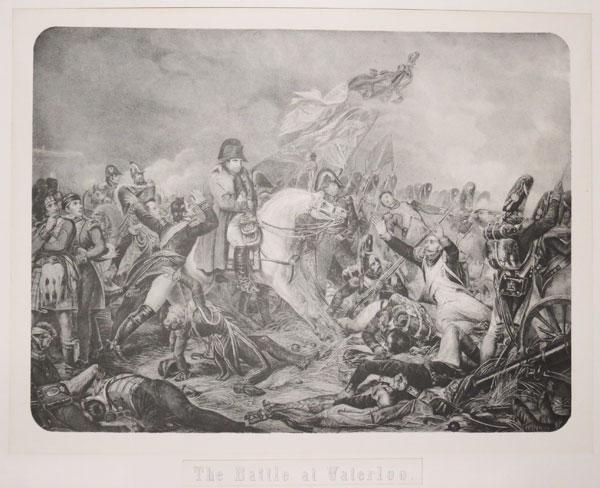
The Battle at Waterloo.
[After Baron Charles Steuben.]
[n.d., c.1845.]
Very rare lithograph. Printed area: 405 x 545mm (16 x 21½").
A dramatic scene at the Battle of Waterloo, with Napoleon on horseback in the centre, facing left, looking grimly at his struggling soldiers who fall on all sides, with one running up from the left, waving his hat behind him as he speaks urgently to the Emperor. The French standards are flying behind them. A Scottish officer watches the scene with a thoughtful expression in the extreme left. After German painter Baron Charles Guillaume Henri Auguste François Louis Steuben (1788 - 1856).
[Ref: 36154] £360.00
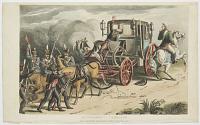
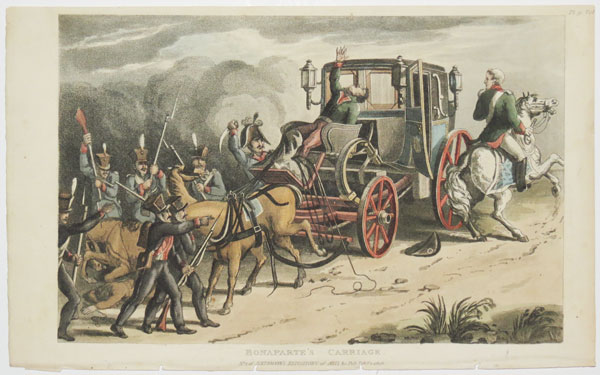
Bonaparte's Carriage.
No.2 of Ackermann's Repository of Arts &c. Pub. Feby. 1 1816.
Hand coloured etching with aquatint. Sheet: 145 x 235mm (5¾ x 9¼''). Repaired tear in bottom edge.
A scene showing Napoleon Bonaparte's near-capture after the Battle of Waterloo; the French Emperor rides away from the Prussian troops that have captured his carriage. The Prussian field marshal Gebhard Leberecht von Blucher, quoted below the image, presented the carriage to the Prince Regent, who subsequently sold it to William Bullock, who made it the centrepiece of a Napoleon exhibition at his Egyptian Hall, Piccadilly. In 1842 it was sold to Madame Tussaud, who displayed for 80 years before it was completely destroyed in a fire. Numbered 'Pl. 9, Vol. I', for Rudolph Ackermann's 'Repository of Arts' periodical, published from 1809-1829. The formal title of the publication was "Repository of Arts, Literature, Commerce, Manufactures, Fashions, and Politics", and it discussed and illustrated day to day life, and influenced English taste in fashion, architecture and literature.
[Ref: 49056] £60.00
(£72.00 incl.VAT)
![[Keyplate] The Battle of Waterloo.](img-thumbnail/jpegs/57910.jpg)
[Keyplate] The Battle of Waterloo.
[n.d., 1815.]
Scarce etching with letterpress. Sheet 460 x 520mm (18¼ x 20½"), on paper watermarked 'J. Whatman 1814'. Small hole in letterpress.
The key plate to William Heath' painting of the Battle of Waterloo, with a 62-point key in English and French, as published in James Jenkins' Martial achievements, less than three months after the battle. The letterpress (which continues on the reverse of the sheet) contains the dispatches from the Duke of Wellington, and list of British officer casualties.
[Ref: 57910] £380.00
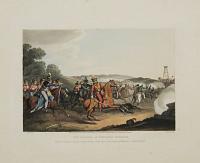
The Marquis of Angelsea Wounded, Whilst heading a charge of heavy Cavalry at the close of the Battle of Waterloo. June 18.th. 1815.
J. A. Atkinson Del. M. Dubourg Sculp.
Published & Sold Sep.r. 1. 1815 by EDW.D. ORME, Publisher to his Majesty & H.R.H th Prince Regent Bond St., corner of Brook St. London.
Fine coloured aquatint with very large margins. Plate: 330 x 250mm (13 x 9¾"). Some slight staining in lower right-hand corner of plate.
Battle scene depicting the moment Henry Paget, 1st Marquess of Angelsea was wounded in the leg by artillery fire. Paget's, horse rears up and two cavalrymen near by look concerned. Meanwhile, the battle rages on with clouds of smoke billowing above the ranks of soldiers. On losing his leg Paget is reported to have cried 'By God, sir, I've lost my leg!,' to which Wellington replied, 'By God, sir, so you Have!'. Following the amputation of the wounded leg, it went on to have career as a tourist attraction in the village of Waterloo.
[Ref: 33577] £190.00
(£228.00 incl.VAT)
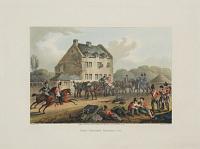
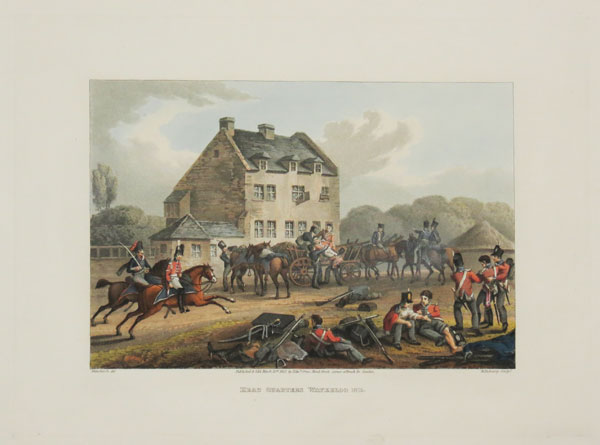
Head Quarters Waterloo 1815.
Manskirch del. M. Dubourg Sculp.t.
Published & Sold March 25.th. 1817. by Edw.d. Orme, Bond Street, corner of Brook Str. London.
Very fine coloured aquatint with large margins. Plate: 330 x 250mm (13 x 9¾).
Exterior scene depicting a large house, around which wounded soldiers are carried and cared for. One soldier is lifted down from a wagon, whilst on the left two mounted soldiers gallop into the scene. The house may be a depiction of Chateau d'Hougoumont, the house and farm of which were garrisoned by the allied British and Prussian troop before the battle, and around which a significant part of the Battle of Waterloo was fought.
[Ref: 33578] £160.00
(£192.00 incl.VAT)
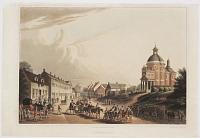
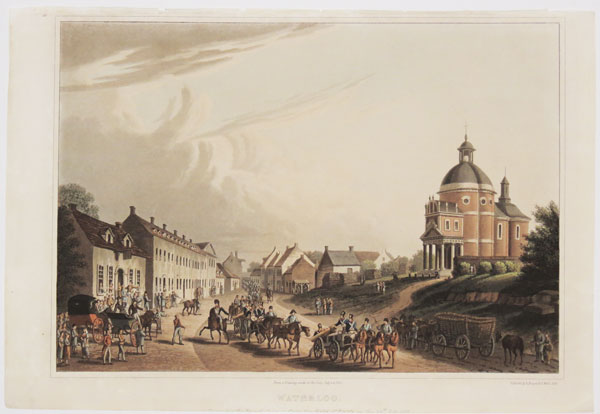
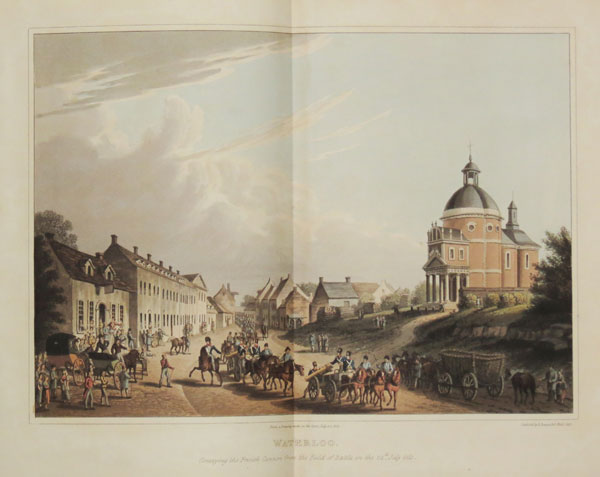
Waterloo. [Conveying the French Cannon from the Field of Battle, on the 24th July, 1815.] From a Drawing made on the Spot, July 24th, 1815.
Publish'd by R. Bowyer, Pall Mall, 1816.
Coloured aquatint. Sheet 255 x 380mm (10 x 15"). Trimmed into plate top and bottom, losing part of the title, some toning.
An illustration from Bowyer's 'Campaign of Waterloo', a sequel to his 'Illustrated Record of Important Events in the Annals of Europe', which had ended after the first abdication of Napoelon Bonaparte in April 1814. Abbey Life: 354.
[Ref: 30251] £130.00
(£156.00 incl.VAT)

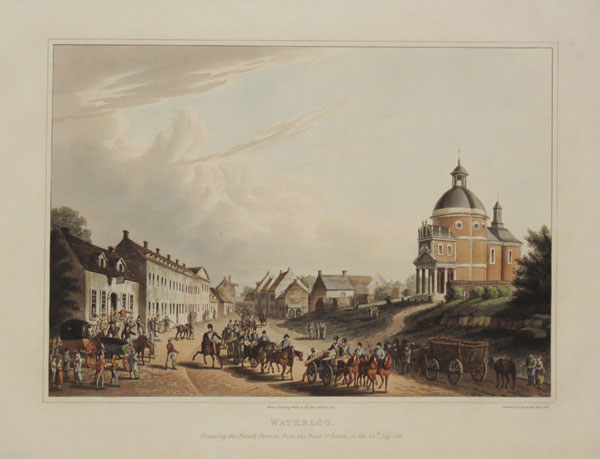
Waterloo. [Conveying the French Cannon from the Field of Battle, on the 24th July, 1815.] From a Drawing made on the Spot, July 24th, 1815.
Publish'd by R. Bowyer, Pall Mall, 1816.
Coloured aquatint. Plate: 400 x 300mm (15¾ x 11¾").
An illustration from Bowyer's 'Campaign of Waterloo', a sequel to his 'Illustrated Record of Important Events in the Annals of Europe', which had ended after the first abdication of Napoelon Bonaparte in April 1814. Abbey Life: 354.
[Ref: 42634] £140.00
(£168.00 incl.VAT)
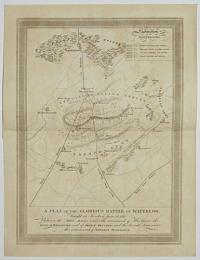
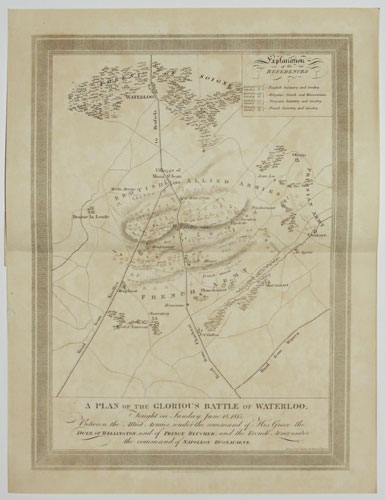
A Plan of the Glorious Battle of Waterloo, Fought on Sunday, June 18th, 1815; Between the Allied Armies, under the command of His Grace the Duke of Wellington, and of Prince Blucher; and the French Army under the command of Napoleon Buonaparte.
Davies sculp.t Compton Street: Brunsw.k Square.
Published by R. Bowyer, Pall Mall, 1816.
Engraved map. 350 x 290mm (13¾ x 7½"). Central horizontal crease where previously folded. Slightly time stained.
The map from Bowyer's 'Campaign of Waterloo', a sequel to his 'Illustrated Record of Important Events in the Annals of Europe', the narrative of which had ended after the first abdication of Napoleon Bonaparte in April 1814.
[Ref: 39356] £220.00
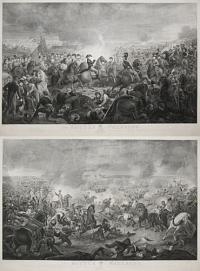
The Battle of Waterloo. To the Prince Regent this Plate is with His Most Gracious Permission Humbly Dedicated by His Royal Highnesses Obliged Devoted & Faithful Servants T. Clay and R. Lambe. [&] To Field Marshal H.R.H. the Duke of York this Plate is with Permission most Humbly Dedicated by His Royal Highness's Obliged Devoted & Faithful Servants R. Lambe and T. Clay.
Alexander Sauerweid Pinx.t. John W. Cook [& H.R. Cook], Sculpt.
London: Pub.d Mar. 1. [& June 18th.] 1819, by R. Lambe, 96, Gracechurch Street and T. Clay, 18, Ludgate Hill.
Pair of mixed method engravings with small margins. 550 x 820mm (21½ x 32¼"). Some wear to edges. Repairs & damaged. Sky scuffed.
Pair of large rare scenes from the Battle of Waterloo. The first scene is focused on the Duke of Wellington, shown on horseback with a telescope in his right hand, having given the order for the advance of the British troops. The second shows the charge of the British heavy cavalry led by General Henry Paget (1768-1854), Earl of Uxbridge, against Comte d'Erlon's column, which checked the French advance. One of the last cannonballs shot that day hit Paget's right leg necessitating its amputation. He was created Marquess of Anglesey the following month. Alexander Sauerweid (1782 - 1844) was a Baltic German painter who specialised in battle scenes and horses. He studied in Dresden and received commissions of horse portraits from Napoleon before moving to St Petersburg to paint official portraits of Russian troops and their uniforms for Alexander I. He also instructed the sons of Nocholas I in drawing. In 1831 he bcame a director of the St Petersburg Academy.
[Ref: 36757] £950.00
view all images for this item

The Battle of Waterloo.
Painted by J.A. Atkinson. The Portraits by A.W. Dervis. Drawn & Engraved by John Burnet.
London, J. Hagger, 67 Paternoster Row. [n.d., c.1850.]
Etching and engraving. Sheet 510 x 690mm (20 x 37¼"). Trimmed to plate.
The Duke of Wellington, mounted, hat in hand, the battle being fought across the fields behind. To the right Highlander foot soldiers fight French cavalry. A re-engraved plate, first published 1819.
[Ref: 36761] £360.00
![[Steam cranes, Waterloo Bridge]](img-thumbnail/jpegs/36796.jpg)
[Steam cranes, Waterloo Bridge]
H. Macbeth-Raeburn Sct.
[n.d., c.1910]
Signed etching with very large margins, platemark 200 x 300mm (8 x 11¾").
Industrial scene on the south bank of the river Thames, with steam cranes on scaffolding hoisting pails, surrounded by boats to let. By Henry Macbeth Raeburn (1860-1947), portrait painter and printmaker active in London, who exhibited at the RA 1881-1904. 'A good etcher' (Guichard). Ex: collection of the Late Hon. C. Lennox-Boyd.
[Ref: 36796] £260.00
(£312.00 incl.VAT)

Key to the Battle of Waterloo, by Lieut. Read.
G.W. Ginger, College Street, Westminster.
[n.d., watermarked 1836.]
Etching with letterpress. Sheet 450 x 560mm (17¾ x 22"). Watermarked 'Sweetapple 1836', Wear to edges.
Keyplate to the aquatint drawn and etched by William Heath after Lieut. R.P. Read, first published by Reeve in 1816. This keyplate is for a later issue as the letterpress 'Summary Account of that Decisive Victory' has been updated to include Napoleon's death on St Helena in 1821. Ex: collection of the Hon. Christopher Lennox-Boyd.
[Ref: 36969] £360.00
![[Keyplate to the Battle of Waterloo, by William Heath.]](img-thumbnail/jpegs/36971.jpg)
[Keyplate to the Battle of Waterloo, by William Heath.]
[n.d., c.1880.]
Wood engraving. Printed area 120 x 360mm (4¾ x 14¼").
Keyplate to the aquatint by Fry & Sutherland after William Heath, first published by Reeve in 1817. It names Wellington, Clinton, and Anglesea, with Napoleon Bonaparte in the background. Ex: collection of the Hon. Christopher Lennox-Boyd.
[Ref: 36971] £85.00
(£102.00 incl.VAT)
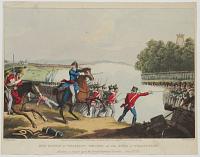
The Battle of Waterloo Decided by the Duke of Wellington, Heading a charge upon the French Imperial Guards, June 18.th. 1815.
J. A. Atkinson Del. M. Dubourg Sculp.
Published & Sold Sep.r.1. 1815 by Edw.d Orme, Publisher to his Majesty & H. R. H. the Prince Regent, Bond Street corner of Brook St London.
Coloured aquatint. Sheet 220 x 285mm (8¾ x 11¼"). Tear taped. Cut inside plate.
Battle scene depicting Wellington's charge on the Imperial Guard. Wellington, mounted upon his horse Copenhagen, calls the charge, brandishing his sword. A figure in a recognisable bicorne hat (perhaps Napoleon) watches the battle from the safety of a platform behind the French line. Wellington's charge, which took place several hours into the Battle of Waterloo, combined with Blücher's attack on Napoleon's right-flank, drove the French troops into disorder allowing the coalition forces to win the day.
[Ref: 37132] £120.00
(£144.00 incl.VAT)

Plan of the Military Operations in the Netherlands. June 1815.
London, Published by Rich.d Edwards, Crane Court, Fleet Street, 1816.
Coloured engraving. Printed area 295 x 180mm (11½ x 7") Hole in binding folds taped on reverse.
A map of the approaches to Brussels, showing the French advance and the array of the British defences around Quatre Bras and Waterloo.
[Ref: 37317] £140.00

Vredetocht naar Waterloo. 23 Juni 1890.
Drukk, van Flandria, Schaarbeek-Brussel.
4pp. scarce letterpress and music. Each page 280 x 200mm (11 x 8"). Text not complete, mounted on album paper.
Part of a programme of Belgian celebrations of the 75th anniversary of the Battle of Waterloo. The central two pages contain the music and five verses (in Dutch) of 'The Peace Trip of Waterloo'.
[Ref: 37133] £80.00
(£96.00 incl.VAT)

Plan of the Battle of Waterloo.
Published Aug.t 31 1816 by Thomas Kelly No. 53 Paternoster Row London.
Engraved map with some hand colour. Sheet 405 x 265mm (16 x 10½"), watermarked 1818. Original folds, one split, staining in title.
A plan of the battlefield, showing the deployment of the British & Belgian, Prussian and French troops. From Christopher Kelly's 'The Memorable Battle of Waterloo'.
[Ref: 37066] £140.00
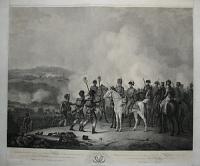
AUZ ARMÉES ALLIÉES. Opgedragen aan Hare Majesteit de Koninginder Nederlanden Door de Ervan J. Allart. Afbeelding van het Glorieryk tydstip van den Veldslag by WATERLOO op den XVIIIden va Somermaand MDCCCXV, waar op aan den Herlog van Hellington opperbevelhebber, door oenige Schotten de op het Fransche Leger veroverde Adelaars worden aangeboden. Tableau Representant to mement de la Gorieuse Bataille de WATERLOO le 18 Juin 1815, Ou quelques Escossais presentent au Duc Wellington General en Chef les Aigles Conqui sur les Francais.
M. J. van Bree Pinxt. P. Velyn Sculpt.
[Published by] J. Allart.
Engraving. 810 x 635mm. Creases in margins outside image but along bottom of title.
Johannes Allart: Amsterdam. Mathieu Lgnace Van Bree. The moment the French. ' The Greys, who had been in a theoretical reserve position, moved straight to their front, which took them through the ranks of the Gordons. The head of the French Division was now only 20 yards away and the Greys simply walked into the 1st/45th Infantry of the Line. There was no gallop and no 'charge.' It is clear from the French report that they did not expect to see British cavalry materializing through the ranks of the British infantry. When the cavalry hit them, the 45th were in the act of forming line, and their 1st battalion was at once thrown into violent confusion, already shaken by the fire of the 92nd. The regimental eagles were carried by the 1st battalion of all French infantry regiments, and in a few minutes the Greys were in the midst of the battalion, at which stage Sergeant Charles Ewart of Captain Vernor's troop captured the eagle of the 45th. He was ordered to take it to the rear, which he reluctantly did, but sat on his horse for sometime watching the engagement before finally setting off for Brussels with his trophy. The rest of the French columns believed what they saw could only be an advance guard, and were now under the mistaken impression that they were being attacked by large numbers of cavalry. The Royal Dragoons and Inniskilling charged Donzelot's Division and the Eagle of the 105th Regiment was taken by the Royal Dragoons. These were the only two Eagles captured during the entire Waterloo campaign.'
[Ref: 6250] £720.00

The unexpected meeting of Lord Wellington & Blucher at La Belle Alliance.
London, Published by Thomas Kelly, Paternoster row, June 22~ 1817.
Coloured engraving. Sheet 185 x 250mm (7¼ x 9¾"). Trimmed and mounted in album paper.
The Prussian field-marshal Gebhard Leberecht von Blücher and Arthur Wellesley, 1st Duke of Wellington, shake hands outside La Belle Alliance Inn to celebrate Napoleon's final at the Battle of Waterloo.
[Ref: 37128] £65.00
(£78.00 incl.VAT)
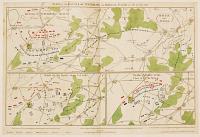
Plans of the Battle of Waterloo, at Different Periods on the 18th June 1815.
London, Published by John Booth, Duke Street, Portland Place, Feb.y 2nd 1816.
Engraved map with hand colour. Sheet 215 x 315mm (8½ x 12¼"). Trimmed to printed border, and mounted in album paper.
Maps of the battle at noon, 2pm and at the close of action. Published in John Booth's 'The Battle of Waterloo, Containing the Series of Accounts Published by Authority, British and Foreign, with Circumstantial Details, Previous, During and After the Battle, from a Variety of Authentic and Original Sources, with Relative Official Documents, Forming an Historical Record of the Operations in the Campaign of the Netherlands'. He used the pseudonym 'A Near Observer'.
[Ref: 37303] £190.00
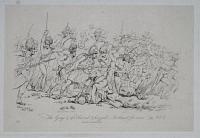
Illustration to the Battles of Quatre-Bras, Ligny, and Waterloo, with Circumstancial Details. By a Near Observer. And the Various Communication of Important Particulars from Staff and Regimental Officers, in a Series of Thirty-Four Etchings, comprehending General Views of the British Positions, Regimental and Individual Acts of Heroism, Gallantry, and Incident.
Drawn from the Most Correct Information, by Capt. George Jones, and Engraved by S.Mitan, &c.
London: Sold by John Booth Duke Street, Portland Place; T.Egerton, Military Library, Whitehall; and J.Fairburn, Edinburgh. 1817.
Quarto, disbound, titlepage and 34 numbered engraved plates, complete. Some wear to edges.
The text to the plates was offered for sale separately.
[Ref: 7311] £950.00
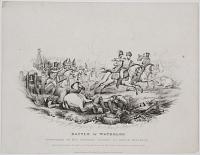
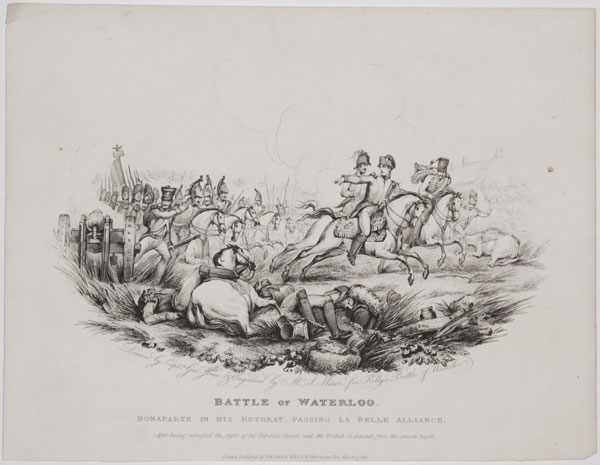
Battle of Waterloo. Bonaparte in his Retreat, Passing La Belle Alliance, After having witnessed the flight of his Imperial Guard, and the British in pursuit from the opposite height.
Drawn by Capt.n Geo. Jones, & Engraved by Mr S. Mitan for Kelly's Battle of Waterloo.
London, Pub. by Thomas Kelly, No. 53 Paternoster Row, March 15, 1817.
Engraving. Sheet 195 x 240mm (7¾ x 9¾"). Trimmed and mounted on album paper.
Napoleon galloping his horse, gesturing behind. From Christopher Kelly's 'The Memorable Battle of Waterloo'.
[Ref: 37126] £75.00
(£90.00 incl.VAT)

The Terror & flight of Buonaparte after the Battle of Waterloo, leaving his hat & Sword in his Carriage.
London, Published by Thomas Kelly, Paternoster row, Feb. 29 ~ 1817.
Engraving, printed in red and hand-finished. Sheet 185 x 250mm (7¼ x 9¾"). Trimmed and mounted in album paper.
Napoleon galloping his horse, looking over his shoulder at the chasing troops.
[Ref: 37127] £75.00
(£90.00 incl.VAT)
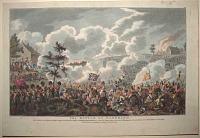
The Battle Of Waterloo. The Contest of the British and Allied Troops, commanded by the Duke of Wellington, Marshal Blucher, &c. against the French Army, commanded by Buonaparte, between La Haye and la Belle Alliance, 18th. June 1815.
Publish'd May 1, 1816, by Whittle & Laurie, 53, Fleet Street London.
Hand coloured engraving, plate 285 x 445mm (11¼ x 17½"), with large margins on two sides. Remains of backing card verso on right side.
A dramatic view of the fighting during the Battle of Waterloo (18th June 1815).
[Ref: 56304] £320.00
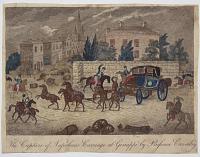
The Capture of Napoleon's Carriage at Genappe by Prussian Cavalry.
[Anon, c.1815]
Engraving with hand-colouring, rare; sheet 150 x 195mm (6 x 7¾"), Trimmed around image and title; glued to album sheet.
Following the Battle of Waterloo, Johannes Horn, who drove Napoleon's coach (or 'dormeuse') tried to bring the vehicle to safety. He drove from La Belle Alliance to near Genappe where the Prussian cavalry captured the carriage and left Horn for dead. The aftermath of the battle is suggested by the scattered cannons, barrels and cannonballs.
[Ref: 32294] £120.00
(£144.00 incl.VAT)
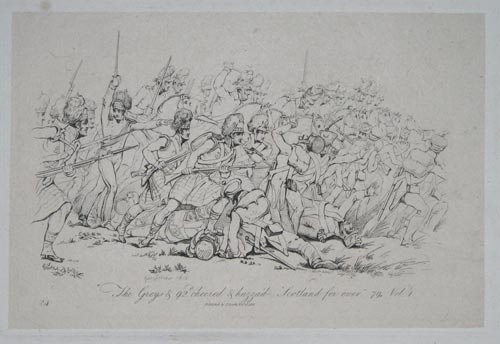
![Charge of the Guards at Waterloo [ms below image]](img-thumbnail/jpegs/44195.jpg)
Charge of the Guards at Waterloo [ms below image]
[James Stewart] c.1820.
Pen lithograph, image 145 x 280mm (5¾ x 11"). J. Whatman watermark.
Early lithograph of the Battle of Waterloo. Ex: Collection of the Hon. C. Lennox-Boyd.
[Ref: 44195] £140.00
(£168.00 incl.VAT)
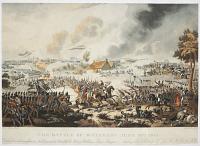
The Battle of Waterloo June 18th. 1815. Dedicated with permission to Lieu.t General the Most Noble Henry William Paget, Marquis of Anglesey & Earl of Uxbridge G:C:B: K.M.T. & K.S.G. [By Lieu.t R.P. Read.]
Drawn & Etched by W. Heath. Aquatinted by R. Reeve.
[London. Publish'd, June 4th 1816. for the Porprietor: by J. & M. Rippin No.21 Theobald's Road.]
Coloured aquatint. Sheet 395 x 545mm (15½ x 21½") Trimmed within image on three sides, losing end of the dedication and publication line at bottom; some surface abrasion, colour faded.
An intense battle scene, with British infantry closing in on the French cavalry from both sides. A mortar explodes in the foreground and cannon balls streak across the sky.
[Ref: 36817] £450.00

Waterloo. Conveying the French Cannon from the Field of Battle, on the 24th July, 1815. From a Drawing made on the Spot, July 24th, 1815.
Publish'd by R. Bowyer, Pall Mall, 1816.
Coloured aquatint. Sheet 290 x 410mm (11½ x 16"). Centre fold as normal.
An illustration from Bowyer's 'Campaign of Waterloo', a sequel to his 'Illustrated Record of Important Events in the Annals of Europe', the narrative of which had ended after the first abdication of Napoleon Bonaparte in April 1814. Abbey Life: 354.
[Ref: 37130] £130.00
(£156.00 incl.VAT)
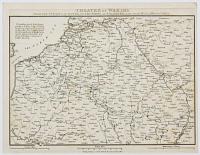
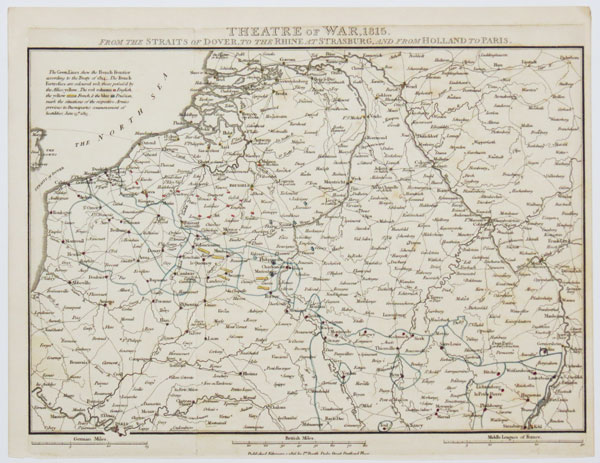
Theatre of War, 1815. From the Straits of Dover, to the Rhine at Strasburg, and from Holland to Paris.
Published February 1 1816. by John Booth, Duke Street, Portland Place.
Engraved map with hand colour. Sheet 215 x 290mm (8½ x 11¼"). Trimmed, affecting title and publisher's address, mounted in album paper.
Map of the campaign that culminated with the Battle of Waterloo. Published in John Booth's 'The Battle of Waterloo, Containing the Series of Accounts Published by Authority, British and Foreign, with Circumstantial Details, Previous, During and After the Battle, from a Variety of Authentic and Original Sources, with Relative Official Documents, Forming an Historical Record of the Operations in the Campaign of the Netherlands'. He used the pseudonym 'A Near Observer'.
[Ref: 37314] £120.00
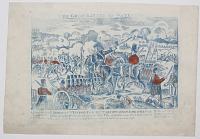
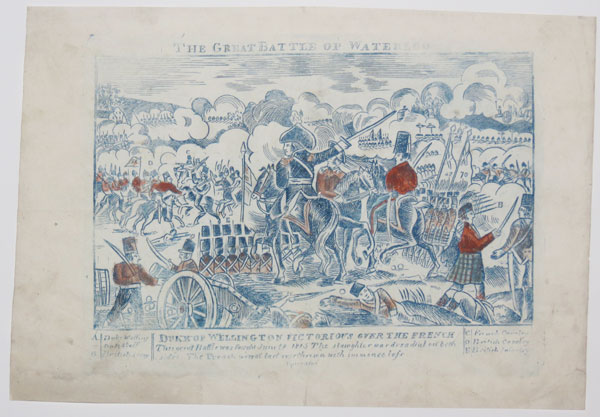
The Great Battle of Waterloo. Duke of Wellington Victorious Over the French...
Paterson. [n.d., c.1815.]
Woodcut printed in blue ink, some additional hand-colour, rare. Sheet: 270 x 185mm (10½ x 7½"), with very large margins. Repaired tear in centre of image, pin hole. Scuffed, with some surface dirt.
A crudely engraved scene showing the victory of the Battle of Waterloo.
[Ref: 44555] £160.00
(£192.00 incl.VAT)
![The Battle of Waterloo June 18.th 1815. [&] Key To the Battle of Waterloo, By Lieut. Read.](img-thumbnail/jpegs/60541.jpg)
The Battle of Waterloo June 18.th 1815. [&] Key To the Battle of Waterloo, By Lieut. Read. Dedicated with permission to Lieu.t General the Most Noble Henry William Paget, Marquis of Anglesey & Earl of Uxbridge GCB KMT & KJG. By Lieut. R.P. Reeve.
Drawn & Etch'd by W. Heath. Aquatinted by R. Reeve.
London, Published June 4th. 1816 for the Proprietor by R. Reeve No. 15 Rathbone Place. [&] Printed by J. Barfield, 91, Wardour Street Soho.
Wonderful hand-coloured etching and aquatint, image watermarked J. Whatman 1815, 450 x 600mm (17¾ x 23¾), with large margins. Key etching with letterpress, sheet 480 x 615mm (19 x 24¼"), on '1814' watermarked paper. Etching and aquatint taped into mount. Slight mount burn, otherwise near Mint. Key slightly creased.
Battle scene with British infantry closing on French cavalry on both flanks, injured soldiers lying in the foreground, a localised explosion in the centre; cannon shot trailing fire crosses the sky above sheets of flame on the horizon. With accompanying key in fine condition.
[Ref: 60541] £650.00
view all images for this item
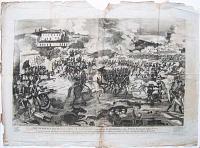
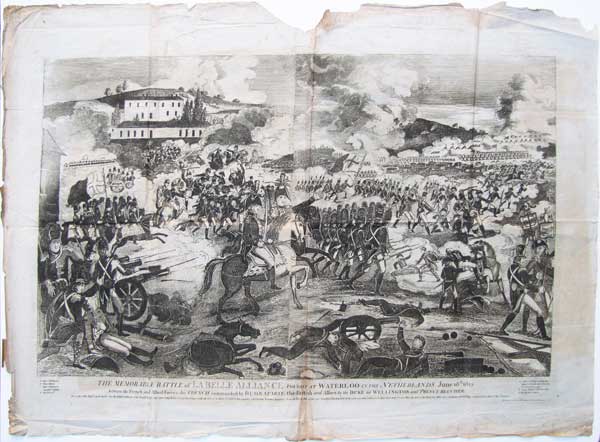
The Memorable Battle of La Belle Alliance fought at Waterloo in the Netherlands June 18.th, 1815 between the French and Allied Forces, the French commanded by Buonaprte the British and Allies by the Duke of Wellington and Prince Blucher. the result of this hard fought Battlewas the total overthrow of the French Army who were compell'd to retreat into France with the loss of 210 Pieces of Cannon, Buonaparte's own Carriage, Breasures Baggage, &c. &c. the loss in this affair was dreadful. Buonaparte in his own account confesses to have lost near 60,000 Men. ths loss of the British & Allies was immense, yet trifling compared to that of the French.
Published by W. Bishop Rolls Buildings Fetter Lane London [n.d., c.1816].
Etching on two sheets conjoined, total 590 x 890mm (22¾ x 35"), with large margins. Edges of sheets chipped, splits on folds, some creasing and spotting.
A large popular print of the Battle of Waterloo, La Belle Alliance in the background, with a seven-point key marking Wellington, Blucher and 'Buonaparte escaping'. Extremely rare: we have been unable to trace another example.
[Ref: 61740] £1,500.00

Explanation Of the Battle of Waterloo, Painted On the largest Scale, from Drawings taken on the Spot, by Mr. Henry Aston Barker, (The Figures composed and painted by Mr. John Burnet,) Now Exhibiting in the Panorama, Leicester Square. The Upper Circle contains a Representation of the Battle of Paris, Fought by the Allies in March, 1814, With a View of the City and Environs. 1817. Open from Ten until Dusk. Admission to each Painting One Shilling.
[J. Adlard, Printer, 23, Bartholomew-Close, West Smithfield.]
Wood engraved broadside with letterpress. Sheet 365 x 275mm (14¼ x 10¾"). Mounted in album paper, wear to folds reinforced with tape on reverse.
A circular wood engraving with a 68-point key, the guide to a painted panorama of the Battle of Waterloo exhibited at the 'Panorama', the first building to be erected for the purpose of displaying panoramas. According to the letterpress he went to Allied Headquarters in Paris to research the battle. His sketches were issued as a set of eight etchings by John Burnett. During his lifetime Barker's celebrity opened doors: he met Sir William Hamilton and Admiral Nelson in Naples, and Napoleon Bonaparte on Elba. He married Admiral William Bligh's eldest daughter in 1802. See Ref: 37063
[Ref: 37171] £360.00
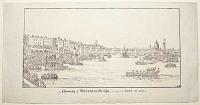
Opening of Waterloo Bridge. June 18. 1817.
I.G. [Lady Julia Gordon.]
Very scarce pen lithograph, pt J. Whatman watermark. Sheet 170 x 325mm (6¾ x 12¾"). Trimmed within plate on three sides, tear in bottom edge taped.
The celebrations during the opening of the first Waterloo Bridge, which was designed by John Rennie. Lady Julia Gordon (1775-1867, neé Julia Isabella Levina Bennet) was a pupil of both J.M.W. Turner and Thomas Girtin. Her husband, General Sir James Willoughby Gordon, was Quartermaster General during the Peninsular Wars. Ex: Collection of the Hon. Christopher Lennox-Boyd.
[Ref: 56271] £160.00
(£192.00 incl.VAT)
![[Under Waterloo Bridge.]](img-thumbnail/jpegs/12338.jpg)
[Under Waterloo Bridge.]
W. Monk. [pencil signature, monogram in image lower right.]
[n.d., c.1920.]
Etching, 180 x 250mm. 7 x 9¾". Some spotting.
Figures and carts by Waterloo Bridge, part of Somerset House in the background. Drawn, etched and published by William Monk (1863 - 1937), a skilled architectural draughtsman who started 'The London Calendar' in 1903.
[Ref: 12338] £120.00
(£144.00 incl.VAT)
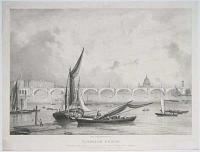
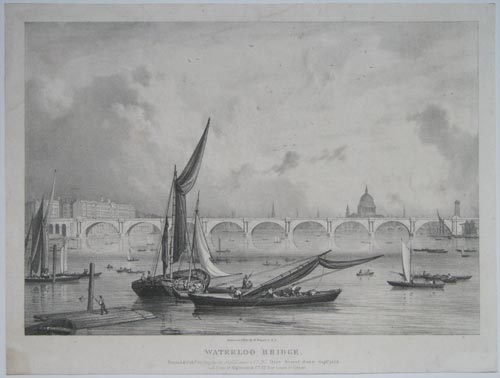
Waterloo Bridge.
Drawn on Stone by W. Westal. A.R.A.
Printed & Pub.d.. by Englemann Graf, Coindet & Co. 92 Dean Street Soho Septr.1826 and Paris at Englemann & Co. 27. Rue Louis le Grand.
Lithograph on india laid paper, sheet 277 x 365mm. Trimmed to edges of india paper. Trace of water stain upper left and extreme lower left corner
View of Westminster Bridge with boats on the River Thames. Not in Abbey.
[Ref: 7570] £280.00
(£336.00 incl.VAT)

The opening of the Waterloo Bridge on the 18th June 1817.
Etched by A.Pugin from a Drawing by Wm. Findlater, taken from the top of Holylands Hotel, above Salisbury Wharf. Engraved by R.Havell & Son.
[n.d., c.1818.]
Rare coloured aquatint. 470 x 290mm (18½ x 11½"). Frame 660 x 470mm (26 x 18½"). Framed and mounted. Repairs top right.
View of Waterloo Bridge from the top of Holyland's Hotel, Salisbury Wharf; many boats on water passing beneath bridge, the river bank is crowded with people standing on shore or on docked boats, many more people crowded onto bridge, on which flags are flown; St Paul's in distance to left.
[Ref: 67099] £260.00
(£312.00 incl.VAT)

Londres. Vue du Pont de Waterloo. Pl.2.
Alph. Leroy del. Lith de Langlamé.
[n.d. c.1830.]
Lithograph; 274 x 362mm. 10¾ x 14¼" large margins. One small tear in margins.
A view from Waterloo Bridge towards Southwark Bridge and St Paul's Cathedral to the left. An unusual interpretation of the London skyline.
[Ref: 39915] £130.00
(£156.00 incl.VAT)

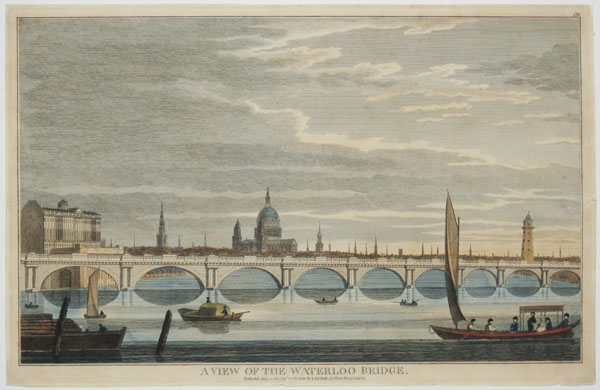
A View of the Waterloo Bridge.
Published July 12, 1816 by Whittle & Laurie, 53, Fleet Street, London.
Coloured engraving. 280 x 440mm, 11 x 17¼".
John Rennie's Waterloo Bridge, opened in 1817, the year after publication. Behind the bridge visible landmarks include Somerset House, St Paul's Cathedral and Watt's Shot Tower, Lambeth.
[Ref: 20693] £280.00
(£336.00 incl.VAT)
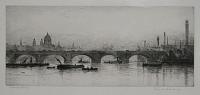
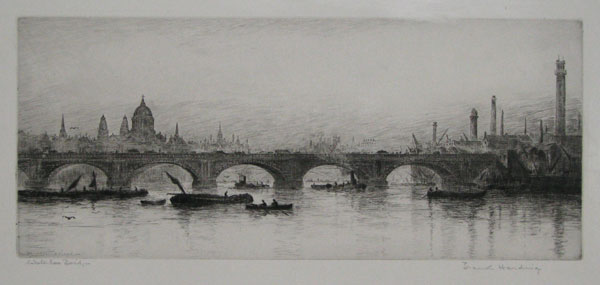
Waterloo Bridge.
Frank Harding [signed in pencil].
[n.d. c.1890.]
Etching. 270 x 458mm. 10¾ x 18".
Waterloo Bridge with St Paul's in the Background and the Shot Mill; barges and rowing boats in the Thames.
[Ref: 19888] £280.00
(£336.00 incl.VAT)
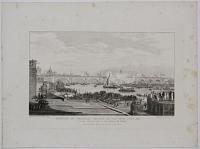
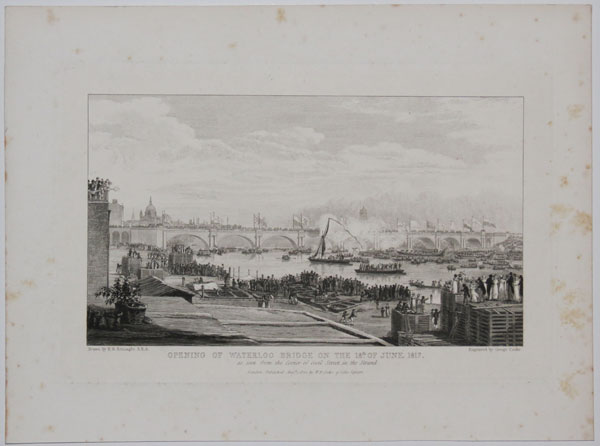
Opening of Waterloo Bridge on the 18.th of June, 1817. as seen from the Corner of Cecil Street, in the Strand.
Drawn by R.R. Reinagle, A.R.A. Engraved by George Cooke.
London, Published Aug.st 1. 1822; by W.B. Cooke 9 Soho Square.
Etching and engraving on india. Plate 152 x 240mm. 6 x 9½". Foxing in the margins.
View of Waterloo Bridge on its opening day, taken from the corner of Cecil Street in the Strand; many boats on the water and crowds lining the river bank and bridge, flags flown on the bridge, St Paul's can be seen in the distance on the left. Collage: p7508339.
[Ref: 26086] £130.00
(£156.00 incl.VAT)
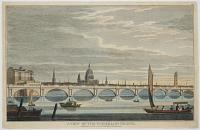
A View of the Waterloo Bridge. 170.
Publish'd July 12, 1823, by Richard H. Laurie. 53, Fleet Street.
Hand-coloured engraving. Plate 279 x 438mm. 11 x 17¼". Small repaired tear on right.
John Rennie's Waterloo Bridge, opened in 1817. Behind the bridge visible landmarks include Somerset House, St Paul's Cathedral and Watt's Shot Tower, Lambeth. See Ref: 20693 for publication date of 1816 by Laurie & Whittle.
[Ref: 26096] £290.00
(£348.00 incl.VAT)
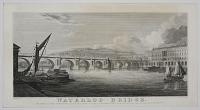
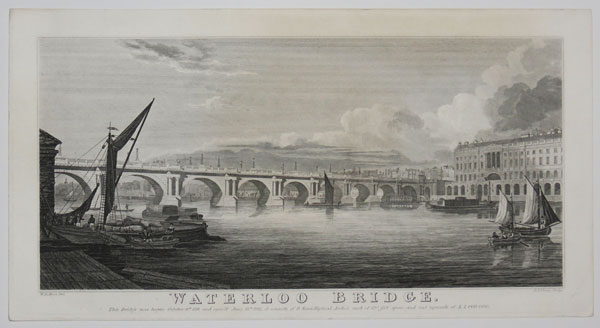
Waterloo Bridge. This Bridge was begun October 11.th 1811, and open'd June 13.th 1817, it consistes of 9 Semielliptical Arches, each of 120 feet span and cost upwards of L.1.000.000.
W.G. Moss. Del. J.J. Shury Sculp.
[n.d. c.1820.]
Engraving. 246 x 461mm. 9¾ x 18¼". Trimmed.
View of Waterloo Bridge from the east, with boats on the River Thames below. Collage: p7509178.
[Ref: 26098] £260.00
(£312.00 incl.VAT)
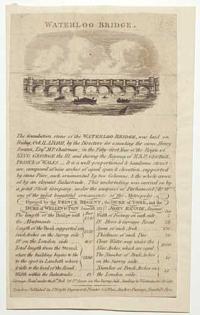
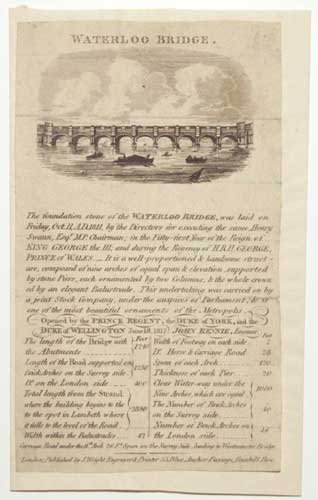
Waterloo Bridge. The foundation of the Waterloo Bridge, was laid on Friday, Oct 11, AD1811, by the Directors for executing the same Henry Swann, Esq.r M.P. Chairman; in the Fifty- first Year of...
London; Published by J. Wright Engraver & Printer 35, Blue Anchor Passage, Bunhill Row. [n.d., 1812].
Rare engraving with text, 1812 watermark; sheet 175 x 105mm (7 x 4"). Trimmed and glued to backing sheet. Tear.
A view of Waterloo Bridge with letterpress with engineering information.
[Ref: 56982] £140.00
(£168.00 incl.VAT)
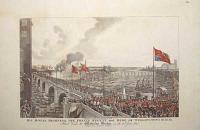
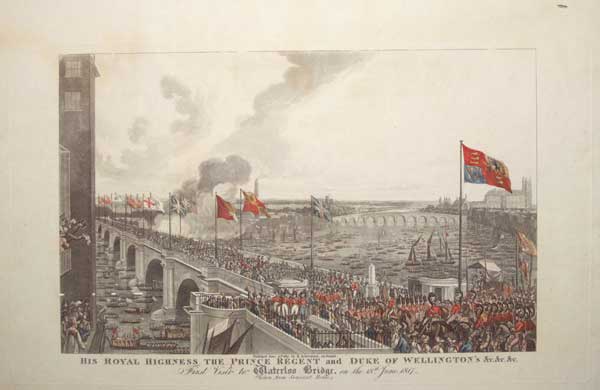
His Royal Highness the Prince Regent and Duke of Wellington's &c.&c.&c. First Visit to Waterloo Bridge of the 18th June 1817. (Taken from Somerset House.)
Published June 21st 1817, By R.Ackermann, 101 Strand.
Rare & fine coloured aquatint. 210 x 360mm, (8¼ x 14¼"), with large margins. Worm holes in left. Some creasing and time staining.
The opening of John Rennie's Bridge in 1817, published only three days after the event.
[Ref: 56061] £290.00
(£348.00 incl.VAT)
![Waterloo Bridge [within image and in pencil].](img-thumbnail/jpegs/61707.jpg)
Waterloo Bridge [within image and in pencil].
Frank Harding. [in pencil]
[n.d., c.1920.]
Etching, signed by the artist. 150 x 350mm (6 x 13¾"), with very large margins.
The bridge from the Thames, the dome of St Paul's Cathedral looming behind.
[Ref: 61707] £280.00
(£336.00 incl.VAT)
![[Waterloo Bridge.]](img-thumbnail/jpegs/33853.jpg)
[Waterloo Bridge.]
J. Spencer [pencil.]
[n.d., c.1930.]
Etching, signed by the artist in pencil. 150 x 225mm (6 x 9"), on cartridge paper.
Waterloo Bridge, with the dome of St Paul's Cathedral rising above and barges on the Thames.
[Ref: 33853] £95.00
(£114.00 incl.VAT)

![[Bound reprint of The Times newspaper, June 22nd 1815, with reports of the Battle of Waterloo.]](jpegs/62559.jpg)

![[Keyplate] The Battle of Waterloo.](jpegs/57910.jpg)



![[Steam cranes, Waterloo Bridge]](jpegs/36796.jpg)

![[Keyplate to the Battle of Waterloo, by William Heath.]](jpegs/36971.jpg)




![Charge of the Guards at Waterloo [ms below image]](jpegs/44195.jpg)

![The Battle of Waterloo June 18.th 1815. [&] Key To the Battle of Waterloo, By Lieut. Read.](jpegs/60541.jpg)


![[Under Waterloo Bridge.]](jpegs/12338.jpg)


![Waterloo Bridge [within image and in pencil].](jpegs/61707.jpg)
![[Waterloo Bridge.]](jpegs/33853.jpg)