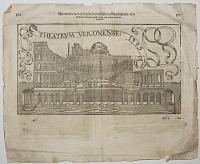
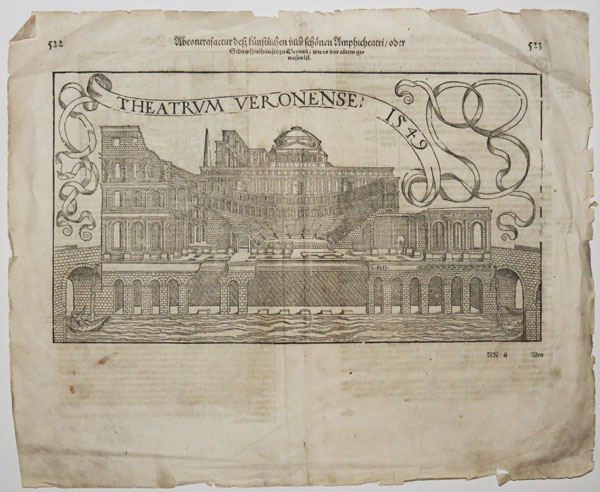
Theatrum Veronese: 1549.
[Sebastian Munster.]
[c.1550.]
Woodcut. Sheet: 350 x 430mm (13¾ x 17''). Central crease as normal, foxing, tears. Bit messy.
A view of the Roman amphitheatre at Verona from Sebastian Münster's (1488-1552) "Cosmographia". Münster's "Cosmographia" was the earliest German language description of the world and was republished in numerous editions and languages. The last German edition was published in 1628.
[Ref: 49370] £180.00
(£216.00 incl.VAT)
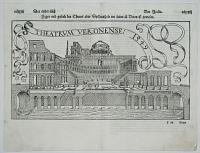
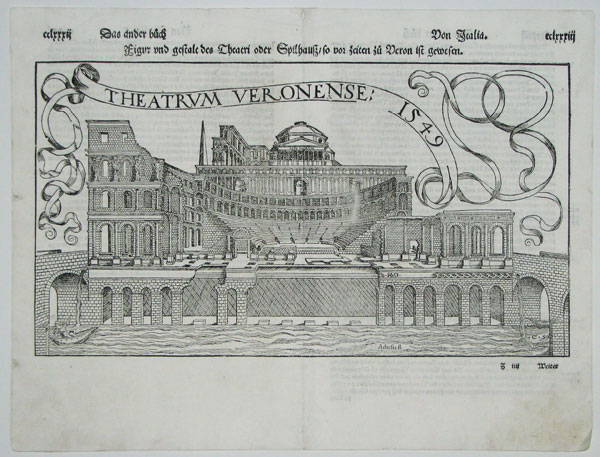
Theatrum Veronense: 1549.
[Hans Rudolf Manuel's monogram 'RMD' in image, on the facade at right. Monogram of the cutter 'C.S' also in image lower right.]
[Basel, Switzerland?, late 16th century, '1561' in pencil to verso.]
Woodcut on laid paper, folding double-page illustration to a German edition of Sebastian Münster's 'Cosmographia'. Sheet 300 x 395mm, 11¾ x 15½". Centre crease as usual.
This is a view of the grandiose Verona Arena (Arena di Verona), a Roman amphitheatre in Piazza Bra in Verona, Italy, which is internationally famous for the large-scale opera performances given there. It is one of the best preserved ancient structures of its kind. The theatre was built in the last quarter of the 1st century B.C., at the foot of the Hill of St. Peter on the banks of the Adige River. Captioned in German, German text to verso. Page numbers upper left and right. Sebastian Münster (1488 - 1552) was a cartographer and cosmographer, also professor of Hebrew at the University of Basel, whose Cosmographia of 1544 was the first German description of the world.
[Ref: 22523] £220.00
(£264.00 incl.VAT)
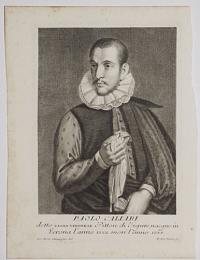
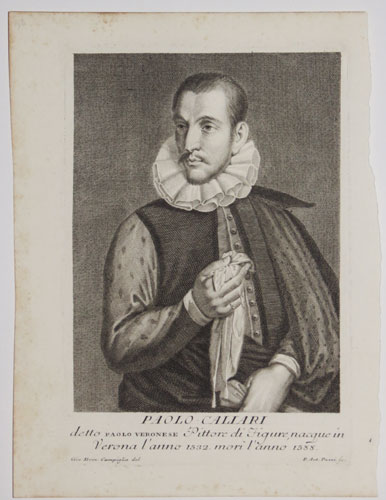
Paolo Caliari. detto Paolo Veronese Pittore di Figure, nacque in Verona l'anno 1532. Mori l'anno 1588.
Gio Dom. Campiglia del./ P.Ant, Pazzi fc.
[n.d., c.1766.]
Engraving. 175 x 260mm. (6¾ x 10¾"), with wide margins.
Veronese (Paolo Cagliari, 1532 - 1588) artist whose name derives from his birthplace in Verona. This portrait was part of A. F. Gori's monumental 'Museum Florentium', which set out to engrave all the portraits of painters, architects, sculptors and patrons of the arts in the major galleries of Florence. This vast undertaking was issued in parts, taking over thirty years (1731-1766) to complete.
[Ref: 29102] £140.00
(£168.00 incl.VAT)
![[Maria Anna Veronese] M.lle. Coraline.](img-thumbnail/jpegs/63171.jpg)
[Maria Anna Veronese] M.lle. Coraline.
Allais Pinxit. Vispré Sculp.
[n.d., c.1700s.]
Rare mezzotint. Sheet 195 x 145mm (7¾ x 5¾").
Portrait of Maria Anna Veronese (French: Marie Anne Véronèse) (died 1782) was a Franco/Italian actress active at the Comédie-Italienne in Paris. She became the mistress of Louis François Joseph, Prince of Conti, by whom she had two illegitimate children, born in 1761 and 1767. Nicknamed "Mademoiselle Coraline", Anna Veronese was the daughter of Italian Pantalone-actor Carlo Veronese and the sister of actress Giacoma Antonia Veronese (d. 1768). She debuted with her sister at the Comédie-Italienne in Paris in 1744. The Veronese sisters are considered two of the most notable interpreters of the soubrette-parts of the commedia dell'arte. They were known as Corallina (Coraline in French) and Camilla, respectively, after their standard parts. Anna was particularly known for her quick costume changes.
[Ref: 63171] £260.00
(£312.00 incl.VAT)

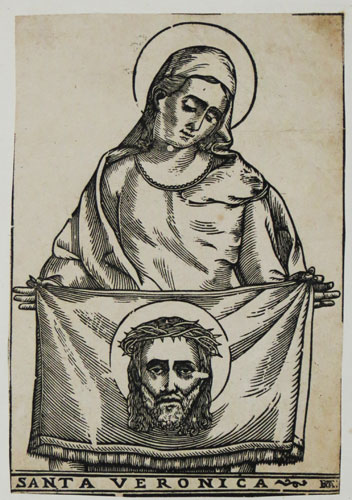
Santa Veronica.
B.T.A.
[n.d., c.1630.]
Rare woodcut. Sheet: 180 x 130mm (7¼ x 5¼''). Trimmed and laid on album sheet.
A portrait of Saint Veronica, a woman of Jerusalem who offered her veil to Jesus to mop his brow while carrying the cross. When he returned the veil to Veronica his face had miraculously been impressed upon it. A woodcut by the monogrammist BTA, probably for a Carmelite order in Venice in the first half of the 16th century.
[Ref: 49645] £240.00
(£288.00 incl.VAT)
p. The Triumphal Arch so called because it resembles one. This fine structure is of Brass Gilt & contains 3 large Porticos. On the top of it are Seven Basins, from whence projects as many spouts of water which falling down flow over the Basins & into the the Shels on each side: between the Porticos there Projects 3 other spouts of water which falling down flow likewise over their Basins, & over the Steps which ascend to the Arch, & form a beautifull Cascade On either side going towards ye Arch is a Pyramid if water & near them several Buffets of water, Shels supported by Pedestals & streams of water arising out, w.ch have an inexpressible effect.
I. Bowles. Excud:
[London. Printed & Sold by John Bowles Print & Map Seller at Mercers Hall in Cheapside, 1726.]
Engraving with small margin. Plate 222 x 272mm (8¾ x10¾"). Fold.
A triumphal arch in the gardens of Versailles. This was built during the reign of Louis XIV and later replaced with a fountain in 1679. From "Versailles Illustrated, or Divers Views of the Several Parts of the Royal Palace of Versailles; as likewise of all the Fountains, Groves, Parterras, ye Labyrinth & other ye most Beautiful Parts of the Gardens, Wherein are represented whatever is remarkable whether Statues, Groups of Figures, Water Fall, Pleasure Houses, &c. Drawn on the Spot by the Order & with the Approbation of the French King".
[Ref: 28533] £80.00
(£96.00 incl.VAT)
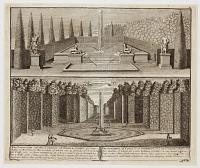
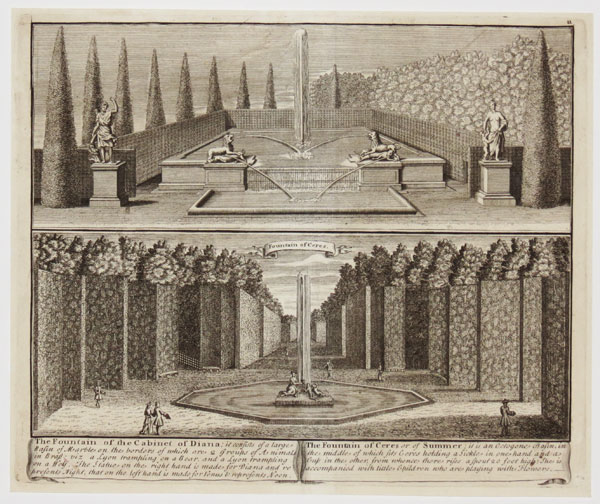
u. The Fountain of the Cabinet of Diana; it consists of a large Basin of Marble on the borders of which are 2 Groups of Animals in Brass; viz a Lyon trampling on a Bear, and a Lyon trampling on a Wolf. The Statue on the right hand is made for Diana, and represents Night, that on the left hand is made for Venus & represents Noon. Fountain of Ceres. The Fountain of Ceres or of Summer; it is an Octogone Basin, in the middle of which sits Ceres holding a Sickle in one hand and a Cup in the other, from whence there rises a spout 20 foot high; She is accompanied with little Children who are playing with Flowers.
[London. Printed & Sold by John Bowles Print & Map Seller at Mercers Hall in Cheapside, 1726.]
Engraving with small margins, paper watermarked. Plate 222 x 272mm (8¾ x10¾"). Folds and creasing.
The Fountain of the Cabinet of Diana, which appears to no longer exist, with representations of Venus and Diana; and the Ceres Fountain which was laid out between 1672 and 1679 by Thomas Regnaudin, after a drawing by Charles Le Brun. Ceres, the Roman goddess of harvests and corn, is seated on a bed of corn stalks, accompanied by cornflowers and roses. Symbolising summer, the fountain forms a set with those of Bacchus, Flora and Saturn who represent the three other seasons. From "Versailles Illustrated, or Divers Views of the Several Parts of the Royal Palace of Versailles; as likewise of all the Fountains, Groves, Parterras, ye Labyrinth & other ye most Beautiful Parts of the Gardens, Wherein are represented whatever is remarkable whether Statues, Groups of Figures, Water Fall, Pleasure Houses, &c. Drawn on the Spot by the Order & with the Approbation of the French King".
[Ref: 28529] £60.00
(£72.00 incl.VAT)
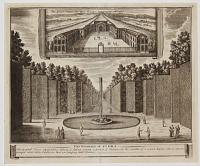
t. The Great Stables for the Kings manages Horses. The Fountain of Flora. The Goddess Flora representing Spring is sitting among a parcel of Flowers in the middle of a round Basin: She is accompanyed with little Children that are playing with Flowers.
[London. Printed & Sold by John Bowles Print & Map Seller at Mercers Hall in Cheapside, 1726.]
Engraving with small margins. Plate 222 x 272mm (8¾ x10¾"). Folds and creasing.
The great stables, designed by Jules Hardouin-Mansart, to shelter the King's 600 horses, equerries, stablemen, musicians and pageboys. The Flora Fountain, located at the crossroads of several Groves, including the Queen’s Grove, the fountain of Flora, Roman goddess of flowers, gardens and spring, symbolises the first season of the year. Sculpted by Tuby, she is represented with a crown of flowers in the centre of the fountain. From "Versailles Illustrated, or Divers Views of the Several Parts of the Royal Palace of Versailles; as likewise of all the Fountains, Groves, Parterras, ye Labyrinth & other ye most Beautiful Parts of the Gardens, Wherein are represented whatever is remarkable whether Statues, Groups of Figures, Water Fall, Pleasure Houses, &c. Drawn on the Spot by the Order & with the Approbation of the French King".
[Ref: 28530] £60.00
(£72.00 incl.VAT)
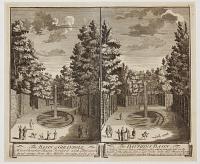
r. The Basin of Girandole. It is a Circular Basin border'd with Turf, and a Spout rising from the Middle twenty Seven feet. The Dauphins Basin. So called from a Statue of the Dauphin whic formerly was in the Middle of the Basin, but is now broke down, this Basin Resembles that of the Girandole, and has likewise a Spout rising twenty seven feet.
[London. Printed & Sold by John Bowles Print & Map Seller at Mercers Hall in Cheapside, 1726.]
Engraving with small margins, paper watermarked. Plate 222 x 272mm (8¾ x10¾"). Fold.
The Girandole Grove, a pendant to the Dauphin’s Grove, replaced old quincunxes in the south planted in the reign of Louis XVI. It has changed very little since it was installed, and is decorated with sculptures on tapering plinths commissioned by the Superintendent of Finance, Nicolas Fouquet, for his château in Vaux-le-Vicomte and executed in Rome based on models by Poussin. The Dauphin ‘s Grove, also known as “The Two Groves” along with the Girandole, is one of the very first designed by André Le Nôtre around 1660. At the end of the 17th century, the sculptor Théodon completed the series of sculptures dedicated to the seasons and mythological gods. From "Versailles Illustrated, or Divers Views of the Several Parts of the Royal Palace of Versailles; as likewise of all the Fountains, Groves, Parterras, ye Labyrinth & other ye most Beautiful Parts of the Gardens, Wherein are represented whatever is remarkable whether Statues, Groups of Figures, Water Fall, Pleasure Houses, &c. Drawn on the Spot by the Order & with the Approbation of the French King".
[Ref: 28531] £60.00
(£72.00 incl.VAT)

q. The Three Fountains. This is a beautifull Rural Grove in which the murmurs of the Fountains and the Cascades of Water; at the same time most agreeable entertain the Eyes and Ears, the large Spout at the end of the Grove rises 22 feet, and the Spouts in the Octogone Basin 170 feet. The Fountain of the Pyramid: so called from the resemblance it bears to a Pyramid, it consists of 4 Basins one above the other; the tower most of which 12 Feet in Diameter, under which are 4 Tritons who seem to be at play and running after one another, above them are several other Figures & Ornaments which support the other Basins.
I. Bowles. Excud.
[London. Printed & Sold by John Bowles Print & Map Seller at Mercers Hall in Cheapside, 1726.]
Engraving with small margins, paper watermarked. Plate 222 x 272mm (8¾ x10¾"). Fold.
The Grove of the Three Fountains. Designed by Le Nôtre in 1677, this grove is the only one mentioned on an old plan as “from the king’s thoughts”. It consists of three terraces each with a different fountain. Restored in 2005, it has recovered its magnificent composition and its jets of water desired by the king: in the lower fountain, the jets form a fleur-de-lys in the centre, vertical spouts and a vault of water, while above it is a column of water formed by 140 jets; moreover, it is this imposing column which supplies the lower fountains. Well hidden by the trellises, this grove had been laid out so that the king, aged 39, then suffering from gout, could reach it seated in a chair with castors and get up the grassy access ramps. The Pyramid Fountain. Executed by the sculptor François Girardon from a drawing by Charles Le Brun, the Pyramid in the centre of the fountain took three years to build. It consists of four superimposed lead bowls supported by lead tritons, dolphins and crayfish. From "Versailles Illustrated, or Divers Views of the Several Parts of the Royal Palace of Versailles; as likewise of all the Fountains, Groves, Parterras, ye Labyrinth & other ye most Beautiful Parts of the Gardens, Wherein are represented whatever is remarkable whether Statues, Groups of Figures, Water Fall, Pleasure Houses, &c. Drawn on the Spot by the Order & with the Approbation of the French King".
[Ref: 28532] £60.00
(£72.00 incl.VAT)

g. The Colonade. It is a Peristile or Circle of 32 Marble Columns of the Ionick Order, 12 of w.ch, are Red, 12 Blew & 8 colour’d like Violets. Their Bases & Capitols are of white Marble & the Spaces under ye Architrave are adorn’d w.th curious Ornam.nts & carv’d Work in Basso Relievo. Between ye Pillars ar 31 Basins of white Marble form each of w.ch there projects a Spout of Water 16 foot high w.ch falling into ye Basins spread over ym like so many Table Cloths. In ye midst of ye Peristile there is a Group of Figures representing e Rape of Proserpine and Pluto, supported by a beautiful Pedestal, & perfom’d by Girardon. The Diam.tr of ye Peristile is 123 foot & ye Circumference 369.
J. Bowles Excud.
[London. Printed & Sold by John Bowles Print & Map Seller at Mercers Hall in Cheapside, 1726.]
Engraving with small margins. Plate 222 x 272mm (8¾ x10¾"). Fold.
The Colonnade. Build from 1685 on by Jules Hardouin-Mansart, the Colonnade replaced a grove designed by Le Nôtre in 1679: the Springs Grove. A peristyle accompanies the 32 marble columns. The triangular tympani between the arcades are decorated with low relief carvings depicting children. The arch stones are adorned with heads of nymphs and naiads. The famous group in the centre on a circular marble base was executed between 1678 and 1699 by Girardon: Proserpine Ravished by Pluto. From "Versailles Illustrated, or Divers Views of the Several Parts of the Royal Palace of Versailles; as likewise of all the Fountains, Groves, Parterras, ye Labyrinth & other ye most Beautiful Parts of the Gardens, Wherein are represented whatever is remarkable whether Statues, Groups of Figures, Water Fall, Pleasure Houses, &c. Drawn on the Spot by the Order & with the Approbation of the French King".
[Ref: 28542] £80.00
(£96.00 incl.VAT)
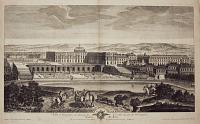
Vuë et Perspective de Château de Versailles du côté de l'Orangerie. Dédié Au Roy par son tres humble tres obeissant et tres fidéle Serviteur et Sujet, P. Menant.
Dessiné et Gravé d'apres le naturel par P. Menant.
Se vend chez P. Menant aux grandes Ecuries du Roy à Versailles. [n.d., c.17200.]
Engraving. 360 x 595mm (14¼ x 23½"). Tears in very large margins.
An elevated view of the Palace of Versailles, looking towards the Orangerie.
[Ref: 38182] £390.00
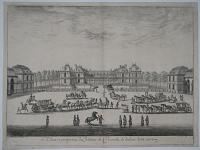
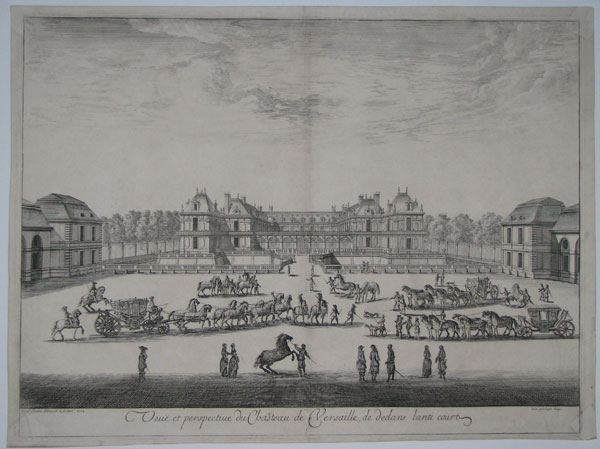
Veue et perspective du Chasteau de Versaille, de dedans lanti court.
Israel Silvestre delineavit et sculpsit. 1664.
Cum privilegio Regis. [n.d. c.1715.]
Copper engraving. Plate 375 x 495mm. 14¾ x 19½". Centre fold as normal.
The Palace of Versailles, Paris, France, with regal horse drawn carriages on the forecourt. From De Mortain's "Les Plans, Profils et Elevations de Versailles".
[Ref: 23295] £240.00
(£288.00 incl.VAT)
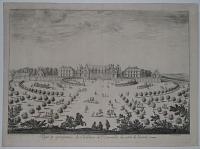
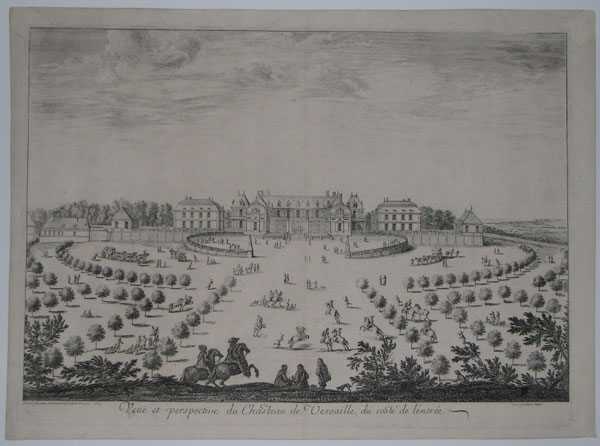
Veue et perspectuve du Chasteau de Versaille, du coste de l'entree.
Israel Silvestre, delineavit et Sculpsit Parisis 1664.
Cum privilegio Regis. [n.d. c.1715.]
Engraving. Plate 355 x 490mm. 14 x 19¼". Centre fold.
A view of the Palace of Versailles, Paris, France from the entrance. From De Mortain's "Les Plans, Profils et Elevations de Versailles".
[Ref: 23299] £280.00
(£336.00 incl.VAT)
![Bereau de Treillage du Labyrinthe a Versailles. [in sepia ink]](img-thumbnail/jpegs/62834.jpg)
Bereau de Treillage du Labyrinthe a Versailles. [in sepia ink]
[after Adam Perelle]
Paris chez N. Langlois rüe St Jacques à la Victoire avec Privilege.[in speia ink] [n.d. c.1700]
Hand coloured etching, plate 205 x 195mm (8¼ x 7¾"). Large margins.
A view most likely from "Receuille des plus belles veües des maisons royale de France," published by Langlois.
[Ref: 62834] £70.00
(£84.00 incl.VAT)

Un amour de bronze qui tire une flèche d'eau à Versailles.
de Lespine ex. Cum Privilegio Ordin: Hollandiae et West-Frisiae [n.d., 1717].
Engraving. 385 x 495mm (15¼ x 19½"). Folds, tears taped.
An illustration of the fountain featuring Cupid drawing his bow, the jet of water replacing his arrow. It was created by Louis Lerambert (1620-70) for the pool of the Parterre des Fleurs in the gardens of the Palace of Versailles.
[Ref: 62143] £280.00
(£336.00 incl.VAT)

Interieure de la Chapelle Royale de Versailles.
[n.d., c.1760.]
Engraving. 220 x 205mm (8¾ x 8") very large margins. Crease left hand corner.
The interior of the chapel of the Palace of Versailles.
[Ref: 60918] £180.00
(£216.00 incl.VAT)
![[Set of six views of Versailles.] Diverses Vues du Chateau de Versailles.](img-thumbnail/jpegs/38425.jpg)
[Set of six views of Versailles.] Diverses Vues du Chateau de Versailles. 1. Vuë prise de la grandes avenue entre les deux Ecuries. [&] 2. Vue des Ecuries de Versailles prise de la Seconde Grille. [&] 3. Vüe Particuliere de la Châpelle du Chateau de Versailles. [&] 4. Vue du Chateau de Versailles Prise du Côte de la Terrace vis à Vis la Chapelle. [&] 5. Vuë du Chateau et d'une partie de la Ville de Versailles du Côte de l'Estang. [&] 6. Vüe du Château de Versailles du Côte de l'Orangerie.
Dessiné et Gravé par J. Rigaud.
Avec Privilege du Roy. [Published by Rigaud c.1730.]
Set of six numbered engravings. Each 260 x 490mm (10¼ x 19¼"), very large margins.
A fine set of six views of the Palace of Versailles drawn and engraved by Jacques Rigaud (1681-1754). He depicts the huge complex of buildings as the centre of French society, with each scene filled with the participants in Louis XV's court as well as the workers who made it function. Rigaud spent twenty years on his vast 'The Royal Houses of France', which also included the châteaux of Marly, Fontainbleau, St Cloud and Meudon.
[Ref: 38425] £2,400.00
view all images for this item
![[Set of six views of Versailles.] Endroits Remarquables du Jardin et du Parc de Versailles.](img-thumbnail/jpegs/38427.jpg)
[Set of six views of Versailles.] Endroits Remarquables du Jardin et du Parc de Versailles. 7. Vuë de lde l'Orangerie de Versailles. [&] 8. Vuë du Bassin de Latone prise au bord de la Terrasse du Château. [&] 9. Vue de Bassin de Neptune dans le Jardins de Versailles. [&] 10. Vüe de Trianon dans le Parc de Versailles du Côté de l'Avenue. [&] 11. Vuë du Château de Trianon de Coté du Parterre. [&] 12. Vüe du Paÿsage et der la Maison Royalle de S.t Cir.
J. Rigaud In. Sculp.
Avec Privilege du Roy. [Published by Rigaud c.1730.]
Set of six numbered engravings. Each 260 x 490mm (10¼ x 19¼"), very large margins.
A fine set of six views of the buildings and features of the Palace of Versailles, drawn and engraved by Jacques Rigaud (1681-1754). He depicts Louis XV's court at rest in the sumptuous surroundings. The final view is from the park looking towards the Maison royale de Saint-Louis, the boarding school for girls set up by Louis XIV. Rigaud spent twenty years on his vast 'The Royal Houses of France', which also included the châteaux of Marly, Fontainbleau, St Cloud and Meudon.
[Ref: 38427] £2,400.00
view all images for this item
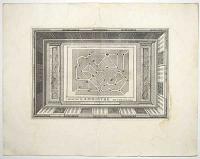
Plan du Labirinthe de Versailles.
A Liede, Chez Pierre Vander Aa, Marchand Libraire [n.d., 1728].
Engraved map with separately-engraved printed border. Total 220 x 330mm (8¾ x 13"), with large margins. Split in inner plate mark, damp stain in margin.
A plan of the hedge maze grown in the Gardens of Versailles, laid out 1672-7. The thirty-nine fountains, each representing one of the fables of Aesop, are numbered, unfortunately without a key. From Pieter van der Aa's monumental 66-volume 'Galerie Agréable du Monde', noted for the additional frame-like borders around each plate. It is said only one hundred copies were printed. See Ref: 26900
[Ref: 59196] £180.00

Plan General de la Ville Chateau Jardins et Parc de Versailles nouvellement levé sur les lieux.
AParis chez Jombert rue Dauphine [n.d., c.1740].
Engraved plan. 420 x 435mm (16½ x 17¼"). Damage at top with loss of printed area. Creases as normal.
A finely-engraved plan of Versailles, showing the positions of the house, ornamental gardens and parkland, with an extensive key.
[Ref: 63861] £220.00
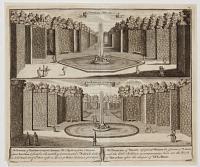
w. The Fountain of Bacchus. The Fountain of Bacchus represents Autumn, The Basin is of an Octogne figure Bacchus is seated in the middle of it surrounded wth Satirs he holds a cup in his hand of wch there arises a Spout of Water Nineteen foot high. The Fountain of Saturn. The Fountain of Saturn represents Winter the figures of Saturn and the little Children accompanying him are the Work of Girardon after the designs of Mr. Le Brun.
[London. Printed & Sold by John Bowles Print & Map Seller at Mercers Hall in Cheapside, 1726.]
Engraving with small margins. Plate 222 x 272mm (8¾ x10¾"). Folds and creasing, small chip to paper lower left.
Bacchus Fountain, also called the Autumn fountain, one of the four dedicated to the seasons and near the Royal Walk. Bacchus, a figure of Roman mythology, teaches the cultivation of the vine throughout the world. The god of wine and drunkenness, he symbolises the harvest and is surrounded by small satyrs, half child and half goat. [&] The Saturn fountain, located at the south end, was sculpted by Francois Girardon and symbolises the season of Winter. Saturn is seated on a throne in the centre, surrounded by small cupids, on an island studded with shellfish. From "Versailles Illustrated, or Divers Views of the Several Parts of the Royal Palace of Versailles; as likewise of all the Fountains, Groves, Parterras, ye Labyrinth & other ye most Beautiful Parts of the Gardens, Wherein are represented whatever is remarkable whether Statues, Groups of Figures, Water Fall, Pleasure Houses, &c. Drawn on the Spot by the Order & with the Approbation of the French King".
[Ref: 28528] £60.00
(£72.00 incl.VAT)
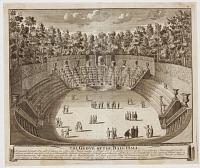
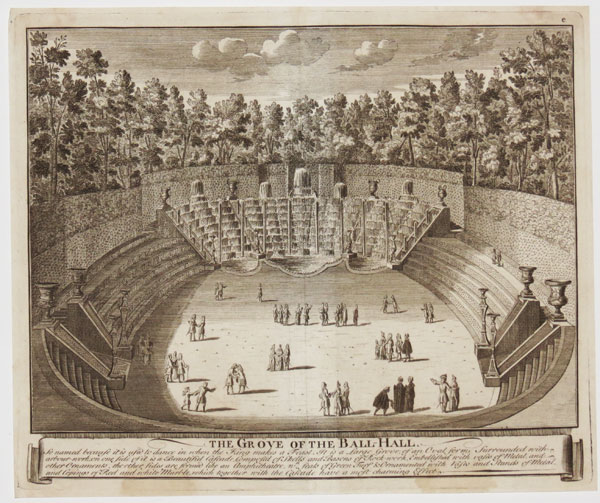
e. The Grove of the Ball-Hall. So named because it is used to dance in when the King makes a Feast. It is a Large Grove of an Oval form, Surrounded with arbour-work; on one Side of it is a Beautiful Cascade, Composed of Shells and Basons of Rock-work, Embellished with vases of Metal, and other Ornaments, the other Sides are formed like an Amphitheatre, w.th Seats of Green Turf & Ornamented with Vases and Strands of Metal, and Copings of Red and white Marble, which together with the Cascade have a most charming Effect.
[London. Printed & Sold by John Bowles Print & Map Seller at Mercers Hall in Cheapside, 1726.]
Engraving with small margins. Plate 222 x 272mm (8¾ x10¾"). Fold, some staining along lower edge.
The Ballroom. Laid out by André Le Nôtre between 1680 and 1683, the open-air Cascade Ballroom is also called the Rocaille Grove, because of the millstones and the sea shells brought back from the coasts of Africa and Madagascar over which the water pours down in a cascade. The marble “island” in the centre, easily accessible, was used for dancing, an art in which Louis XIV excelled. The musicians played above the cascade and, facing them, an amphitheatre with grassy rows of seats enabled the spectators to sit down. From "Versailles Illustrated, or Divers Views of the Several Parts of the Royal Palace of Versailles; as likewise of all the Fountains, Groves, Parterras, ye Labyrinth & other ye most Beautiful Parts of the Gardens, Wherein are represented whatever is remarkable whether Statues, Groups of Figures, Water Fall, Pleasure Houses, &c. Drawn on the Spot by the Order & with the Approbation of the French King".
[Ref: 28544] £80.00
(£96.00 incl.VAT)

n. The Baths of Apollo. So calld from 3 Groups of white marble, the middle most of which represents Apollo at the Apartment of Thetis attended, by the Nymphs of that Goddess who are platting his hair, washing his feet &c. the other two Groups are Compos'd of Tritons watering the Horses of the Sun; in the Group on the left hand the Carver has represented two Horses, one of which Rears up on end, & a Triton in order to hold him, lifts up his Brawny Arme with great force and spirit this Group is perform’d by Tuby and is Esteem’s a most Excellent piece of Work ye Canopy’s over these 3 Groups are Brass Gilt.
[London. Printed & Sold by John Bowles Print & Map Seller at Mercers Hall in Cheapside, 1726.]
Engraving with small margins. Plate 222 x 272mm (8¾ x10¾"). Fold.
The Grove of Apollo's Baths. This grove, formerly called the Marsh, was laid out during the reign of Louis XIV, between 1670 and 1673, at the request of Mme de Montespan, it is said. In 1704, Jules Hardouin-Mansart designed for this place a new grove intended to host the groups of the Sun Horses and Apollo served by the Nymphs. These groups were sculpted between 1664 and 1672 to adorn the famous Grotto of Tethys, and when the latter was destroyed to build the north wing of the Château, it was transferred to the Grove of the Domes. Hardouin-Mansart then designed this place to highlight these particularly remarkable works. In 1776, one year after the order given by Louis XVI to replant the park, the painter Hubert Robert was commissioned to produce a new layout. The grove which he imagined, completed in 1778, was laid out in the then fashionable style of English-Chinese gardens. This one has survived to our day. From "Versailles Illustrated, or Divers Views of the Several Parts of the Royal Palace of Versailles; as likewise of all the Fountains, Groves, Parterras, ye Labyrinth & other ye most Beautiful Parts of the Gardens, Wherein are represented whatever is remarkable whether Statues, Groups of Figures, Water Fall, Pleasure Houses, &c. Drawn on the Spot by the Order & with the Approbation of the French King".
[Ref: 28535] £80.00
(£96.00 incl.VAT)
k. The Fountain of Enceladus. It is an oval Basin border’d with Turf, in the middle of it that Giant is represented cover’d w.th those Mountains w.ch he & his Companions had gathered together in order to Scale the Heavens. Out of his Mouth there proceeds a Spout of Water 70 foot high & of an extraordinary largeness. The Figure is Brass gilt & four times as big as the Life. It was design’d by Le Brun and cast from the Models of Gasper Marsy and is perfectly well done.
J. Bowles Excud.
[London. Printed & Sold by John Bowles Print & Map Seller at Mercers Hall in Cheapside, 1726.]
Engraving with small margins, paper watermarked. Plate 222 x 272mm (8¾ x10¾"). Fold.
The Encelade Grove. The Encelade Fountain was sculpted in lead by Gaspard Marsy between 1675 and 1677. The subject is taken from the myth of the fall of the Titans who were buried under the rocks of Mount Olympus which they tried to climb in defiance of the prohibition of Jupiter. The sculptor has depicted a giant half buried under the rocks and in the throes of death. From "Versailles Illustrated, or Divers Views of the Several Parts of the Royal Palace of Versailles; as likewise of all the Fountains, Groves, Parterras, ye Labyrinth & other ye most Beautiful Parts of the Gardens, Wherein are represented whatever is remarkable whether Statues, Groups of Figures, Water Fall, Pleasure Houses, &c. Drawn on the Spot by the Order & with the Approbation of the French King".
[Ref: 28538] £80.00
(£96.00 incl.VAT)

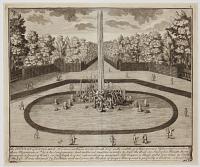
l. The Fountain of the Obelisk. The place where this mountain of Water is, was formerly call’d the Hall of Banquets, but is name & form are both now chang’d. This prodigious Spout of Water rises 75 foot high & is compos’d of 231 small Spouts closely joyn’d, on every side the Water flows over several Steps into a Canal that surrounds the Basin & very agreably forms 4 Cascades.
J. Bowles Excudit.
[London. Printed & Sold by John Bowles Print & Map Seller at Mercers Hall in Cheapside, 1726.]
Engraving with small margins, paper watermarked. Plate 222 x 272mm (8¾ x10¾"). Fold.
The Obelisk Grove. The Obelisk fountain was built by Jules Hardouin-Mansart in 1704, to replace the old Festive Room or Council Room, laid out by Le Nôtre in 1671. Decorative features and sculptures in moulded lead were used at the time to adorn the fountains of the garden of the Grand Trianon. From "Versailles Illustrated, or Divers Views of the Several Parts of the Royal Palace of Versailles; as likewise of all the Fountains, Groves, Parterras, ye Labyrinth & other ye most Beautiful Parts of the Gardens, Wherein are represented whatever is remarkable whether Statues, Groups of Figures, Water Fall, Pleasure Houses, &c. Drawn on the Spot by the Order & with the Approbation of the French King".
[Ref: 28537] £80.00
(£96.00 incl.VAT)
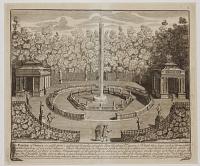
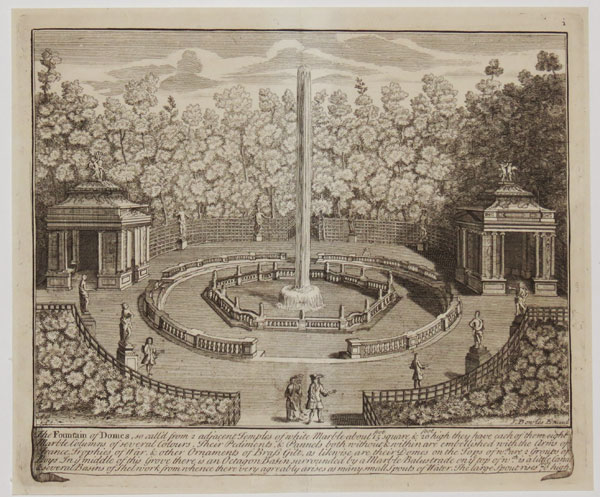
i. The Fountain of Dome, so call’d from 2 adjacent Temples of white Marble about 15 foot square & 20 foot high they have each of them eight Marble Columns of several Colours. Their Pediments & Pannels both without & within are embellished with the Arms of France, Trophies of War, & other Ornaments of Brass Gilt, as likewise are their Domes on the Tops of w.ch are 2 Groups of Boys. In ye middle of this Grove there is an Octagon Basin surrounded by a Marble Balustrade on yes top of w.ch is a little Canal & several Basins of Shelwork from whence there very agreably arises as many small Spouts of Water. The large Spout rises 70 foot high.
J. Bowles Excud.
[London. Printed & Sold by John Bowles Print & Map Seller at Mercers Hall in Cheapside, 1726.]
Engraving with small margins, paper watermarked. Plate 222 x 272mm (8¾ x10¾"). Fold.
The Grove of Domes. Very frequently redesigned, this grove changed its name with each new modification of its decor. Designed by Le Nôtre in 1675, it was then the Grove of Fame, in 1677-1678, owing to the statue of Fame in the centre of the fountain and which spouted a jet of water from its trumpet. Between 1684 and 1704, the groups from Apollo’s Baths were placed here, giving it its new name in this period: the Grove of Apollo’s Baths. But in 1677, Jules Hardouin-Mansart built two pavilions of white marble surmounted by domes, giving it is present name, although the two buildings were destroyed in 1820. From "Versailles Illustrated, or Divers Views of the Several Parts of the Royal Palace of Versailles; as likewise of all the Fountains, Groves, Parterras, ye Labyrinth & other ye most Beautiful Parts of the Gardens, Wherein are represented whatever is remarkable whether Statues, Groups of Figures, Water Fall, Pleasure Houses, &c. Drawn on the Spot by the Order & with the Approbation of the French King".
[Ref: 28540] £80.00
(£96.00 incl.VAT)

Le Labyrinte De Versailles.
Paris chez N. Langlois rüe St Jacques à la Victoire avec Privilege du Roy. [n.d. c.1700]
Engraving, plate 250 x 345mm (10 x 14½"), with margins. Repaired tears.
A map most likey from "Receuille des plus belles veües des maisons royale de France," published by Langlois. See Ref: 62862
[Ref: 62863] £130.00

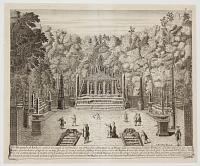
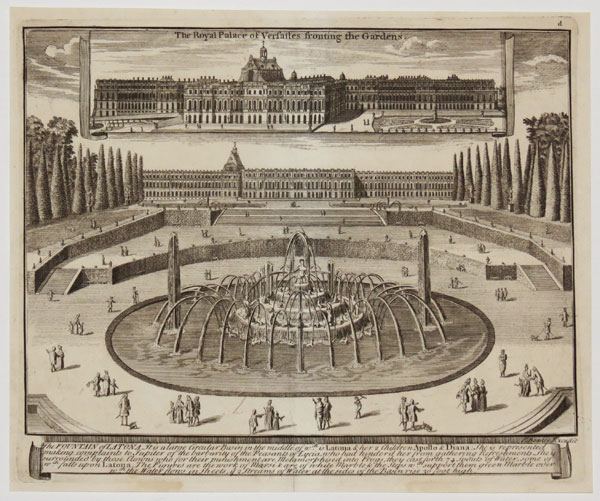
d. The Royal Palace of Versailles fronting the Gardens. The Fountain of Latona. It is a large Circular Basin in the middle of w.ch is Latona & her 2 Children Apollo & Diana: She is represented making complaints to Jupiter of the barbarity of the Peasants of Lycia, who had hinder’d her from gathering Refreshments. She is surrounded by those Clowns who for their punishment are Metamorphised into Frogs, they cast forth 74 Spouts of Water, some of w.ch falls upon Latona. The Figures are the work of Marsi & are of white Marble & the Steps w.ch support them green Marble over w.ch the Water flows in Sheets, ye 2 Streams of Water at the sides of the Basin rise 30 foot high.
J. Bowles Excudit.
[London. Printed & Sold by John Bowles Print & Map Seller at Mercers Hall in Cheapside, 1726.]
Engraving with small margins, paper watermarked. Plate 222 x 272mm (8¾ x10¾"). Fold, some staining along lower edge.
The front facade of the Palace of Versailles. The Latona Fountain. Inspired by Ovid’s Metamorphoses, the Latona fountain illustrates the legend of Apollo’s mother and Diana protecting her children against the insults of the peasants of Lycia, and calling on Jupiter to avenge them. He heard their plea and transformed them into frogs and lizards. The central marble group sculpted by the Marsy brothers represents Latona and her children. The group was originally placed on a rock in 1670. It was surrounded by six frogs emerging partly from the water, and twenty-four others around the fountain on the lawn. The goddess then looked towards the Château. This arrangement was modified by Jules Hardouin-Mansart between 1687 and 1689. The rock was replaced on a concentric marble base and the Latona group henceforth gazes towards the Grand Canal. The Latona fountain is prolonged by a parterre holding the two lizard pools. From "Versailles Illustrated, or Divers Views of the Several Parts of the Royal Palace of Versailles; as likewise of all the Fountains, Groves, Parterras, ye Labyrinth & other ye most Beautiful Parts of the Gardens, Wherein are represented whatever is remarkable whether Statues, Groups of Figures, Water Fall, Pleasure Houses, &c. Drawn on the Spot by the Order & with the Approbation of the French King".
[Ref: 28545] £90.00
(£108.00 incl.VAT)
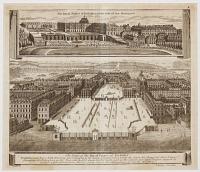
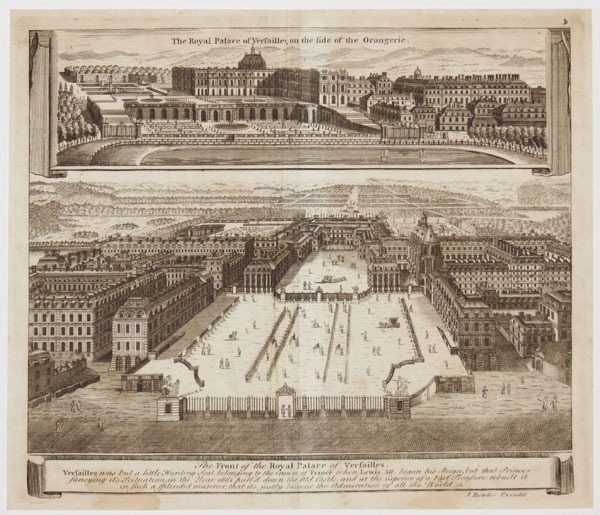
b. The Royal Palace of Versailles, on the side of the Orangerie. The Front of the Royal Palace of Versailles. Versailles was but a little Hunting Seat belonging to the Crown of France when Lewis XII began his Reign, but that Prince fancying its Situation in the year 1661 pull’d down the Old Castle, and at the Expence of a Vast Treasure rebuilt it in such a Splendid manner, that it’s justly became the Admiration of all the World.
J. Bowles Excudit.
[London. Printed & Sold by John Bowles Print & Map Seller at Mercers Hall in Cheapside, 1726.]
Engraving with small margins. Plate 233 x 272mm (9¼ x10¾"). Fold, some staining along lower edge.
The Orangerie; built by Jules Hardouin-Mansart between 1684 and 1686 to replace the small orangery built by Le Vau in 1663, it consists of a central vaulted gallery 150 metres long, prolonged by two side galleries located under the stairways of the Cent-Marches. The building is lit by large windows. The Orangerie Parterre covers no less than three hectares. In the reign of Louis XIV it was decorated with sculptures now kept in the musée du Louvre. Consisting of six sections of lawn and a circular pool, in the summer it features 1,055 trees in boxes, including palm trees, oleanders, pomegranate trees, eugenias and orange trees that spend the winter inside the building. The Palace of Versailles; the site began as Louis XIII’s hunting lodge before his son Louis XIV transformed and expanded it, moving the court and government of France to Versailles in 1682. Each of the three French kings who lived there until the French Revolution added improvements to make it more beautiful. From "Versailles Illustrated, or Divers Views of the Several Parts of the Royal Palace of Versailles; as likewise of all the Fountains, Groves, Parterras, ye Labyrinth & other ye most Beautiful Parts of the Gardens, Wherein are represented whatever is remarkable whether Statues, Groups of Figures, Water Fall, Pleasure Houses, &c. Drawn on the Spot by the Order & with the Approbation of the French King".
[Ref: 28547] £95.00
(£114.00 incl.VAT)
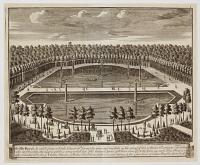
f. The Isle Royal, so call’d from a little Island w.ch formerly was in ye middle of the great Pond of Water w.ch contains 780 Feet in length &160 in breadth, the nearer pond is some what less. The largest Spout of Water rises 47 Feet, & the lesser 44 each. This Place is not only considerable for ye 2 large Basins of Water, but likewise for several Statues, & for 2 fine Vases of white Marble done by Le Fevre & Legeret.
[London. Printed & Sold by John Bowles Print & Map Seller at Mercers Hall in Cheapside, 1726.]
Engraving with small margins, paper watermarked. Plate 222 x 272mm (8¾ x10¾"). Fold.
The large ornamental lake called Cupid's Island or the Royal Island (1674) on which were test scale models of warships. Completely neglected during the Revolutionary years, it was redesigned on the order of Louis XVIII in 1817, when the architect Dufour laid out the King’s Garden, an enclosed garden laid out in the English style, planted with superb tree species most of which, unfortunately, were blown down in the great storm of 1999. All that remains today is the original layout of the Mirror fountain. From "Versailles Illustrated, or Divers Views of the Several Parts of the Royal Palace of Versailles; as likewise of all the Fountains, Groves, Parterras, ye Labyrinth & other ye most Beautiful Parts of the Gardens, Wherein are represented whatever is remarkable whether Statues, Groups of Figures, Water Fall, Pleasure Houses, &c. Drawn on the Spot by the Order & with the Approbation of the French King".
[Ref: 28543] £80.00
(£96.00 incl.VAT)
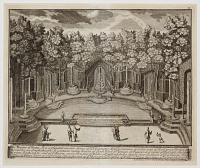
m. The Theater of Water. It is a pleasant circular Grove of 156 feet Diameter. Half ye entrance of it has seats of Turf, green Portico’s & resembles an Amphiteahter. It contains many Basins of Rock Work w.th Groups of Figures in ye midst of y:in of little Children at play, Bathing, &x. out of ye Basins arise Streams of Water w.ch falling down again, flow in Sheets over ye Basins. The 3 ally’s of Water have a surprising Effet, for out of ym there projects spouts of Water, w.ch vary four times w.th a great deal of Art.
[London. Printed & Sold by John Bowles Print & Map Seller at Mercers Hall in Cheapside, 1726.]
Engraving with small margins. Plate 222 x 272mm (8¾ x10¾"). Fold.
The Green Round Grove. The Water Theatre was laid out between 1671 and 1674 by Le Nôtre, backed up by the hydraulics engineers Francine and Denis, while the fountains were designed by Le Brun. It consisted of a large almost round area with two semicircular amphitheatres with tiers of seats and separated by an oblong pool divided into two levels of water. The semicircular stage was framed by three triangular cascades falling in tiers, adorned with varied seashells and numerous water spouts. At the top and the bottom of the cascades were fountains decorated with lead sculptures. In 1677, the amphitheatres seating the spectators were surrounded by 18 round rocaille pools, each with a spout of water reaching up to arcades of greenery planted between 1680 and 1688. During the replanting ordered by Louis XVI in 1775, the very damaged Water Theatre was destroyed and the grove was replaced by the Round green (“Rond-vert”). "Versailles Illustrated, or Divers Views of the Several Parts of the Royal Palace of Versailles; as likewise of all the Fountains, Groves, Parterras, ye Labyrinth & other ye most Beautiful Parts of the Gardens, Wherein are represented whatever is remarkable whether Statues, Groups of Figures, Water Fall, Pleasure Houses, &c. Drawn on the Spot by the Order & with the Approbation of the French King".
[Ref: 28536] £80.00
(£96.00 incl.VAT)
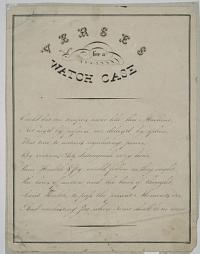
Verses for a Watch Case. Could but our tempers move like this Machine, Not urg’d by passion, nor delay’d by spleen; But true to nature's regulating power, By virtuous Acts distinguish every hour. Then Health & Joy would follow as they ought, The laws of motion and the laws of thought; Sweet Health, to pass the present Moments o'er, And everlasting Joy, when Time shall be no more.
[n.d. c.1727.]
Manuscript, 242 x 188mm. 9½ 7½". Laid down on album sheet. Crease and some smudging.
John Byrom (1692-1763) was an English poet and the inventor of a revolutionary system of shorthand. In 1742, His Majesty George II secured him as the sole right of publishing for a certain term of years the art and method of shorthand. His system was published posthumously as "The Universal English Shorthand". This particular poem was later used as example for Byrom's shorthand.
[Ref: 18389] £160.00
(£192.00 incl.VAT)

A Copy of Verses for the Year 1847, Humbly Presented to the Worthy Inhabitants of the Borough fo High Wycomb, by J. Cooper & W. Venables, Night Police. Prologue... On St.Luke... On St. Andrew... On St. Thomas... On Christmas Eve... On Christmas Day... On St. Stephen... On St. John... On The New Year... On the Queen... On the Times... To My Masters and Mistresses... To the Young Men... To the Maids... Epilogue.
London: Printed by John Vandenburgh Quick, 5, Weston Place, King's Cross. (First printed, 1721.)
Engraving and letterpress. 571 x 438mm. 22½ x 17¼". Horizontal crease and part tear.
Religious verses accompanied by twelve little religious scenes.
[Ref: 15274] £140.00
(£168.00 incl.VAT)
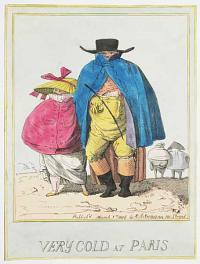
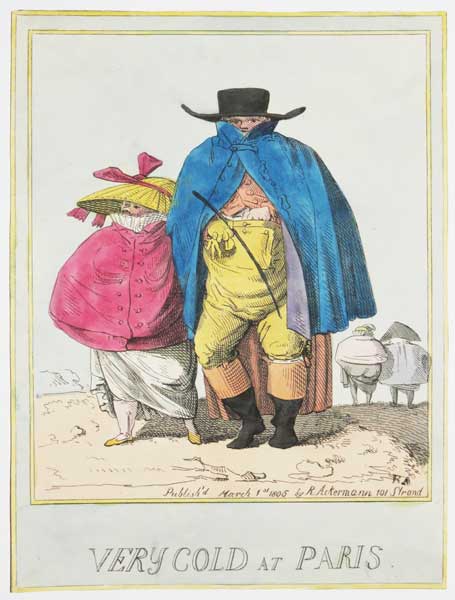
Very Cold at Paris.
Publish'd March 1st 1806 by R. Ackermann 101 Strand.
Hand-coloured etching. Sheet: 300 x 225mm (11¾ x 9''). Trimmed within plate, damage and very small hole in image. Remains of album sheet verso.
A caricature portrait of two figures, probably English, in Paris, shown with their coats pulled up around their faces. Perhaps a copy of a French print. BM Satire 10649.
[Ref: 50782] £160.00
(£192.00 incl.VAT)
![Quite Well! [&] Very Ill!](img-thumbnail/jpegs/31479.jpg)
Quite Well! [&] Very Ill!
London Published by J.L. Marks, 17 Artillery Street, Bishopsgate. [n.d., c.1830.]
Pair of coloured aquatints mounted on one blue Regency album sheet. Each c. 170 x 145mm (6¾ x 5¾"). Trimmed.
Two men raising drinks.
[Ref: 31479] £160.00
(£192.00 incl.VAT)
view all images for this item
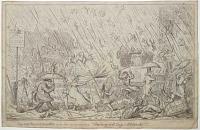
Very unpleasant Weather, or the old saying verified ''Raining Cats, Dogs & Pitchforks.''!!!
Cruikshank fecit.
Pub.d April 27 1820 by G.Humphrey 27 St James's Street London.
Etching. Sheet 245 x 375mm (9¾ x 14¾"). Trimmed to printed border, partly pasted on album paper.
A heavy slanting downpour composed of cats, dogs, and pitchforks descends on a road filled with pedestrians, causing chaos. BM Satires 14084; Cohn 2074.
[Ref: 60963] £180.00
(£216.00 incl.VAT)

Very Wet! N.o 21.
London Published by J.L. Marks, 17 Artillery Street, Bishopsgate. [n.d., c.1825.]
Coloured aquatint, sheet 195 x 155mm (7¾ x 6"). Trimmed.
A weather caricature: a woman with an inefffectual umbrella walks in a windy downpour.
[Ref: 58438] £65.00
(£78.00 incl.VAT)

Madame Very Restaurateur. Palais Royal Paris. La Belle Liminaudiere au Caffee de Mille Collone, Palais Royale Paris.
Rowlandson Scul. J.N. [John Nixon]
[London, Thomas Tegg, 1814 but later.]
Coloured etching. 350 x 250mm (13¾ x 9¾").
Two scenes of Parisian high life on one plate: above is Madame Very, the foremost restaurateur of the period; below is Madame Romain, who presided over the Café des Mille Colonnes, renowned for its gilt columns and mirrors. Usually the two scenes are found separately. John Nixon visited Paris in 1814 after the fall of Napoleon. BM Satires 12409 & 12410.
[Ref: 41132] £320.00
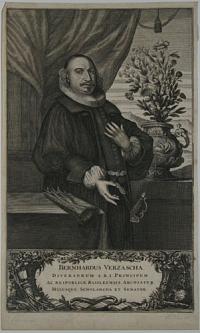
Bernhardus Verzascha, Diversorum S.R.I. Pincipum Ac Reipublicae Basileensis. Archiater Huiusque Scholarcha et Senator.
[in pencil outside the image] Merian de. Kilian sc.
[n.d. c.1700.]
Copper engraving, very scarce, 335 x 203mm. 13¼ x 8".
Bernard Verzascha (1627-1680) Swiss medic. Wellcome: 9395i
[Ref: 15064] £140.00
(£168.00 incl.VAT)
![[Andreas van Wesel] Andreas Vesalius.](img-thumbnail/jpegs/40004.jpg)
[Andreas van Wesel] Andreas Vesalius.
Esme de Boulonois, fecit.
[n.d., 1682.]
Engraving. Sheet size: 185 x 135mm (7¼ x 5½"). Trimmed inside plate. Laid on backing sheet.
A portrait of the anatomist Andreas van Wesel (1514-64), Latinised as Andreas Vesalius, author of the highly influential 'De humani corporis fabrica'. Published in Isaac Bullart's 'Académie des Sciences et des Arts'. He is often considered to be the founder of modern human anatomy. Starting his study in Paris where he later moved to Padua for his doctorate. Upon completion in 1537 he was immediately offered the chair of surgery and anatomy. He took his studies further by understanding the correlation between surgery and anatomy, by performing dissections himself and producing detailed charts for his students. Vesalius' pamphlet on blood letting , for the treatment of various illnesses, underlined the importance of understanding the structure of the body in medicine. After many years he chose to take up medical practice and he became physician to the Imperial Court of Emperor Charles V and in 1555 took service with Charles' son, Philip II of Spain. In 1564 he left to tour the Holy Land but died in October on the island of Zakynthos during the journey home. Wellcome: 3051/9.
[Ref: 40004] £95.00
(£114.00 incl.VAT)
![Wm. V Fitz - Gerald [facsimile signature]](img-thumbnail/jpegs/8309.jpg)
Wm. V Fitz - Gerald [facsimile signature] The Right Honble. W. R. Vesey Fitz-Gerald. Engraved from the original picture presented to him by the inhabitants of Horsham and others, on his departure from England to assume the Governorship of Bombay.
Painted by John Lucas. Engraved by Saml. Bellin.
London Published by Thomas Mc.Lean, 7 Haymarket, and Thomas Jull, Horsham, Decb. 12th. 1867.
Mixed-method engraving. 492 x 386mm. 19" 1/3 x 15¼".
Sir William Robert Seymour Vesey-FitzGerald, GCSI, GCIE PC (1818 - 28 June 1885) was a British politician and Member of Parliament for Horsham. FitzGerald was an illegitimate child of William Vesey-FitzGerald, 2nd Baron FitzGerald and Vesey. He studied at both Christ Church, Oxford and Oriel College, Oxford, graduating with a degree in Classics in 1837. FitzGerald was elected member for Horsham in 1848, but was unseated on petition. In 1852 he was once again elected for Horsham and was able to hold the seat until 1865. During this time he served as Under Secretary for Foreign Affairs. In 1866, he was appointed as Governor of Bombay and was elevated to the Privy Council of the United Kingdom and made a Knight Commander of the Order of the Star of India and Knight Grand Commander of the Order of the Indian Empire. On his return to Britain, he again served Horsham as MP from 1874 to 1875. In 1875 he was appointed Chief Charity Commissioner. AP: 42. LP: 25. PSA.
[Ref: 8309] £120.00
(£144.00 incl.VAT)
![[William Vesey Fitzgerald]](img-thumbnail/jpegs/8313.jpg)
[William Vesey Fitzgerald]
[Painted by John Lucas. Engraved by Saml. Bellin.]
[London Published by Thomas Mc.Lean, 7 Haymarket, and Thomas Jull, Horsham, Decb. 12th. 1867.]
Mixed-method engraving on india. Proof before all letters. 521 x 407mm. 20½" x 16".
Sir William Robert Seymour Vesey-FitzGerald, GCSI, GCIE PC (1818 - 28 June 1885) was a British politician and Member of Parliament for Horsham. FitzGerald was an illegitimate child of William Vesey-FitzGerald, 2nd Baron FitzGerald and Vesey. He studied at both Christ Church, Oxford and Oriel College, Oxford, graduating with a degree in Classics in 1837. FitzGerald was elected member for Horsham in 1848, but was unseated on petition. In 1852 he was once again elected for Horsham and was able to hold the seat until 1865. During this time he served as Under Secretary for Foreign Affairs. In 1866, he was appointed as Governor of Bombay and was elevated to the Privy Council of the United Kingdom and made a Knight Commander of the Order of the Star of India and Knight Grand Commander of the Order of the Indian Empire. On his return to Britain, he again served Horsham as MP from 1874 to 1875. In 1875 he was appointed Chief Charity Commissioner AP: 42. LP: 25. PSA.
[Ref: 8313] £120.00
(£144.00 incl.VAT)
![[William Vesey-Fitzgerald.]](img-thumbnail/jpegs/37336.jpg)
[William Vesey-Fitzgerald.]
[Charles J. Tomkins.]
London Published Feb.y 1885 by Henry Graves & Co. the Proprietors. Publishers to H.M the Queen and T.R.H. the Prince & Princess of Wales. 6 Pall Mall.
Mezzotint. Very rare. 'Printsellers Assosiation' blind stamp in lower right corner.Sheet size: 415 x 310mm (16¼ x 12¼"). Trimmed inside platemark.
A portrait of William Gerald Seymour Vesey-Fitzgerald (1841 - 1910), half-length, seated, directed to the right, facing the viewer, his left hand placed inside his jacket, holding papers with his right. Vesy-Fitzgerald was a political ADC to the Secretary of State for India. AP.25 P.25. B.L.I. 25.
[Ref: 37336] £230.00
(£276.00 incl.VAT)
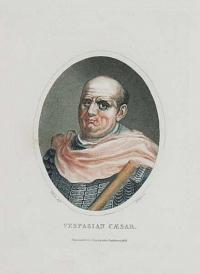
Vespasian Cæsar.
Titian del.t. J.Pass sc.
Engraved for the Encyclopedia Londinensis, 1826.
Colour printed stipple with engraving. 180 x 135mm, 7 x 5¾".
Oval portrait of Titus Flavius Caesar Vespasianus Augustus (9-79), after Titian. He was the Roman general in charge of Claudius's invasion of Britain in AD 43 and the suppression of the Great Jewish Revolt of AD 66–70. After the assassination of Nero in 68, the throne was seized by Galba, who was murdered by Otho, who was defeated by Vitellius, in turn defeated by Vespasian. When the Senate proclaimed Vespanian Emperor in December AD 69 he was the fourth emperor in a year. The 'Encyclopedia Londonensis' was published from 1796 to 1829, compiled by John Wilkes, edited by John Jones.
[Ref: 18552] £80.00
(£96.00 incl.VAT)
![[Vespasian.] Imp. Caes. Vespasian. Aug. P. M. Tr. P. P. P. Cos. III.](img-thumbnail/jpegs/49698.jpg)
[Vespasian.] Imp. Caes. Vespasian. Aug. P. M. Tr. P. P. P. Cos. III.
[Wolfgang Kilian.][After Raffaello Schiaminossi.]
[n.d., c.1620.]
Engraving. Sheet: 205 x 130mm (8 x 5''). Trimmed and laid on album sheet.
A portrait of Vespasian from a series of thirteen busts of Roman Emperors engraved by Wolfgang Kilian (1581-1662) after Raffaello Schiaminossi.
[Ref: 49698] £120.00
(£144.00 incl.VAT)
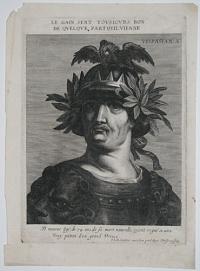
Vespasian. X. Le gain sent toujours bon de quelque part q'uil Vienne.
F.L.D. Ciartres excudit Cum privegio Regis Christianiss.
Copper engraving. 280 x 200mm, 11 x 8".
Vespasian, the tenth Roman emperor, by François Langlois (1589-1647), called Ciartres.
[Ref: 19850] £140.00
(£168.00 incl.VAT)
![[Vespasian.] Imp. T. Caes. Vespas. Aug. P. M. Tr. P. P. P.](img-thumbnail/jpegs/49700.jpg)
[Vespasian.] Imp. T. Caes. Vespas. Aug. P. M. Tr. P. P. P. Felix imperio, felix breuitate regendi...
[Wolfgang Kilian.][After Raffaello Schiaminossi.]
[n.d., c.1620.]
Engraving. Sheet: 205 x 130mm (8 x 5''). Trimmed and laid on album sheet, stained.
A portrait of Vespasian from a series of thirteen busts of Roman Emperors engraved by Wolfgang Kilian (1581-1662) after Raffaello Schiaminossi.
[Ref: 49700] £70.00
(£84.00 incl.VAT)
![[Vespertina Quies.]](img-thumbnail/jpegs/59622.jpg)
[Vespertina Quies.]
[Etched by Émile Boilvin after Edward Burne-Jones]
Copyright 1897 by Mess.rs Arthur Tooth & Son, Publishers, 5 & 6 Haymarket, London, 295. Fifth Avenue New York, & Mess.rs Stiefbold & Co Berlin, Printed by Mess.rs A. Salmon & Ardail, Paris.
Etching on vellum, signed by Boilvin in pencil. Limited edition of 275 signed proofs. Printed area 395 x 255mm (15½ x 10"), with very large margins. Ink stamp in image corner bottom left.
'Evening Quiet': a woman leans against a balustrade, pensively playing with a ring on her finger, a pose reminiscent of Italian Renaissance portraits. We believe this is a pre publication proof as it does not have the Printsellers' Stamp. It comes from a collection of Solvin proofs (Paris) The model for the oil (pained 1893 and now in the Tate, N05176) is belived to be Elizabeth Keene.
[Ref: 59622] £1,500.00
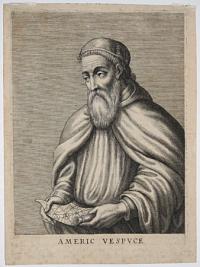
Americ Vespuce.
[n.d., c.1680.]
Engraving. 180 x 135mm.
Amerigo Vespucci (1454-1512), Italian merchant, explorer and cartographer. His two voyages to the east coast of South America between 1499 and 1502 led him to postulate that the Americas were a new landmass, not the East Indies as Columbus believed. From the Blackburn Collection.
[Ref: 400] £130.00
(£156.00 incl.VAT)
![[Maria Anna Veronese] M.lle. Coraline.](jpegs/63171.jpg)



![Bereau de Treillage du Labyrinthe a Versailles. [in sepia ink]](jpegs/62834.jpg)


![[Set of six views of Versailles.] Diverses Vues du Chateau de Versailles.](jpegs/38425.jpg)
![[Set of six views of Versailles.] Endroits Remarquables du Jardin et du Parc de Versailles.](jpegs/38427.jpg)







![Quite Well! [&] Very Ill!](jpegs/31479.jpg)


![[Andreas van Wesel] Andreas Vesalius.](jpegs/40004.jpg)
![Wm. V Fitz - Gerald [facsimile signature]](jpegs/8309.jpg)
![[William Vesey Fitzgerald]](jpegs/8313.jpg)
![[William Vesey-Fitzgerald.]](jpegs/37336.jpg)

![[Vespasian.] Imp. Caes. Vespasian. Aug. P. M. Tr. P. P. P. Cos. III.](jpegs/49698.jpg)

![[Vespasian.] Imp. T. Caes. Vespas. Aug. P. M. Tr. P. P. P.](jpegs/49700.jpg)
![[Vespertina Quies.]](jpegs/59622.jpg)