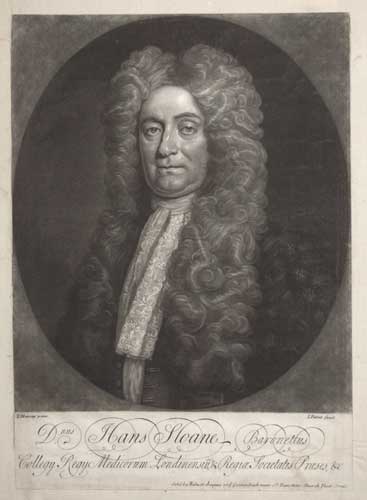
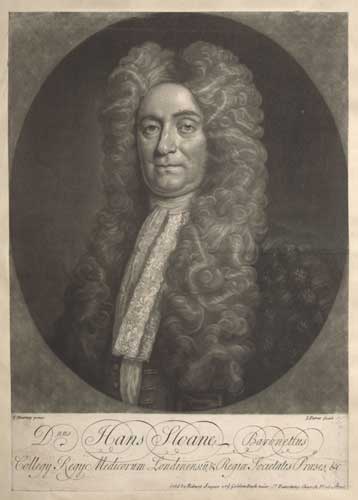
D.nus Hans Sloane Baronettus Collegii Regii Medicorum Londinensiu, & Regniæ Societatis Præses, &c.
T. Murray pinx. J. Faber fecit.
Sold by Robert Sayear at ye Golden Buck near St Dunstans Church Fleet Street [n.d., c.1760].
Mezzotint. 350 x 250mm (13¾ x 9¾"). Trimmed to image on three sides, into plate at bottom, laid on album paper.
Head and shoulders portrait in oval of Sir Hans Sloane (1660-1753), in long wig and lace cravat. In 1716 he was appointed physician-general to the army; in 1727 he became President of the Royal Society. His collection and library formed the nucleus of the British Museum. Wellcome: 2750-1; CS 328, ii of ii. Ex: collection of The Hon. Christopher Lennox-Boyd & Belton House.
[Ref: 67372] £260.00
(£312.00 incl.VAT)

D.nus Hans Sloane Baronettus Collegii Regii Medicorum Londinensiu, & Regniæ Societatis Præses, &c.
T. Murray pinx. J. Faber fecit.
Sold by Robert Sayear at ye Golden Buck near St Dunstans Church Fleet Street [n.d., c.1760].
Mezzotint. Sheet 350 x 245mm (13¾ x 9¾"). Trimmed to image on three sides, into plate at bottom, laid on on album paper.
Head and shoulders portrait in oval of Sir Hans Sloane (1660-1753), in long wig and lace cravat. In 1716 he was appointed physician-general to the army; in 1727 he became President of the Royal Society. His collection and library formed the nucleus of the British Museum. Wellcome: 2750-1; CS 328, ii of ii.
[Ref: 65785] £230.00
(£276.00 incl.VAT)

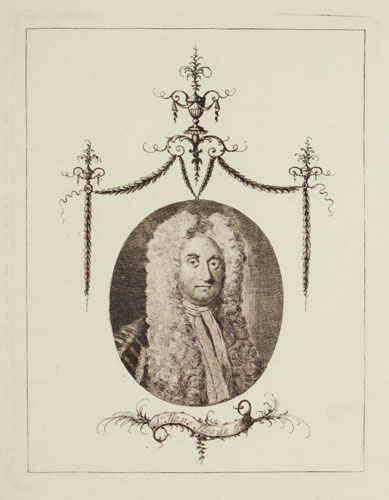
Sir Hans Sloane Bar.t.
[n.d., c.1800.]
Engraving, plate 175 x 105mm (7 x 10¼"), with large margins on three sides. Small right margin.
Half-length portrait of Sir Hans Sloane (1660 - 1753), physician and botanist, founder of the British Museum.
[Ref: 59826] £45.00
(£54.00 incl.VAT)

Sir Hans Sloane M.D.
W. Holl.
A. Fullarton & Co. London & Edinburgh [n.d., c.1840.]
Steel engraving, plate 215 x 145mm (8½ x 5¾"). Small margins except top.
Sir Hans Sloane (1660 - 1753), physician and botanist, founder of the British Museum. Copied from the mezzotint by Faber after T. Murray. Not in BM. W 2750-8.
[Ref: 61114] £65.00
(£78.00 incl.VAT)
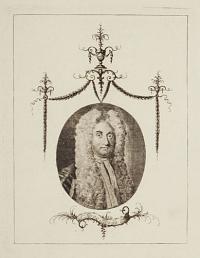
Sr. Hans Sloane B.t
[n.d., c.1750.]
Engraving, unique. Plate: 200 x 150mm (8 x 6").
A trimmed portrait of Sir Hans Sloane laid on a decorative, printed background. Title in manuscript below.
[Ref: 46466] £120.00
(£144.00 incl.VAT)

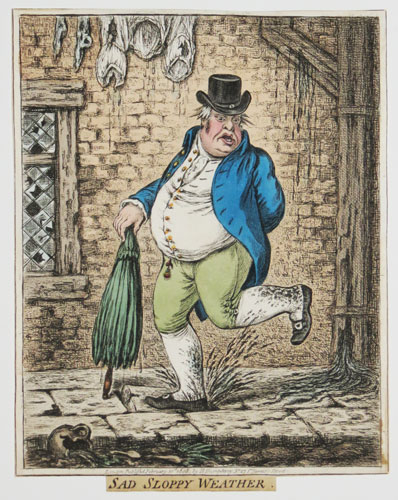
Sad Sloppy Weather.
[James Gillray.]
London, Publish'd February 10th 1808 by H. Humphrey No.27 St. James's Street.
Hand-coloured engraving. Sheet: 240 x 185mm (9½ x 7¼''). Trimmed.
A comic scene showing a large man splashing himself in a muddy puddle. BM Satire 11096.
[Ref: 48768] £240.00
(£288.00 incl.VAT)

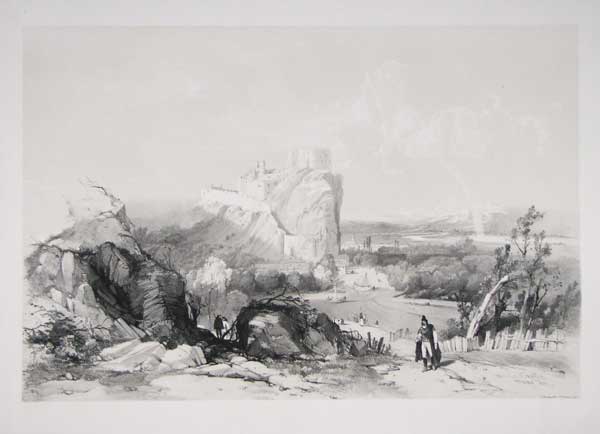
The Castle of Arva, on the Borders of Gallicia.
G.Hering del_ J.B.Pyne Lith.
[Day & Hague Lithrs. to the Queen, c.1838.]
Lithograph. 375 x 300mm (14¾ x 11¾"). Some surface dirt on the right of image. Edges chipped.
View of the Orava Castle situated on a high rock above Orava river in the village of Oravský Podzámok, Slovakia. The castle was built in the Kingdom of Hungary, with the oldest parts being built in the thirteenth century and the most recent parts in the early seventeenth century. Plate 14 from a series of 26 lithographs, titled 'Sketches on the Danube, Hungary and Transylvania' by George Hering. The views illustrate Hering's tour to Hungary and Transylvania in 1835, countries then little known to the English. It is dedicated to Count Szenchenyi, the leading Hungarian light of his day. Abbey 79.
[Ref: 65298] £220.00
(£264.00 incl.VAT)

Tokey on the Theis.
G.Hering del_ J.B.Pyne Lith.
[c.1838.]
Lithograph. 390 x 260mm (15¼ x 10¼"). Edges chipped.
View of the Dunabe river. Plate 17 from a series of 26 lithographs, titled 'Sketches on the Danube, Hungary and Transylvania' by George Hering. The views illustrate Hering's tour to Hungary and Transylvania in 1835, countries then little known to the English. It is dedicated to Count Szenchenyi, the leading Hungarian light of his day. Abbey 79.
[Ref: 65299] £160.00
(£192.00 incl.VAT)
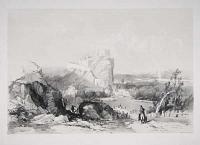
Betsko Castle Waag Thal.
G. Hering del. J.B. Pyne Lith.
[London, 1838.]
Tinted lithograph heightened in white, sheet 380 x 555mm. 15 x 21¾".
Dramatic view of Beckov Castle near the village of Beckov in western Slovakia. From 'Sketches on the Danube, in Hungary and Transilvania' by George Edwards Hering (1805 - 1879). Abbey Travel: 79, 10. Provenance Sitwell family, Renishaw Hall, Sheffield, Derbyshire.
[Ref: 13702] £220.00
(£264.00 incl.VAT)
![[Allegorical print with town view of Filakovo, Slovakia in background]](img-thumbnail/jpegs/46384.jpg)
[Allegorical print with town view of Filakovo, Slovakia in background] Nimb dich nicht mehr an, als du kanst.
[Sebastian Furck, c.1625]
[Frankfurt am Main: Eberhard Kieser, 1623-32.]
Engraving, sheet 100 x 145mm (4 x 5¾"). Trimmed and glued to backing sheet.
One of 830 emblematic views made for Daniel Meisner's (1585-c.1625) 'Thesaurus philopoliticus', also called 'Politisches Schatzkästlein', published in two volumes, 1623-26 and 1627-32. Each volume contained eight parts of 52 prints per part (there is one part containing merely 50 prints). Kieser made some of the etchings himself; others were made by Sebastian Furck, Georg Keller, Matthäus Merian and Johann Eckard Löffler among others.
[Ref: 46384] £90.00
(£108.00 incl.VAT)
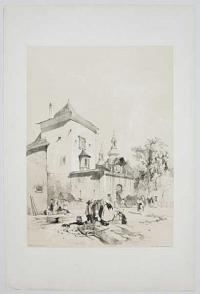
The Gate of Kremnitz.
G. Hering del._ J.B. Pyne lith:
[London: T. McLean, 1838.]
Sepia-tinted lithograph, image 380 x 280mm. 15 x 11".
Kremnica is a well-preserved medieval town in central Slovakia. Kremnica was among the major mining towns of the world during the Middle Ages due to the abundant gold ore deposits in the Kremnica Mountains. From 'Sketches on the Danube, in Hungary and Transylvania' (26 plates), by George Edwards Hering (1805-1879). Abbey Travel 79, 9.
[Ref: 26804] £230.00
(£276.00 incl.VAT)
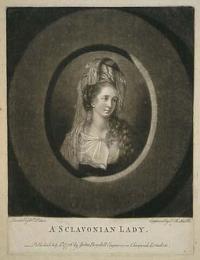
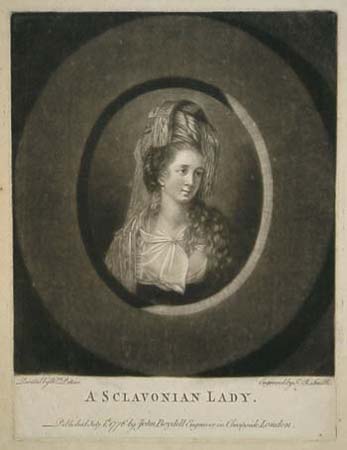
A Sclavonian Lady.
Painted by Wm. Peter. Engraved by J.R.Smith.
Published July 30th, 1776 by John Boydell Engraver in Cheapside London.
Mezzotint. 260 x 200mm.
Half-length portrait within an oval border. One of four 'Ladies in Foreign Dress'. The artist is Matthew William Peters (1742-1814), most famous for his provocative painting of a courtesan (known as 'Lydia' in the mezzotint copy). He came to regret his choice of subject, as he was ordained in 1781, becoming the Royal Academy's chaplain (1784-8), then chaplain to the Prince of Wales. D'Oench: 75. From the Oettingen-Wallerstein Collection, Sotheby's London 1997; Lady Victoria Manners, 'Matthew William Peters, R.A.' p.65, ii/ii
[Ref: 4615] £260.00
(£312.00 incl.VAT)
![Upper Carniola [Slovenia]](img-thumbnail/jpegs/57589.jpg)
Upper Carniola [Slovenia]
L. Mansion 1831.
[London: William Spooner, 1832.]
Lithograph with fine hand colour. Sheet 285 x 230mm (11¼ x 9"). Trimmed to printed border, title separated, laid on album sheet.
A young woman in colourful native dress with a picturesque background. Regional Costume Studies from Fancy Ball Dresses, a collection of ethnic designs by Andre Leon Larue, called Mansion (1785-1834) See: Ref: 22872, 17087
[Ref: 57589] £190.00
(£228.00 incl.VAT)
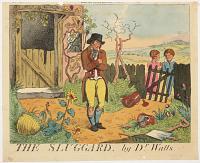
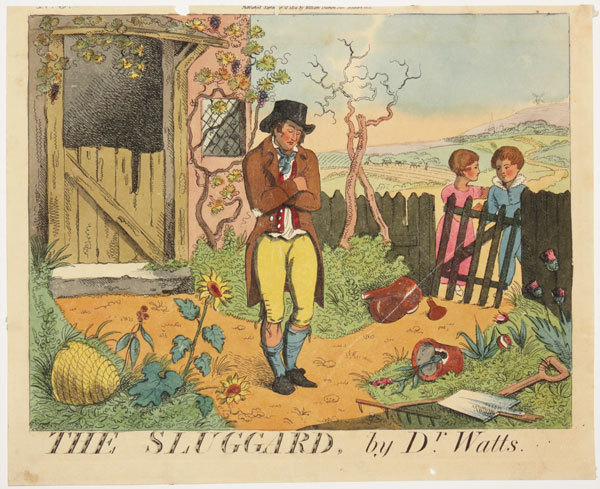
The Sluggard, by Dr. Watts.
Published September 18. 1810 by William Darton Jun.r, Holborn Hill.
Hand-coloured engraving. Sheet: 180 x 215mm (7 x 8½"). Trimmed, publication line trimmed, some text missing.
An illustrattion of a comic peom by Isaac Watts which warns of the dangers of being lazy, the scene shows the sluggard fast asleep as two children walk by.
[Ref: 46155] £230.00
(£276.00 incl.VAT)
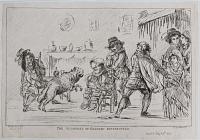
The Slumbers of Ragotin Interrupted
Mr. Bunbury del. Js.Bretherton f. Scarron B 2d.
Engraving. 310 x 220mm. Trimmed outside platemark
Illustration to Scarron's 'Roman Comique' 1665, Book II, Chapter XX. BM Satire 5218.
[Ref: 1083] £130.00
(£156.00 incl.VAT)
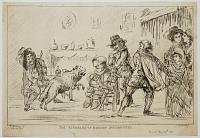
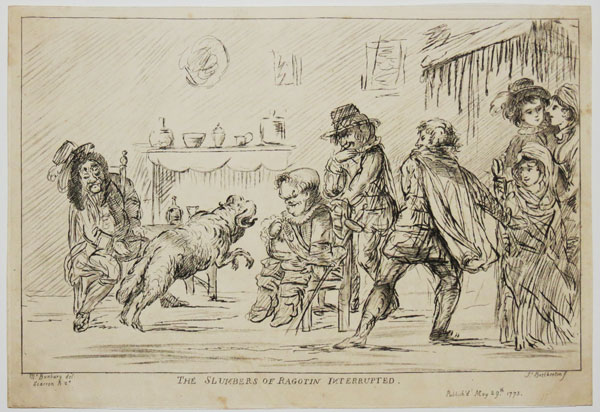
The Slumbers of Ragotin Interrupted.
M.r Bunbury del. J.s Bretherton.
Scaroon B 2.d. Publish'd May 29.th 1773.
Etching. Sheet: 225 x 330mm (9 x 13''). Trimmed and foxing; slight mark on chimney breast.
An illustration to Scarron's 'Roman Comique'. The character of Ragotin sits on a chair in a tavern about to be butted by a ram while other figures watch. BM Satire 5218.
[Ref: 49184] £190.00
(£228.00 incl.VAT)
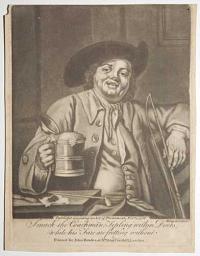
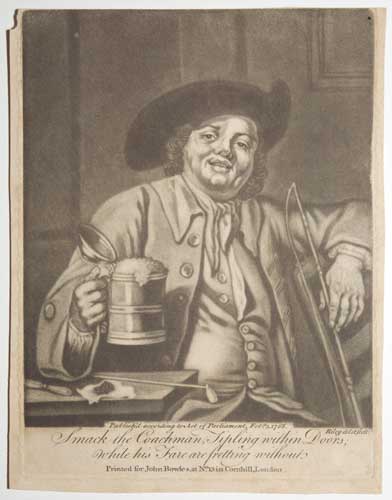
Smack the Coachman, Tipling within Doors; while his Fare are fretting without.
Riley [Thomas Ryley] del et fecit.
Published according to Act of Parliament, Feb.y 1, 1768. Printed for John Bowles, at No 13 in Cornhill, London.
Mezzotint. 155 x 115mm (6 x 4½"). Top margin cut to plate, elsewhere toned. Small margins.
A smiling coachman lifts a foaming tankard, his arm hooked over a chair, whip in hand and his pipe and tobacco on the table.
[Ref: 58392] £130.00
(£156.00 incl.VAT)
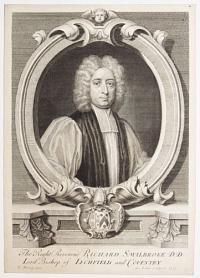
The Right Reverend Richard Smalbroke D.D. Lord Bishop of Lichfield and Coventry.
T. Murray pinx. Geo. Vertue Sculpsit 1733.
Engraving. Plate: 385 x 270mm (15¼ x 10¾"). Trimmed to plate. Thread margins.
A portrait of Richard Smalbroke (1672-1749) who served as Bishop of Lichfield. Alexander: 649.
[Ref: 46825] £180.00
(£216.00 incl.VAT)
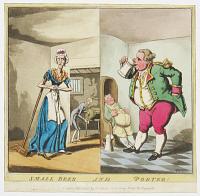
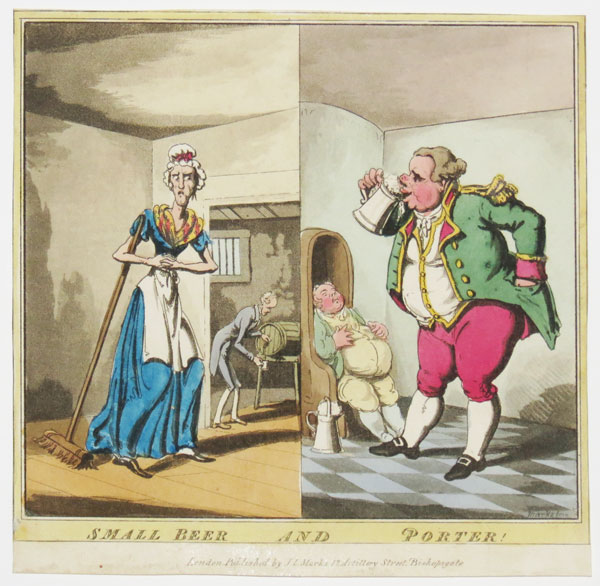
Small Beer and Porter!
London Published by J.L. Marks 17 Artillery Street, Bishopsgate [c.1820]
Etching and aquatint with hand-colouring, paper watermarked 'John All'; sheet 170 x 170mm (6¾ x 6¾"). Trimmed.
Contast between drinking habits of the rich and poor. Print published by (and probably engraved by) J. Lewis Marks (c.1796-1855). A tradecard describes Marks as 'Engraver & Printer in General' and promises 'Aquatinting Tastefully Executed'. In keeping with the subject of this print, Marks in later life was also landlord of the Portland Arms pub in Long Lane, London.
[Ref: 41476] £140.00
(£168.00 incl.VAT)

A Small Breeze.
Brooking Pinx.t Tho.s Boydell Sculp. Harvarden 1755. Publish'd according to Act of Parliament & Sold by Jn.o Boydell Engraver at the Unicorn the Corner of Queen Street Cheapside London.
London, 1755.
Very fine hand coloured engraving, 18th century watermark. 290 x 420mm (11½ x 16½"), large margins. Top margin trimmed to platemark.
A seascape of ships and sail boats under a clearing sky.
[Ref: 55568] £360.00
![[The Small Indian Civit] The Rasse.](img-thumbnail/jpegs/50353.jpg)
[The Small Indian Civit] The Rasse. Viverricula Malaccensis.
[Lithographed by Joseph Smit after Joseph Wolf.]
[London: Henry Graves & Company, 1861-1867.]
Coloured lithograph, trimmed to image and mounted on card with gilt title, as issued. Printed area 230 x 335mm (9 x 13¼"), with a letterpress description, very large margins.
The small Indian civet, Viverricula indica, widespread through India and Incochina. From 'Zoological Sketches by Joseph Wolf. Made for the Zoological Society of London, from animals in their vivarium, in the Regent's Park', issued in two parts, 1861 and 1867. Joseph Wolf (1820-99), a German artist, specialized in natural history illustration, and is considered one of the great pioneers of wildlife art, having depicted animals accurately in lifelike postures. He worked with John Gould on 'The Birds of Great Britain'. Sir Edwin Landseer considered him 'without exception, the best all-round animal artist who ever lived'.
[Ref: 50353] £180.00
(£216.00 incl.VAT)
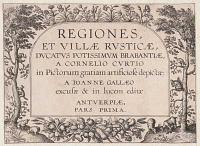
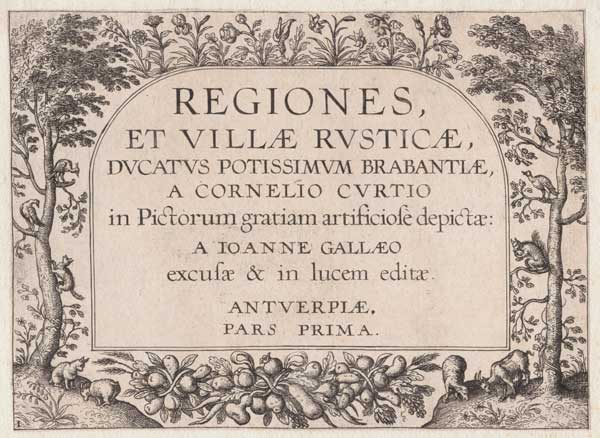
Regiones et villæ rusticæ ducatus potissimum Brabantiæ, Ducatus Potiossimum Brabantiæ, a Cornelio Curtio in Pictorum gratiam artificiose depictæ:
A Joanne Gallæo excuæ & in lucem editæ. Anterpiæ, Pars Prima [n.d., c.1650.]
Etched titlepage. Sheet 125 x 200mm (5 x 8"). On 17th century watermarked paper. Trimmed to printed border, mounted in album paper.
The title page of 'The Small Landscapes', a series first published by Philips Galle (grandfather of Jan, publisher of this example) in 1601,
[Ref: 60214] £160.00
(£192.00 incl.VAT)
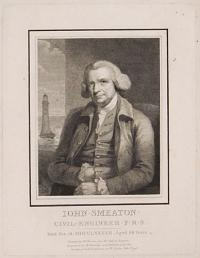
John Smeaton. Civil Engineer. F.R.S. Died Oct. 28. MDCCLXXXXII Aged 68 Years.
Painted by Mr. Brown for Al.r Aubert Esquire. Engraved by Mr. Bromley and Published for the Society of Civil Engineers, by W. Faden Feb. 1st 1798
Engraving, platemark 215 x 165mm (8½ x 6½") large margins.
John Smeaton (1724-92), civil engineer, portrayed here with Eddystone Lighthouse (which he designed in 1755-9) in the background. Smeaton was responsible for numerous bridges, canals and harbours.
[Ref: 43613] £90.00
(£108.00 incl.VAT)
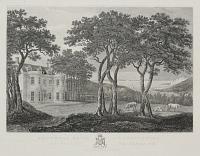
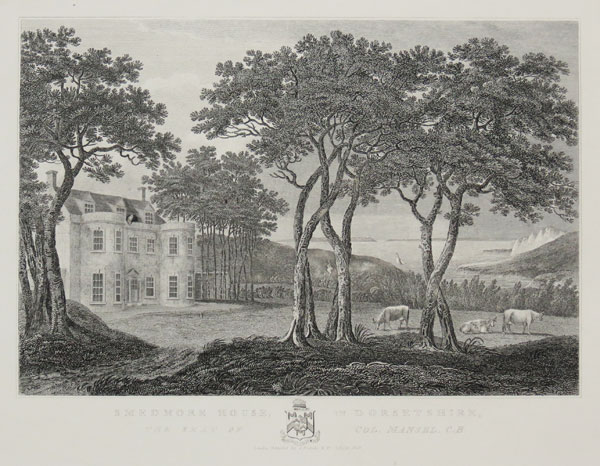
Smedmore House, in Dorsetshire, The Seat of Col. Mansel, C.B.
London, Publish'd by J. Nichols & Co. July 10, 1840.
Engraving. Plate 260 x 380mm (10¼ x 15").
Smedmore House, the country house near Kimmeridge, Dorset, looking out into the bay. It was originally built by Sir William Clavell around 1620, partially rebuilt by Edward Clavell c.1700, and greatly augmented by George Clavell c.1760. After the death of John Clavell-Richards, rector of Church Knowle, the court invalidated his alleged will, and a deal was struck between his surviving heirs-in-law, ensuring that Smedmore remained in the family, under the new ownership of his niece and her husband, Lieutenant Colonel John Mansel (1776-1863). Smedmore has remained in the Mansel family ever since; current owner, the historian Philip Mansel.
[Ref: 34736] £95.00
(£114.00 incl.VAT)
![[Alfred Smee]](img-thumbnail/jpegs/3460.jpg)
[Alfred Smee]
C.H.Jeens [Etched in plate]
[n.d. c.1875]
Engraving on india paper, proof before title. Plate 203 x 128mm.
Surgeon. [1818-1877] W: 2752-2.
[Ref: 3460] £40.00
(£48.00 incl.VAT)
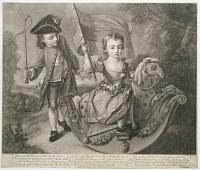
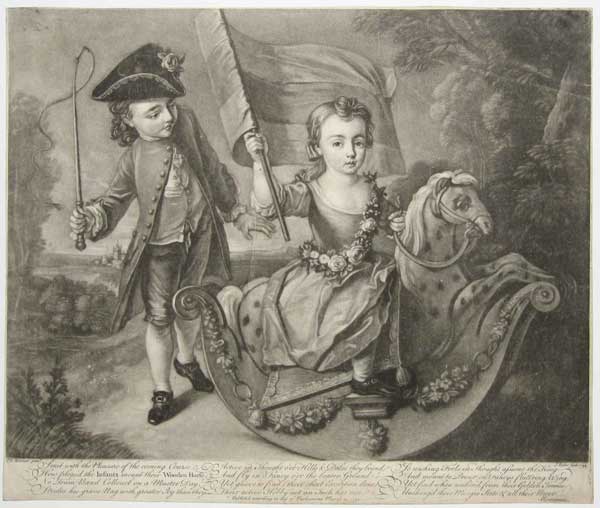
Smit with the Pleasure of the coming Course, How pleas'd the Infants mount their Wooden Horse.
Ph. Mercier pinx.t. J.Faber fecit, 1744.
Publishe'd according to Act of Parliament, March 25th 1744.
A very scarce mezzotint. 280 x 325mm. Trimmed to plate.
Children with a rocking horse. Philippe Mercier (1689 - 1760). Painter and engraver; pupil of Pesne in Berlin, then in Paris; London 1716, recommended from Hanover. Remained in England for the rest of his life. Painter to Frederick Prince of Wales 1729-36; moved to York 1739-51; then returned to London, where he died. Main business in portraits, but made fancy pictures in the manner of Watteau for engraving. Ex: Collection of The Hon. C. Lennox-Boyd.
[Ref: 4197] £290.00
(£348.00 incl.VAT)
![[Blacksmith's Forge.]](img-thumbnail/jpegs/20181.jpg)
[Blacksmith's Forge.]
Done from a Capital Picture of_Brouwer in the Collection of B: Cleeve Esq:r By Jas. Mc.Ardell.
Sold by JMc.Ardell at the Golden Head in Covent Garden. Price 2s.
Mezzotint. 368 x 261mm (14½ x 10¼"). Collector's mark. Trimmed.
The interior of a blacksmith's forge, where one man pulls a chain above him, bending his head down and holding a piece of metal in the embers; whilst another man hammers at a piece of metal on an anvil. Goodwin: 206. Ex Collection: J.F. Gigoux in Paris. Lugt: 1164a.
[Ref: 20181] £260.00
(£312.00 incl.VAT)
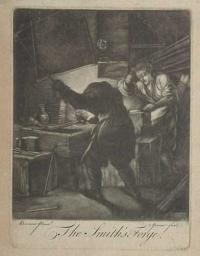
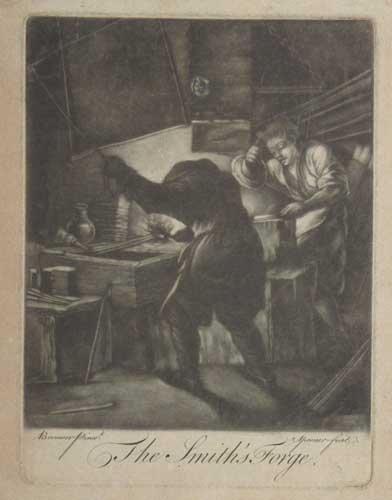
The Smith's Forge.
Brouwer Pinx.t. Spooner fecit.
[Robert Sayer?, c.1770.]
Mezzotint. 150 x 115mm (6 x 4½").
The interior of a blacksmith's forge, where one man pulls a chain above him, bending his head down and holding a piece of metal in the embers; whilst another man hammers at a piece of metal on an anvil. This plate also appears with the inscription 'Printed for Robt. Sayer in Fleet Street, London'. Ex: Collection of Hon. Christopher Lennox-Boyd
[Ref: 55921] £160.00
(£192.00 incl.VAT)
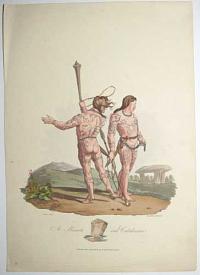
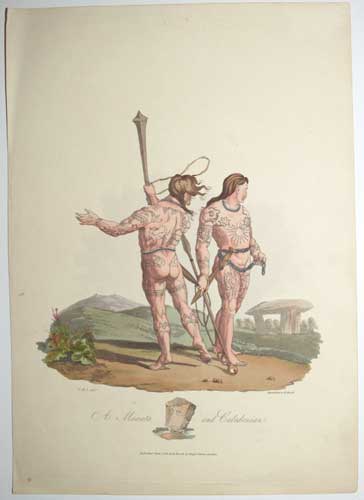
A Maæata and Caledonian.
C.H.S.[Charles Hamilton Smith] del.t. Aquatinted by R.Havell.
Published June 1st, 1815 by R.Havell, 3 Chapel Street, London.
Fine coloured aquatint. 245 x 340mm. Trimmed into plate top and bottom.
Two tribesmen of ancient Scotland showing off their tattoos, standing before a monument of standing stones and a lintel. In the title area is a vignette of an archaeological artifact. The Maeatae lived around the Firth of Forth and were regularly paid off by the Romans to keep the peace. The Caledonians lived further north, around Loch Ness. Published in the 'Costume of the Original Inhabitants of the British Islands', the first attempt to to use archaeological evidence to help create visual images of an imagined prehistoric past. Abbey Life 427.
[Ref: 59202] £130.00
(£156.00 incl.VAT)
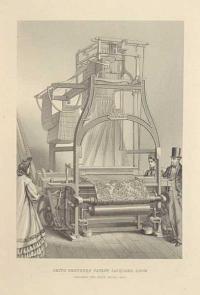
Smith Brothers Patent Jacquard Loom. Obtained The Prize Medal 1862.
[n.d. c.1862]
Steel engraving, 295 x 230mm (11½ x 9"). A bit of creasing and nicks to margins.
A mechanical loom weaving a floral pattern called "jacquard", necessitating a complex mechanism and repartition of the threads. On the sides of the machine are three characters, a man and two women: the man is wearing a three piece suit with a top hat, and the ladies are both wearing short-brimmed bonnets which tie under the chin. One of them, turning her back to the viewer, can be seen wearing a crinoline because of the width of her skirts, even though they are partially out of frame. Jacquard used very early form of computer.
[Ref: 58996] £160.00
(£192.00 incl.VAT)
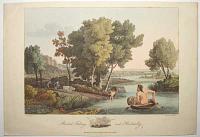
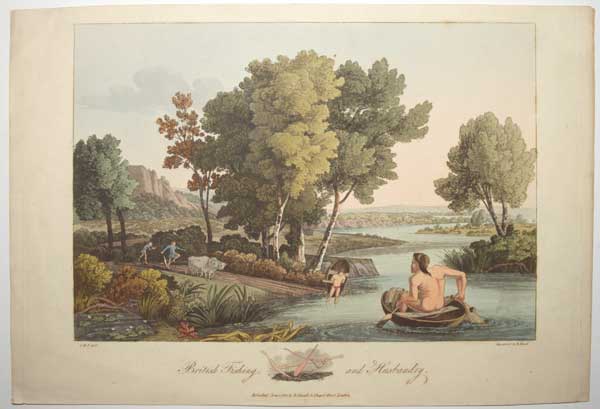
British Fishing, and Husbandry.
C.H.S.[Charles Hamilton Smith] del.t. Aquatinted by R.Havell.
Published June 1st, 1815 by R.Havell, 3 Chapel Street, London.
Fine coloured aquatint. 245 x 340mm (9¾ x 13½"). Trimmed into plate top and bottom.
Ancient Britons fishing from coracles and ploughing using ox. In the title area is a vignette of a plough, based on an archaeological artifact. Published in the 'Costume of the Original Inhabitants of the British Islands', the first attempt to to use archaeological evidence to help create visual images of an imagined prehistoric past. Abbey Life 427.
[Ref: 59201] £95.00
(£114.00 incl.VAT)
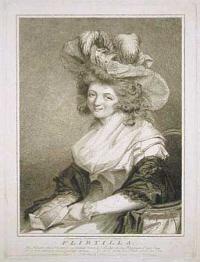
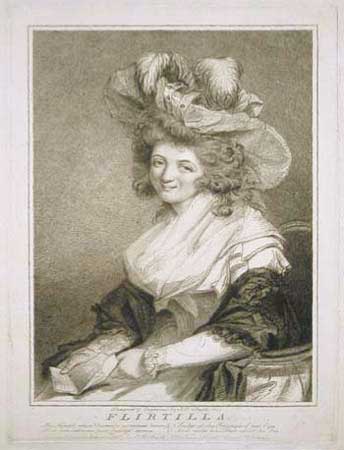
Flirtilla.
Designed and Engraved by J.R.Smith.
London. Publish'd May 12th 1787 = by J.R.Smith, King Street, Covent Garden.
Stipple. 300 x 230mm.
'The Nymph whose Charms (a numerous train) / Have wounded some poor luckless swain.' D'Oench: fig. 130.
[Ref: 5593] £140.00
(£168.00 incl.VAT)
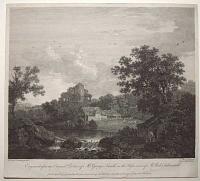
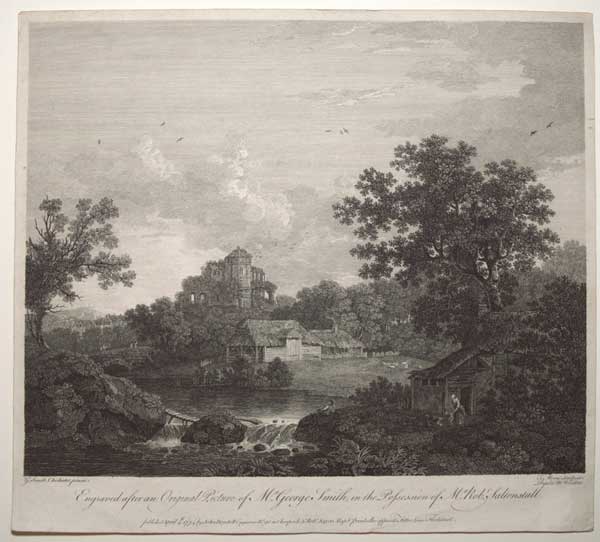
Engraved after an Original Picture of Mr. George Smith, in the possession of Mr Rob.t Saltonstall.
G Smith of Chichester pinxit. T. Morris Sculpsit Pupil to Mr Woollett.
Published April 4th. 1774 by John Boydell Engraver No. 90 in Cheapside, & Rob.t Sayer, Map & Printseller opposite Fetter Lane, Fleet Street.
Etching. Sheet 320 x 355mm (12½ x 14"). Trimmed within plate.
Thatched farm buildings by a river, overlooked by a ruined church, after George Smith of Chichester (1714-76).
[Ref: 55669] £180.00
(£216.00 incl.VAT)
![[Pastoral scene with man playing a shawm.]](img-thumbnail/jpegs/60145.jpg)
[Pastoral scene with man playing a shawm.]
[after Dirk Stoop.]
J. Smith ex [n.d., c.1700].
Mezzotint. 165 x 120mm (6½ x 4¾"). Thread margins.
A man sits under a tree, playing a shawm. Two women, one bare-breasted, holding a shepherd's crook, stand above him. A reversed copy of Stoop's design for a fan. BM 1838,0420.74, state ii of ii, with 'J. Smith ex' rather than 'exc'.
[Ref: 60145] £160.00
(£192.00 incl.VAT)
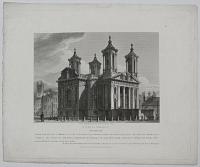
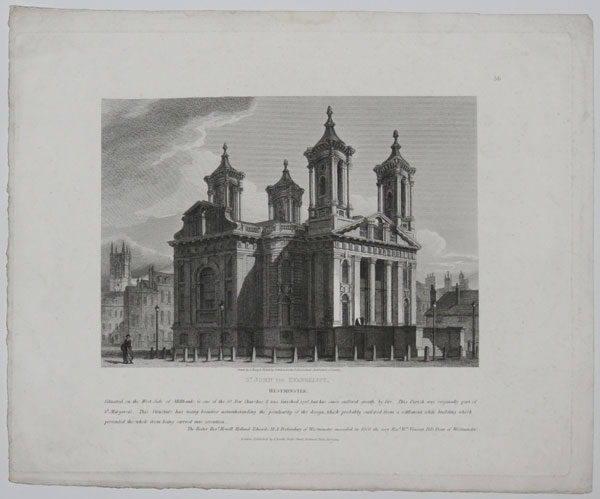
St. John the Evangelist, Westminster.
Drawn by J. Coney. Etched by J. Skelton, for the Ecclesiastical Architecture of London.
London, Published by J. Booth, Duke Street, Portland Place, Jan.y 1, 1814.
Engraving. 270 x 340mm (10½ x 13¼").
St John's, Smith Square, a baroque church built by Thomas Archer (1668-1743) completed 1728. It became known as 'Queen Anne's Footstool'. Archer was consulting the ailing Queen Anne (not noted for her interest in architecture), asking how the new church should look: the Queen petulantly kicked over her footstool, pointed at its legs in the air and snapped 'Like that!, resulting in the church's four corner towers. Gutted by a German incendiary bomb in 1941 it remained a ruin for over twenty years, before being rebuilt and becoming one of London's major concert halls, with fine acoustics.
[Ref: 28605] £90.00
(£108.00 incl.VAT)

Subduing, Shoeing, the Cavison and Millar, &c. 4
[after Thomas Smith.]
Printed for & Sold by Carington Bowles, No 69 in St Pauls Church Yard, London [n.d., c.1770].
Engraving, 18th century watermark. 175 x 280mm (7 x 11"), very large margins. Margins creased, with repaired tears.
The early stages of horse training, a reduced copy of one of a set of six scenes by Thomas Smith, originally engraved by Smith and W. Elliott in 1769. Known as 'Thomas Smith of Derby' (d.1767), Smith originally specialised in country house landscapes, but turned to sporting subjects later in his career. He was the father of John Raphael Smith (1751-1812), famed for his mezzotint engraving.
[Ref: 44469] £160.00
(£192.00 incl.VAT)
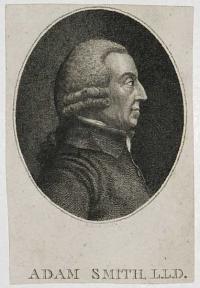
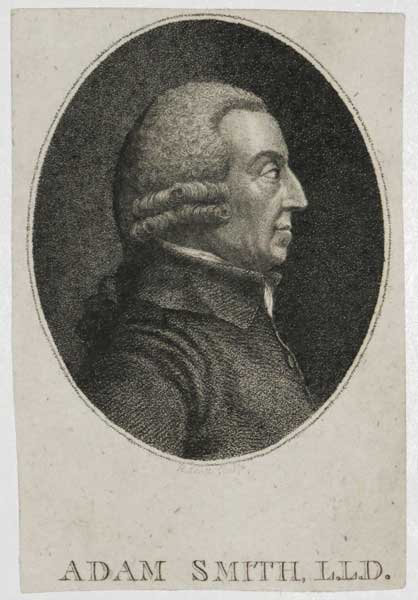
Adam Smith, L.L.D.
R. Scott sculp
[n.d. c.1800.]
Stipple. 107 x 70mm. 4¼ x 2¾". Cut.
Adam Smith (1723-1790) was a Scottish moral philosopher and a pioneer of politial economics. A key figure of the Scottish Enlightenment. Probably taken from James Tassie's glass plate medallion, 1787. Not in O'Donoghue
[Ref: 26594] £95.00
(£114.00 incl.VAT)

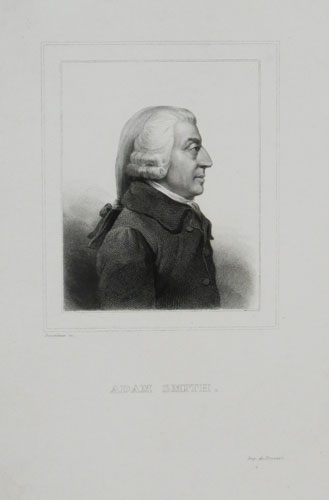
Adam Smith.
Bosselman sc.
Imp. de Drouart. [n.d., c.1800.]
Engraving. Sheet: 255 x 170mm (10 x 6¾'').
A half-length profile portrait of Scottish economist and philosopher Adam Smith (1723-1790) a leader of the Scottish Enlightenment.
[Ref: 48720] £120.00
(£144.00 incl.VAT)

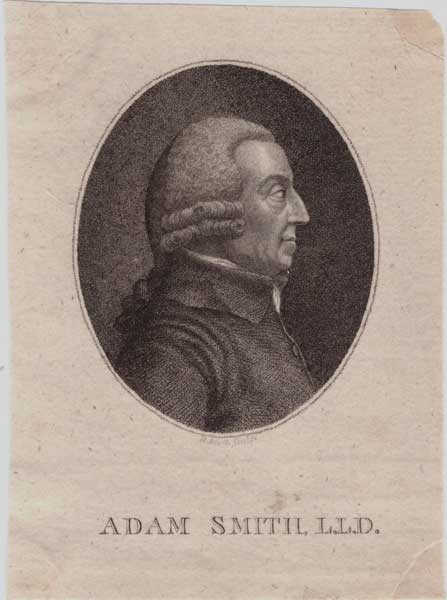
Adam Smith L.L.D.
[n.d., c.1800.]
Stipple engraving. Sheet 95 x 125mm (3¾ x 5"). Trimmed to plate.
A profile portrait of Adam Smith (1723 - 1790), Scottish political economist and moral philosopher, copied from a medallion by Tassie. Smith's 'Inquiry into the Nature and Causes of the Wealth of Nations' was one of the earliest attempts to study the historical development of industry and commerce in Europe. That work helped to create the modern academic discipline of economics and provided one of the best-known intellectual rationales for free trade, capitalism and libertarianism.
[Ref: 64267] £95.00
(£114.00 incl.VAT)
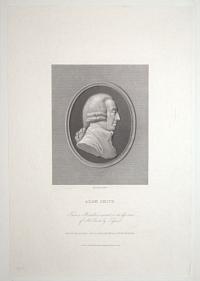
Adam Smith. From a Medallion executed in the lifetime of A. Smith by Tassie. Under the Superintendance of the Society of the Diffusion of Useful Knowledge. Proof.
Engraved by W. Holl.
London, Published by Charles Knight. Ludgate Street. [n.d., c.1835.]
Stipple, printed on chine collé. 220 x 150mm (8¾ x 6"), with wide margins.
Adam Smith (1723-1790), Scottish moral philosopher and a pioneer of politial economics. Published in the ''The Gallery of Portraits: With Memoirs'', 1833-7.
[Ref: 52694] £130.00
(£156.00 incl.VAT)

Adam Smith L.L.D. European Magazine.
Engraved by Ridley.
Pub. by J. Sewell Cornhill Feb. 1. 1802.
Stipple, sheet 150 x 110mm (6 x 4¼"). Trimmed.
Adam Smith (1723-90), Scottish political economist and moral philosopher. Smith's 'Inquiry into the Nature and Causes of the Wealth of Nations' was one of the earliest attempts to study the historical development of industry and commerce in Europe. That work helped to create the modern academic discipline of economics and provided one of the best-known intellectual rationales for free trade, capitalism and libertarianism. After the medallion by James Tassie (1787), the only authentic portrait of Smith.
[Ref: 45430] £85.00
(£102.00 incl.VAT)
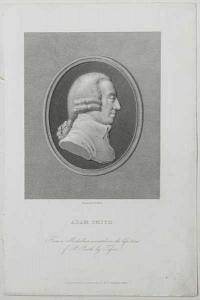
Adam Smith.
From a Medallion executed in the lifetime of A. Smith by Tassie. Engraved by W. Holl.
London, Published by Charles Knight & Co. Ludgate Street. [n.d., c.1835.]
Stipple. 222 x 152mm (8¾ x 6").
Adam Smith (1723-1790), Scottish moral philosopher and a pioneer of politial economics. Published in the ''The Gallery of Portraits: With Memoirs'', 1833-7.
[Ref: 15631] £90.00
(£108.00 incl.VAT)

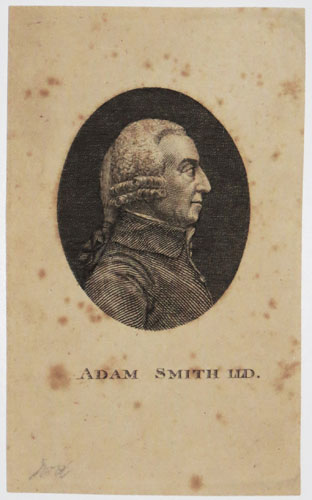
Adam Smith LLD.
[n.d., c.1800.
Rare stipple and line engraving. Sheet 150 x 90mm (6 x 3½").
A profile portrait of Adam Smith (1723 – 1790), Scottish political economist and moral philosopher, copied from a medallion by Tassie. Smith's 'Inquiry into the Nature and Causes of the Wealth of Nations' was one of the earliest attempts to study the historical development of industry and commerce in Europe. That work helped to create the modern academic discipline of economics and provided one of the best-known intellectual rationales for free trade, capitalism and libertarianism.
[Ref: 39701] £160.00
(£192.00 incl.VAT)
![Albert Smith [facsimile signature].](img-thumbnail/jpegs/61518.jpg)
Albert Smith [facsimile signature].
Baugniet 1844. [facsimile signature in plate]. Drawn From Life On Stone By Baugniet. M & N. Hanhart, Lithographic Printers.
Published By Leader & Cock, 63, New Bond St, Corner Of Brook St. London.
Lithograph on india laid paper. Sheet 500 x 350mm. (30¾ x 20") Slight tear in left margin centre.
Albert Richard Smith [1816 - 1860], author and lecturer. On 12 August 1851 he made an ascent of Mont Blanc, and on 15 March 1852 produced at the Egyptian Hall in Piccadilly an entertainment descriptive of the ascent and of Anglo-continental life, which became the most popular exhibition of the kind ever known. From that time until 6 July 1858 he continued at the Egyptian Hall his career of success as a public entertainer, giving various new sketches of character and illustrations by William Beverley, but always keeping Mont Blanc as the central point of attraction. On 24 Aug. 1854 he gave his performance before the queen and the prince consort at Osborne House. This shows Smith at Chamonix.
[Ref: 61518] £240.00
(£288.00 incl.VAT)
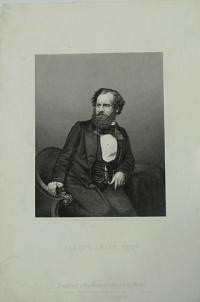
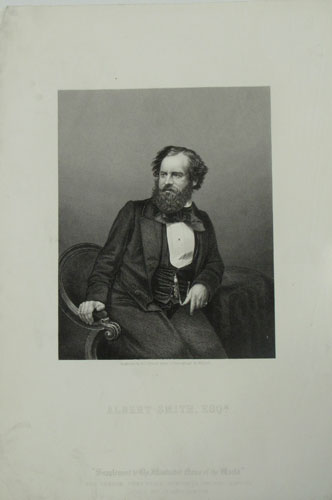
Albert Smith, Esqr.
Engraved by D.J. Pound, from a Photograph by Mayall.
"Supplement to The Illustrated News of the World." The London Joint Stock Newspaper Company_Limited. Office, 199, Strand, London. [n.d. c.1858.]
Stipple and engraving. 400 x 280mm. 15¾ x 11".
Albert Richard Smith (1816-1860) started his career as a surgeon but from the 1840s he became a popular journalist and humourist. He was one of the first contributors to "Punch." He was an English author, entertainer and mountaineer. NPG: D6776.
[Ref: 15642] £75.00
(£90.00 incl.VAT)
![Albert Smith [facsimile signature.] By permission of Messrs. Leader & Cock.](img-thumbnail/jpegs/15643.jpg)
Albert Smith [facsimile signature.] By permission of Messrs. Leader & Cock.
Baugniet del. Cook Sc.
London, Richard Bentley, 1845.
Stipple and engraving on india. Plate 229 x 152mm. 9 x 6".
Albert Richard Smith (1816-1860) started his career as a surgeon but from the 1840s he became a popular journalist and humourist. He was one of the first contributors to "Punch." He was an English author, entertainer and mountaineer.
[Ref: 15643] £60.00
(£72.00 incl.VAT)
![[Arthur Lionel Smith.]](img-thumbnail/jpegs/13362.jpg)
[Arthur Lionel Smith.]
Francis Dodd [pencil signature.]
[1915.]
Etching, 1st state, from a limited edition marked '1 of 6' in pencil by the artist lower left. 230 x 310mm, 9 x 12¼".
Arthur Lionel Smith (1850 - 1924), historian; Master of Balliol College, Oxford. He studied at Balliol College, was a fellow of Trinity College, and returned to Balliol as a fellow in 1882. He remained at the college where he taught history for the rest of his life. 'A.L.S.' scratched in plate upper left. Francis Dodd (1874 - 1935) made two plates portraying Arthur Lionel Smith in 1915, this being the second. This is a reversed design either after the oil painting of Arthur Smith which Dodd completed in 1913, or a study for the painting. The painting was presented by subscribers to Balliol College, Oxford, in 1914; Balliol also holds a probable study for the head in coloured chalks (see John Jones, 'The Portraits of Balliol College. A Catalogue' (1990) cat. nos. 126, 127). Dodd was born in Glasgow and received his training at the Glasgow School of Art. After moving to London he became one of the leading portrait artists of his time. He was an official war artist in the 1914-1918 war, and made many fine etchings.
[Ref: 13362] £180.00
(£216.00 incl.VAT)

Ye roaring Blades who nightly rove, / Ye fam'd Broughtonian Sons; / With pleasure cast your Eyes above / And stag poor Bucky's Muns. / Like greater Blackguards he ne'er rails / For Pension, Place or Fee; / But honest Industry prevails / Nor dreads the fatal Tree.
Publish & Sold by Tho.s Bowen Printseller at ye Golden Pallet in Shug Lane near the Haymarket St James's. [1742]
A very scarce copper engraving. 322 x 204mm. 12¾ x 8". Small tear to the right-hand edge. Trimmed just inside platemark.
Portrait of John 'Buckhorse' Smith [1732-1746] running through Covent Garden holding his hat; St Paul's Church behind to the right. Buckhorse Smith was another famous fighting man, whose ugliness was probably a result of some form of infantile encephalitis. Whatever the reason, his head was big and bulbous at the top and his face pinched and narrow. He was born, according to Eccentric Magazine, “in the house of a sinner” in the notorious Lewkner’s Lane near Drury Lane, where rogues, thieves and ne’er-do-wells gathered to eke out their grimy, violent and precarious existences. Buckhorse learned to steal, and then to fight, with equal mastery and through his appearances at Figg’s Academy and then under Broughton, he became something of a cult celebrity. He ranked high for courage and strength among the boxers of his day and displayed great muscular powers in the battles he had contested. “As ugly as Buckhorse” became a cliché of the time. Buckhorse was never a champion, but apparently his strange looks belied his talents. He was sought after by ladies, who it was said regarded him as enthusiastic and energetic in the arts of love. He died in a ditch one wintry night, cuddling his last bottle of gin. The earliest known autobiography of an English boxer, Memoirs of the Noted Buckhorse, is printed in London. He was never much of a boxer, and reportedly earned his living picking pockets and singing in the streets (it is said that he "sucked in the love of gin" from his first nurse). In 1767 Buckhorse was also the subject of an ode by Christopher Anstey; this too celebrated the man about town rather than the pugilist. The 1745 rebellion brought the heads of fresh victims to the Bar, and this was the last triumph of barbarous justice. Colonel Francis Townley's was the sixth head. Townley was hanged on Kennington Common. Before the carts drove away, the men flung their prayer-books, written speeches, and gold-laced hats gaily to the crowd. As soon as they were dead the hangman cut down the bodies, disemboweled, beheaded, and quartered them, throwing the hearts into the fire. A monster—a fighting-man of the day, named Buckhorse—is said to have actually eaten a piece of Townley's flesh, to show his loyalty.
[Ref: 21298] £230.00
(£276.00 incl.VAT)
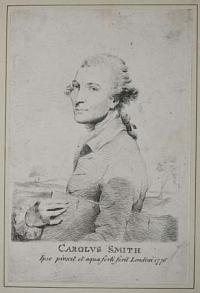
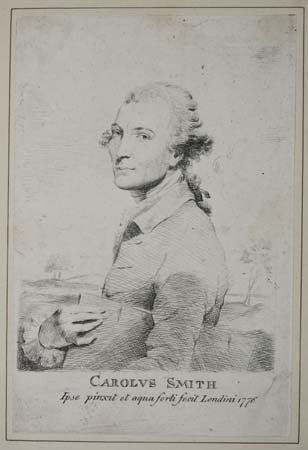
Carolus Smith.
Ipse pinxit et aqua forti fecit Londini 1776.
Etching. 170 x 110mm. Trimmed to plate mark.
Painter to the 'Great Mogal' [1749 - 1824]. Rare.
[Ref: 1173] £80.00
(£96.00 incl.VAT)

Mrs. Charlotte Smith.
Ridley sculp.
[n.d. c.1800.]
Stipple laid on album sheet 146 x 95mm (5¾ x 3¾").
Charlotte Turner Smith (1749-1806), the English Romantic poet and novelist. She initiated a revival of the English sonnet, helped establish the coventions of Gothic fiction, and wrote political novels of sensibility. Her worked was praised by contemporaries such as Romantic poets, William Wordsworth and Samuel Taylor Coleridge, as well as novelist Walter Scott.
[Ref: 34616] £65.00
(£78.00 incl.VAT)




![[Allegorical print with town view of Filakovo, Slovakia in background]](jpegs/46384.jpg)

![Upper Carniola [Slovenia]](jpegs/57589.jpg)



![[The Small Indian Civit] The Rasse.](jpegs/50353.jpg)

![[Alfred Smee]](jpegs/3460.jpg)
![[Blacksmith's Forge.]](jpegs/20181.jpg)

![[Pastoral scene with man playing a shawm.]](jpegs/60145.jpg)



![Albert Smith [facsimile signature].](jpegs/61518.jpg)
![Albert Smith [facsimile signature.] By permission of Messrs. Leader & Cock.](jpegs/15643.jpg)
![[Arthur Lionel Smith.]](jpegs/13362.jpg)