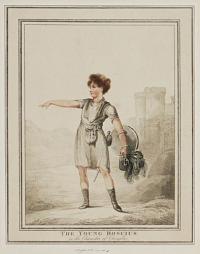
The Young Roscius in the Character of Douglas.
[Engraved by Godby from the original drawing in the possession of his Royal Highness, the Prince of Wales.]
[London, Edward Orme, 1805.]
Stipple engraving, printed in colours. Image 280 x 215mm, 11 x 8". Trimmed to printed border.
William Henry West Betty (1791-1874) as Douglas in the black verse tragedy by John Home. Betty. was a child actor billed as the 'Young Roscius' for his performances in adult roles like Hamlet and Romeo, 1804-1806, at Covent Garden. Harvard Vol.I: p105, 45.
[Ref: 24252] £130.00
(£156.00 incl.VAT)

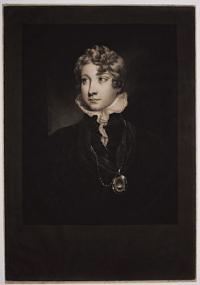
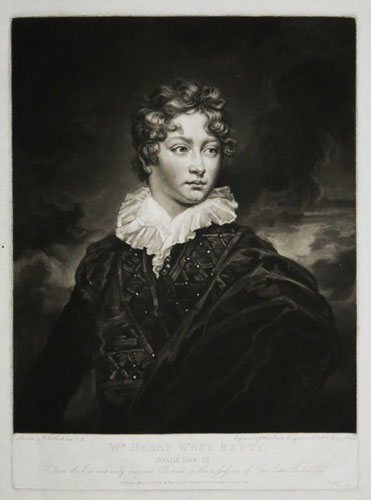
W.m. Henry West Betty, Ætatis Suæ 13. From the first and only original Portrait in the possession of Tho.s Lister Parker Esq.r.
Painted by J. Northcote Esqr. R.A. Engraved by J. Ward Painter & Engraver to H.R.H. the Prince of Wales.
Published March, 16. 1805. by Mr. Betty, at Messrs. Colnaghi & Co. Printsellers, Cockspur Street.
Fine mezzotint, open letter proof. 275 x 380mm (10¾ x 15"), with large margins. Pencil annotations in lower margin.
William Henry West Betty (1791-1874), a child actor billed as the 'Young Roscius' for his performances in adult roles like Hamlet and Romeo, 1804-6, at Covent Garden. He paid for the publication of this portrait before he was fifteen. CS: 4: II of III.
[Ref: 50088] £350.00
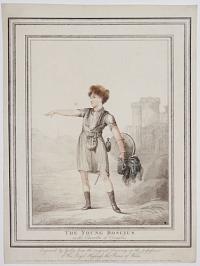
The Young Roscius in the Character of Douglas.
Engraved by Godby from the original drawing in the possession of his Royal Highness, the Prince of Wales.
Published Jan.y 1st 1805, by Edward Orme, His Majesty's Printseller, Bond Street, the Corner of Brook Street. Sold also by Mess.rs Colnaghi & Co. Cockspur Street, & J. Ginger, Booksellers to H.R.H. the Prince of Wales, Piccadilly.
Stipple engraving, printed in colours. Sheet 325 x 240mm (12¾ x 9½"). J. Whatman watermark 1801. Trimmed within plate.
William Henry West Betty (1791-1874) as Douglas in the black verse tragedy by John Home. Betty was a child actor billed as the 'Young Roscius' for his performances in adult roles like Hamlet and Romeo, 1804-1806, at Covent Garden. Harvard Vol.I: p105, 45.
[Ref: 41881] £160.00
(£192.00 incl.VAT)
[William H.W. Betty Engraved by S.W.Reynolds from a drawing in the possession of Her Grace the Duchess of Devonshire to whom this plate is with permission respectfully inscribed by Her Grace's most humble servants S.W.Reynolds & J.s Ramsay.]
[Drawn by J.s Ramsay Sheffield Sept 1804 and published in London Feb.y 1805 by S.W.Reynolds 47 Poland Street, R.Ramsay Duke Street, Strand and sold by Ramsay Sheffield.]
Fine mezzotint, proof before all letters. 505 x 355mm (20 x 14"). Thread margins reinforced on verso, creasing.
William Henry West Betty (1791-1874), a child actor billed as the 'Young Roscius' for his performances in adult roles like Hamlet and Romeo, 1804-6, at Covent Garden. After leaving the stage in 1808 to study at Christ's College, Cambridge, his attempts to return to the stage as an adult all failed. This plate is unusual in that the entire surface is mezzotinted. The published state also had 'The Young Roscius' written in the lower image. Whitman: 26, state i of ii.
[Ref: 51180] £360.00
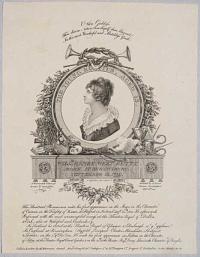
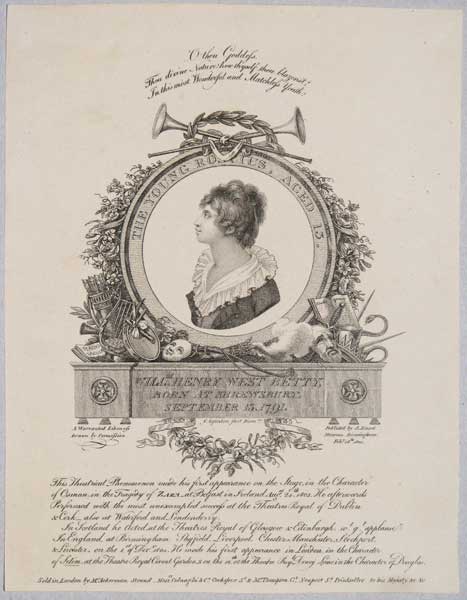
The Young Roscius, Aged 13. Willm. Henry West Betty, Born at Shrewsbury. September 15, 1791.
A Warranted Likeness Drawn by Permission. F. Eginton, fecit Birmm.
Publish'd by J. Bisset. Museum, Birmingham, Feby. 12th 1803. Sold in London by Mr. Ackerman, Strand _ Messrs. Colnaghi & Co. Cockspur St. & Mr. Thompson, Gt. Newport St. Printseller to his Majesty, &c.&c.
Stipple and engraving, scarce, sheet 225 x 175mm. 8¾ x 7". Trimmed within plate.
William Henry West Betty (1791-1874) was a child actor billed as the 'Young Roscius' for his performances in adult roles like Hamlet and Romeo, 1804-1806, at Covent Garden. His bust is enclosed in a floral circular frame decorated with theatrical and musical motifs, on an inscribed pediment. Eight lines of text below, three lines of poetry above. Betty's first appearance on the stage at was at Belfast before he was twelve years old, as Osman in Aaron Hill's Zara, an English version of Voltaire's Zaire. His success was immediate, and he shortly afterwards appeared in Dublin, where it is said that in three hours of study he committed the part of Hamlet to memory. His precocious talents aroused great enthusiasm in Glasgow and Edinburgh, and he was favourably compared with some of the greatest tragedians. In 1801, he first appeared at Covent Garden, when the troops had to be called out to preserve order, so great was the crush to obtain admittance. At Drury Lane, the house was similarly packed. He was a great success socially; George III himself presenting him to the queen, and Pitt upon one occasion adjourning the House of Commons so that members might be in time for his performance. But this enthusiasm gradually subsided, and in 1808, he made his final appearance as a boy actor, and entered Christ's College, Cambridge. He re-appeared four years later, but the public would have none of him, and he retired to the enjoyment of the large fortune that he had amassed as a prodigy. His son Henry Thomas Betty (1819-1897) was also an actor. Engraved by Birmingham printmaker Francis Eginton (1737 - 1805), published for the Birmingham Museum. Harvard Theatre Collection: pg.103, 10.
[Ref: 13321] £140.00
(£168.00 incl.VAT)
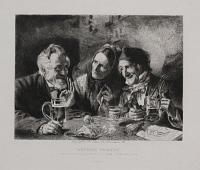
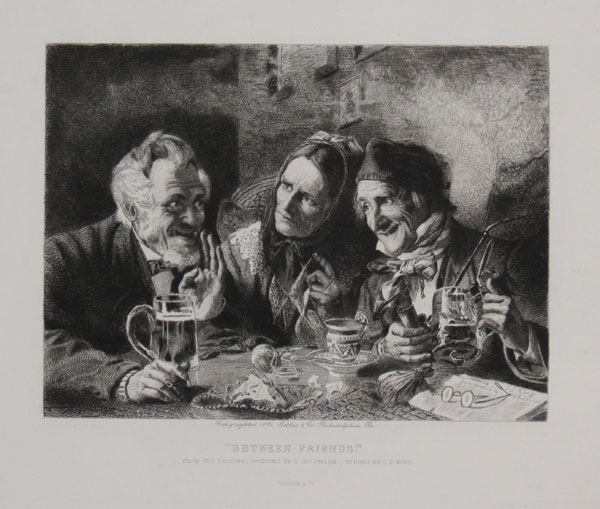
Between Friends.
From the Original Painting by O. Goldmann. Etched by J.S. King.
Copyrighted 1885. Gebbie & Co. Philadelphia, PA [USA].
Etching, 225 x 265mm (9 x 10½").
American social genre: two men and a woman share some gossip over refreshments at a table.
[Ref: 27685] £120.00
(£144.00 incl.VAT)
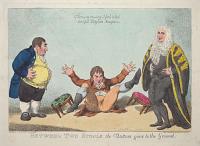
Between Two Stools the Bottom goes o the Ground. There is no trusting I find to that deceitfull Ceylon Manufacture.
Folios of Caracatures lent out for the Evening. [Charles Williams.]
Pubd March 1t 1802 SW Fores 50 Piccadilly.
Hand-coloured etching; 18th century watermark. Plate 248 x 345mm (9¾ x 13½"), with large margins.
Tierney has fallen between two (upholstered) stools: 'Whig Stool' [tattered] and 'Tory Stool' [in good repair]; he holds out his arms, saying, "There is no trusting I find to that deceitfull Ceylon Manufacture". On the extreme left and right stand Fox and Addington both clasping their sides in amusement at the mishap; the latter wears robes and wig. BM Satires 9844.
[Ref: 52270] £230.00
(£276.00 incl.VAT)

William Beveridge DD. Ld Bishop of St Asaph Aetatis Sue 71
B Ferrers pinx. W Sherwin fe.
[n.d., c.1709.]
Mezzotint. 205 x 155mm (8 x 6"). Trimmed to plate.
A portrait in oval of William Beveridge (1637-1708), writer and clergyman who served as Bishop of St Asaph from 1704 until his death. A reversed copy of the painting by Benjamin Ferrers now in the Bodleian Library. During his lifetime Beveridge refused to sit for his portrait: Ferrers (c. 166-1732), a relative, painted this portrait from his corpse. Ex: collection of The Hon. Christopher Lennox-Boyd. CS 5.
[Ref: 66415] £160.00
(£192.00 incl.VAT)

William Beveridge DD. Ld Bishop of St Asaph Aetatis Sue 71
B Ferrers pinx. W Sherwin fe.
[n.d., c.1709.]
Mezzotint. 205 x 155mm (8 x 6"). Trimmed to plate, ink library stamp on the reverse.
A portrait in oval of William Beveridge (1637-1708), writer and clergyman who served as Bishop of St Asaph from 1704 until his death. A reversed copy of the painting by Benjamin Ferrers now in the Bodleian Library. During his lifetime Beveridge refused to sit for his portrait: Ferrers (c. 166-1732), a relative, painted this portrait from his corpse. Ex: collection of The Hon. Christopher Lennox-Boyd. CS 5.
[Ref: 66416] £160.00
(£192.00 incl.VAT)
![[Adrian Beverland.]](img-thumbnail/jpegs/65532.jpg)
[Adrian Beverland.] Viro perillustri Hadriano Berverlando numismatim Insectorum Cochlearam Picturarum ac Librorum rariorum Vindici ac Statori Hanc Tab.
J.Smith ex. Is.Beckett. [After Simon Du Bois.]
[n.d., c.1680.]
Mezzotint. Sheet 425 x 250mm (16¾ x 9"). Trimmed. Some faint creases. Taped into mount at top.
Portrait of Hadriaan Beverland (1650 - 1716), Dutch humanist scholar who was banished from Holland in 1679 and settled in England in 1680. In his studies Beverland defined sexual lust as the original sin. He argued that Adam and Eve had had sexual relations in the Garden of Eden, disobeying God's commands. As a punishment, all people were henceforth dominated by sexual desire. Beverland concentrated on the past to display the universal power of lust in human nature. During a provincial Synod in Gouda in July 1679 Beverland's works were discussed by members of the Dutch Reformed Church. They concluded that his study on sex and sin was licentious and injurious, deputies from the Synods of North- and South-Holland sent a request to the States of Holland. On 12 September 1679 the States approved the request of the deputies of the Synods, in which they had asked to prohibit and repress Beverland's publications to conserve God, his Word, and the Dutch Reformed religion, and to protect young people in Dutch society from Beverland's ideas. On the 26th of October 1679 Beverland was arrested. Ex: Collection of The Hon. Christopher Lennox-Boyd & Christopher Mendez & J. E. Hodgkin. See Griffiths Stuart Britain 164.
[Ref: 65532] £350.00
![[Playbill] Theatre, Beverley,](img-thumbnail/jpegs/65955.jpg)
[Playbill] Theatre, Beverley, For the Benefit of Mr. Piercy, Treasurer. On Friday Evening, July 6th, 1827, Will be performed Lewis's Romantic Drame, of The Castle Spectre...
W.B. Johnson, Printer, Sow-Hill, Market-Place, Beverley.
Rare letterpress, sheet 335 x 210mm (13 x 8¼"). Creasing. Surface dirt. Nicks to edges.
Playbill for the Beverley Theatre featuring, 'Fun, Frolic, Fashion, and Flash,' & 'Tom & Jerry; Or, Life In London.'
[Ref: 65955] £140.00
(£168.00 incl.VAT)
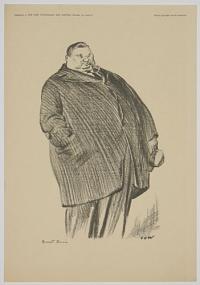
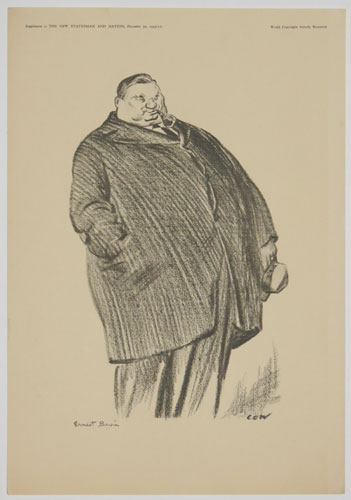
Ernest Bevin. Supplement to the New Statesman and Nation, December 30, 1933 (11).
Low.
Photo-lithograph. Sheet size: 230 x 330mm (9 x 13").
A portrait of Ernest Bevin (1881 - 1951), a British statesman, trade union leader, and Labour politician. He co-founded and served as general secretary of the Transport and General Workers' Union from 1922 to 1940, and as Minister of Labour in the war-time coalition government. By New Zealand born artist, Sir David Low (1891 - 1963). Unhappy with the political leadership of the British establishment David Low created his cartoon character, Colonel Blimp in 1934.
[Ref: 37143] £75.00
(£90.00 incl.VAT)
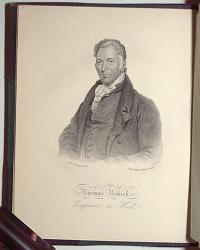
![Thomas Bewick [facsimile siganture.]](img-thumbnail/jpegs/29928.jpg)
Thomas Bewick [facsimile siganture.]
[Frederick Bacon, after James Ramsay.]
R. Turner [stamped.] [n.d. c.1852.]
Engraving on india with small margins, scarce, printseller's association stamp, publisher's blindstamp of R. Turner Newcastle. Limited edition 150 Autograph proofs on india paper; Plate 405 x 305mm (16 x 12").
Thomas Bewick (1753-1828), the British wood-engraver. He is credited with reviving this art and establishing it as a major form of printmaking. He developed the technique of cutting a design into hardwood cut across, rather than with, the grain, using a sharp tool called a bruin. In 1775, he received a payment from the Royal Society for the Encouragment of Arts, Manufactures and Commerce for a wood engraving of the 'Huntsman and the Old Hound'. Bewick's most important works are illustrations for books such as 'A General History of Quadrupeds' (1790) and 'A History of British Birds' (1797). NPG: D31747.
[Ref: 29928] £250.00
(£300.00 incl.VAT)

Mr. Tho.s Bewick, celebrated Engraver on Wood.
Miss Kirkley, Pinx.t. T.A. Kidd, Sculp.t
Published as the Act directs, Jan.y 4th 1798 by G.G. & J. Robinson Paternoster Row, & I.A. Kidd NewCastle upon Tyne.
Engraving. 195 x 140mm (7¾ x 5½"), with very large margins.
Thomas Bewick (1753-1828), wood-engraver. At the age of fourteen Bewick was apprenticed to Ralph Beilby, an engraver in Newcastle. He devoted himself to engraving on wood, and is credited with reviving this art and establishing it as a major form of printmaking. Bewick developed the technique of cutting a design into hardwood cut across, rather than with, the grain, using a sharp tool called a bruin. In 1775, he received a payment from the Royal Society for the Encouragement of Arts, Manufactures and Commerce for a wood engraving of the Huntsman and the Old Hound. Bewick's most important works are illustrations for books such as A General History of Quadrupeds (1790) and A History of British Birds (1797 and 1804). This portrait is engraved from a painting by Caroline Kirkley (1795-1798, fl.), daughter of Sir Joshua Reynolds' manservant Ralph Kirkely.
[Ref: 33972] £130.00
(£156.00 incl.VAT)
![[Thomas Bewick.]](img-thumbnail/jpegs/7377.jpg)
[Thomas Bewick.]
[Painted by James Ramsay.]
[n.d., c.1840.]
Steel engraving, proof before all letters on india paper. India 270 x 180mm. Small holes in india where glued to backing sheet top right and lower left. Pin-sized hole to right of Bewick's head. Two rust spots on image.
Thomas Bewick (1753 - 1828), wood-engraver. Taken from the 1823 portrait by James Ramsay. NP: 319.
[Ref: 7377] £65.00
(£78.00 incl.VAT)

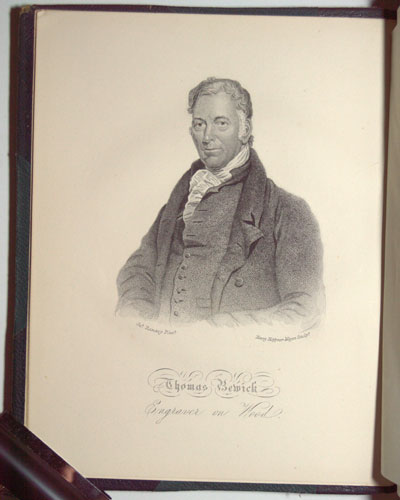
Thomas Bewick. Engraver on Wood.
Ja.s Ramsay Pinx.t Henry Hoppner Meyer, Sculp.t
Edwin Pearson Excudit. [n.d., c.1840.]
Stipple. 279 x 215mm. 11 x 8½".
Thomas Bewick (1753-1828), wood-engraver. At the age of fourteen Bewick was apprenticed to Ralph Beilby, an engraver in Newcastle. He devoted himself to engraving on wood, and is credited with reviving this art and establishing it as a major form of printmaking. Bewick developed the technique of cutting a design into hardwood cut across, rather than with, the grain, using a sharp tool called a bruin. In 1775, he received a payment from the Royal Society for the Encouragement of Arts, Manufactures and Commerce for a wood engraving of the Huntsman and the Old Hound. Bewick's most important works are illustrations for books such as A General History of Quadrupeds (1790) and A History of British Birds (1797 and 1804).
[Ref: 18949] £90.00
(£108.00 incl.VAT)
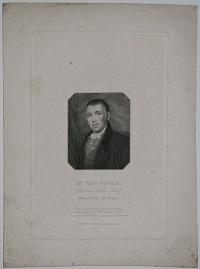
Mr. Thos. Bewick, Restorer of the Art of Engraving on Wood.
From an original Miniature by Murphy, in the possession of Mr. Bewick, with whose permission this Plate is Engraved by J. Summerfield.
Published Feby. 1, 1816, by T. McLean, Sackville Street, Piccadilly.
Engraving on india laid paper, 235 x 155mm. 9¼ x 6". A fine impression.
Scarce portrait of Thomas Bewick (1753 - 1828), wood-engraver. At the age of fourteen Bewick was apprenticed to Ralph Beilby, an engraver in Newcastle. He devoted himself to engraving on wood, and is credited with reviving this art and establishing it as a major form of printmaking. Bewick developed the technique of cutting a design into hardwood cut across, rather than with, the grain, using a sharp tool called a burin. In 1775, he received a payment from the Royal Society for the Encouragement of Arts, Manufactures and Commerce for a wood engraving of the Huntsman and the Old Hound. Bewick's most important works are illustrations for books such as A General History of Quadrupeds (1790) and A History of British Birds (1797 and 1804). for the portrait with additional letterpress see ref. 18951
[Ref: 17200] £160.00
(£192.00 incl.VAT)
Bewick Gleanings: being Impressions from Copperplates and Wood Blocks, Engraved in the Bewick Workshop, Remaining in the possession of the family until the death of the last Miss Bewick, and sold afterwards by order of her executors. Edited, with Notes, by Julia Boyd... To which are added, Lives of Thos. Bewick and his Pupils. With Impressions from other Wood Blocks Collected by or Left to the Author.
Printed and Published by Andrew Reid, Printing Court Buildings, Akenside Hill, Newcastle-Upon-Tyne. 1886.
4to, Small Paper Copy No 44, signed in ink by the editor; green half morocco gilt, top edge gilt; pp. xiv, including engraved frontis. portrait, + 108 + 104, woodcuts throughout, 53 numbered engraved plates at rear with tissue guards. A little rubbing to binding, occasional foxing, bookplate of Leonard Harrison Matthews on front pastedown.
A collection of the work of Thomas Bewick (1753-1828), a natural history author famed for the quality of his wood engravings. Leonard Harrison Matthews (1901-86) was a British zoologist, especially known for his research and writings on marine mammals. In the 1920s he spent some time on South Georgia studying the biology of whales and southern elephant seals.
[Ref: 56129] £350.00
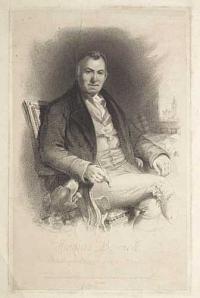
Thomas Bewick the Celebrated Engraver on Wood.
William Nicholson Pinx.t. Thomas Ranson Sculp.t.
London Published by T. Ranson, Judd Place West New Road & Mess.rs Boydell Cheapside, Jan.y 1816.
Scarce etching, scratched letter proof on chine collé. 280 x 180mm (11 x 7"), with large margins. Some spotting and creasing,
Seated portrait of Thomas Bewick (1753-1828), holding burin, with a sketch of a cow on a table beside him. Thomas Ranson (1784-1828) was apprenticed in Newcastle before moving to London. He was a noted bank note engraver. Provenance Davidson Album. Alexander: Pg 731.
[Ref: 57720] £240.00
(£288.00 incl.VAT)

Vue de Bex.
J. Weibel fc.
1818.
Aquatint and etching with fine hand colouring. Size: 209 x 280mm (8¼ x 11"). Trimmed around image and text.
A landscape view of the town of Bex, Switzerland, with mountains and a glacier in the background. A path next to rocks with a herder and his animals can be seen on the left side. Bex sits on the east side of the Rhone River in a wide valley, surrounded on the east by the Bernese Alps and west by the Chablais Alps. By Swiss landscape painter and printmaker, Samuel Jakob Weibel (1771 - 1846).
[Ref: 31913] £260.00
(£312.00 incl.VAT)

Bex.
Martens del. Imp. Lemercier Paris.
[n.d., c.1853.]
Tinted lithograph. Sheet 165 x 210mm (6½ x 8¼").
The village of Bex, in the Vaud district of Switzerland.
[Ref: 38977] £95.00
(£114.00 incl.VAT)
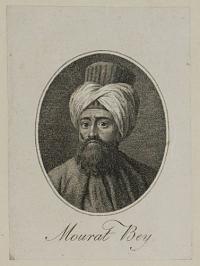
Mourat Bey.
[n.d., c.1800.]
Stipple. Sheet size: 112 x 80mm (4½ x 3¼"). Trimmed inside platemark. Glued to backing sheet.
A bust portrait of Murad Bey Mohammed (c.1750- 1801), full face, bearded, in a hat with turban, and dressed in a plain gown. In an oval. Murad was an Egyptian Mamluk chieftain (Bey), cavalry commander and joint ruler of Egypt with Ibrahim Bey. After the death of his master Muhammad Bey Abu al-Dhahab, Murad Bey was in command of the Mamluk army, whereas Ibrahim Bey was in charge of administrative duties of Egypt. They survived through the persistent Ottoman attempts at overthrowing the Mamluk regime and civil strifes. They served as kaymakams (acting governors) in Egypt on occasion, although they effectively held power for decades, even over the appointed Ottoman governor of Egypt.
[Ref: 34389] £65.00
(£78.00 incl.VAT)
![[Bhutan] A Temple of Bode.](img-thumbnail/jpegs/52892.jpg)
[Bhutan] A Temple of Bode.
Drawn by S. Davis Esq.r. Engraved by W. Daniell.
Published by W.m Daniell, No 9 Cleveland Street, Fitzroy Square, London, July 25, 1813.
Fine and rare coloured aquatint. 350 x 475mm (13¾ x 18¾").
A chorten (temple) flanked by tall dashis, prayer flags inscribed from top to bottom with the sacred Buddhist mantra 'om-mani-padme-hum'. In the distance is a Rajah's small villa. It was drawn by Samuel Davis and engraved by William Daniell for their 'Views in Bootan', a rare book containing only six plates, the first views of Bhutan published in England. Davis (1760-1819) was ''Draftsman and Surveyor'' on Samuel Turner's expedition to Tibet on behalf of the East India Company. He was refused entry into Tibet and had to remain in Bhutan as the expedition proceeded. In 1789 he met William Daniell in Bhagalpur, while William was travelling with his uncle Thomas Daniell, and encouraged the two artists to visit the Himalayas. Davis returned to England in 1806 and was made a director of the East India Company the same year. William Daniell (1769-1837) published this work the year he began travelling for his 'Voyage Round Great Britain'.
[Ref: 52892] £2,500.00
![[Bhutan] View of Choka.](img-thumbnail/jpegs/52891.jpg)
[Bhutan] View of Choka.
Drawn by S. Davis Esq.r. Engraved by W. Daniell.
Published by W.m Daniell, No 9 Cleveland Street, Fitzroy Square, London, June 1, 1813.
Fine and rare coloured aquatint. 350 x 475mm (13¾ x 18¾"), watermarked 'J. Whatman', 1810?
A view of a dzong (fortress) in Chukha, one of the 20 dzongkhag (districts) comprising Bhutan. It was drawn by Samuel Davis and engraved by William Daniell for their 'Views in Bootan', a rare book containing only six plates, the first views of Bhutan published in England. Davis (1760-1819) was ''Draftsman and Surveyor'' on Samuel Turner's expedition to Tibet on behalf of the East India Company. He was refused entry into Tibet and had to remain in Bhutan as the expedition proceeded. In 1789 he met William Daniell in Bhagalpur, while William was travelling with his uncle Thomas Daniell, and encouraged the two artists to visit the Himalayas. Davis returned to England in 1806 and was made a director of the East India Company the same year. William Daniell (1769-1837) published this work the year he began travelling for his 'Voyage Round Great Britain'.
[Ref: 52891] £2,500.00
![[Bhutan] View between Murichom & Choka.](img-thumbnail/jpegs/52893.jpg)
[Bhutan] View between Murichom & Choka.
Drawn by S. Davis Esq.r. Engraved by W. Daniell.
Published by W.m Daniell, No 9 Cleveland Street, Fitzroy Square, London, July 25, 1813.
Fine and rare coloured aquatint. 480 x 350mm (19 x 13¾").
A precipitous path with steps cut into the rock. A European sits using a telescope to view the scenery. It was drawn by Samuel Davis and engraved by William Daniell for their 'Views in Bootan', a rare book containing only six plates, the first views of Bhutan published in England. Davis (1760-1819) was ''Draftsman and Surveyor'' on Samuel Turner's expedition to Tibet on behalf of the East India Company. He was refused entry into Tibet and had to remain in Bhutan as the expedition proceeded. In 1789 he met William Daniell in Bhagalpur, while William was travelling with his uncle Thomas Daniell, and encouraged the two artists to visit the Himalayas. Davis returned to England in 1806 and was made a director of the East India Company the same year. William Daniell (1769-1837) published this work the year he began travelling for his 'Voyage Round Great Britain'.
[Ref: 52893] £2,500.00
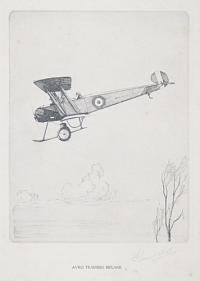
Avro Training Biplane.
Signed in pencil Howard Leigh.
Etching 250 x 190mm, 7½ x 9¾". Light spotting.
Howard Leigh, American 1896-1981.
[Ref: 10908] £220.00
(£264.00 incl.VAT)
![[Biplane dogfight] S.E.5a.](img-thumbnail/jpegs/10907.jpg)
[Biplane dogfight] S.E.5a.
Howard Leigh [pencil signature].
Etching 250 x 190mm (7½ x 9¾"). Light spotting.
A First World War dogfight between a German and a British Royal Aircraft Factory S.E.5, the fastest aircraft in the war. Howard Leigh (1896-1981), an American etcher.
[Ref: 10907] £220.00
(£264.00 incl.VAT)
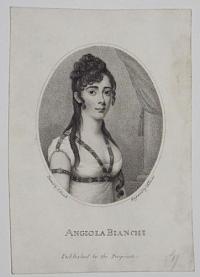
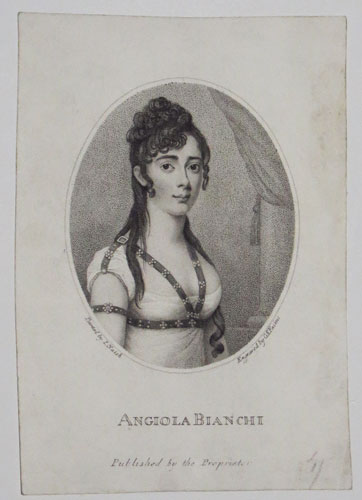
Angiola Bianchi.
Painted by I. Naish. Engraved by G.S. Facius.
Published by the Proprietor. [n.d., c.1800.]
Stipple. Sheet: 175 x 120mm (7 x 4¾''). Trimmed.
A portrait of Italian singer Angiola Bianchi.
[Ref: 49954] £65.00
(£78.00 incl.VAT)
![Auszug aus einer See-Charte die Andreas Bianco im I[ahr] 1436 zu Venedig verfertigte...](img-thumbnail/jpegs/53128.jpg)
Auszug aus einer See-Charte die Andreas Bianco im I[ahr] 1436 zu Venedig verfertigte... Auszug aus einer Charte die Fr. Picigano im I[ahr] 1367 zu Venedig verfertigte...
A.G. Ephem 1807. 10. stk.
Weimar, im Verlag des geograph. Instituts, 1807.
Engraved map. 180 x 230mm (7 x 9"). Folds as issued.
Two facsimiles of Venetian charts of the 15th & 16th centuries, showing the Atlantic before the known discovery of America, The presence of 'Y.a d'Antilla', a large island west of Madeira, is often used to argue that the Portuguese discovered America before Colombus.
[Ref: 53128] £140.00

La France de nos Jours. N.º 226. Biarritz. Vue de la Villa Eugénie et de la Côte Impériale.
Des.é d'ap. nat. et lith. en col. par Ch. Mercereau. Imp.é en 3. coul. par Frick fr. r. de la Vielle Estrapade, 17, Paris.
Paris, F. Sinnett, Editeur [n.d., c.1860].
Tinted lithograph with hand colour. Sheet 300 x 385mm (11¾ x 15¼").
The Villa Eugénie, was built for the Empress Eugénie c.1855 as a summer villa but became a hotel and casino in 1880. It is now the Hôtel du Palais. ''La France de nos jours'' was a series of 475 plates published from 1853 to 1876.
[Ref: 62685] £90.00
(£108.00 incl.VAT)
![[Bias of Priene.] Bias weinet, indem er jemanden zum Tode verurtheilet. Bias, capitis aliquem damnans, lacrymatur. vid. Srobaeus sermone 44.](img-thumbnail/jpegs/60188.jpg)
[Bias of Priene.] Bias weinet, indem er jemanden zum Tode verurtheilet. Bias, capitis aliquem damnans, lacrymatur. vid. Srobaeus sermone 44. Praenobilissimo Dicasterio Civitatis primariae Gedanensis.
A Stech. inv. 1685. D.D.G. humillimus Servus Matth. Deisch fec. Ged. 1769.
Mezzotint, 18th century watermark. 250 x 420mm (9¾ x 16½"), large margins. Stain top right.
Bias weeps while condemning someone to death. Bias of Priene (6th century BC) was one of the Seven Sages of Greece, renouned for his probity. An illustration of a tapestry after Andrzej Stech (1635-97) that once belonged to the bench of judges in the Artus Court in Gdansk, Poland. The story comes from 'Lives and Opinions of Eminent Philosophers' by Diogenes Laërtius (3rd century AD).
[Ref: 60188] £280.00
(£336.00 incl.VAT)
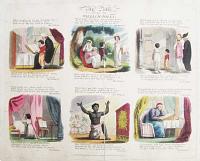
My Bible, by William Jolly.
London, Published July 16th 1812 by William Darton Jun.r 58 Holborn Hill.
Coloured etching. 240 x 395mm (9½ x 15½). Trimmed to plate, split in centre fold, laid on album paper.
Six scenes illustrating 12 verses of Christian morality. Centre bottom shows image of an African.
[Ref: 58498] £240.00
(£288.00 incl.VAT)
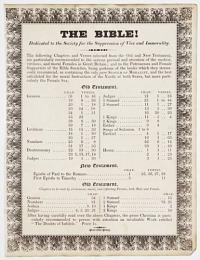
The Bible! Dedicated to the Society for the Supression of Vice and Immorality. The following Chapers and Verses selected for the Old and New Testament, are particularly recommended to the serious perusal and attention of the modest, virtuous, and moral Females in Great Britain[...]
Letterpress with woodcut border.Letterpress with woodcut border. Sheet 245 x 185mm (9¾ x 7¼"). Trimmed just into border, mounted on album paper.
The Society for the Supression of Vice and Immorality was founded in 1802 by William Wilberforce, aiming at ''profanation of the Lord's Day and profane swearing; publication of blasphemous, licentious and obscene books and prints; selling by false weights and measures; keeping of disorderly public houses, brothels and gaming houses; procuring; illegal lotteries; cruelty to animals''. In 1809 Absalom Jones founded an American chapter. The Society was absorbed into the National Vigilance Association in August 1885.
[Ref: 42422] £140.00
(£168.00 incl.VAT)
![[A collection of Christian broadsides.]](img-thumbnail/jpegs/48163.jpg)
[A collection of Christian broadsides.]
[n.d., c.1830.]
Five rare letterpress broadsides. Largest sheet: 390 x 240mm (15½ x 9½''). Creasing.
A collection of broadsides relating to Christianity. Titles are: 'Great and Wonderful News to all Christendom, being a Strange and Wonderful Relation of the Appearance of an Angel', 'The Works of God, Shewn to the Widow and Fatherless', 'Bible Society: State of the World', 'Lines Written on the Death of the Rev. David Stoner, by Ann Foulds, of Great Harwood, Near Blackburn' and 'The Bible Society'.
[Ref: 48163] £250.00
(£300.00 incl.VAT)
view all images for this item
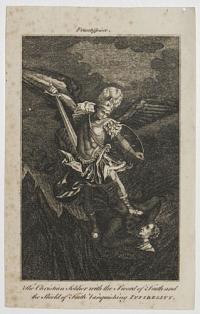
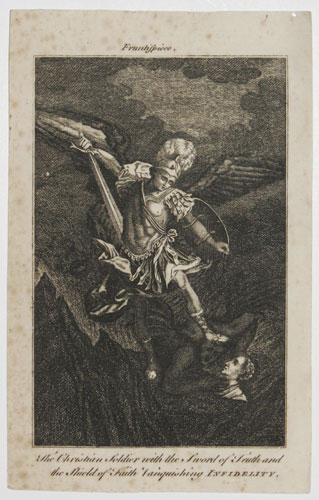
The Christian Soldier with the Sword of Truth and the Shield of Faith Vanquishing Infidelity. Fruntispiece.
[n.d. c.1840.]
Engraving. 172 x 109mm (6¾ x 4¼").
A frontispiece to a religious related text.
[Ref: 28617] £65.00
(£78.00 incl.VAT)
![[Illustrations to Edward Spark's bible]](img-thumbnail/jpegs/68178.jpg)
[Illustrations to Edward Spark's bible] [&] [Illustrations to the Book of Common Prayer]
[London printed for J. Redmayne, Jun, For T. Basset and J. Brome,]
[and are to be sold by J. Williams at the Crown in S.t Paul's Church-yard 1682] [&] [n.d. c.1654]
36 engravings on an album sheet. Sheet size, 610 x 445mm (24 x 17½). All trimmed within plate and glued to backing sheet.
18 illustrations to Edward Spark's, 'Thysiasterion, vel Scintilla altaris : Primitive devotion in the feasts and fasts of the Church of England,' published 1682. 18 illustrations to the Book of Common Prayer including images of the gunpowder plot 'The Powder Plot November 5,' , King Charles I's execution, 'K: Charles I Murthered Pf31,' and 'K Charles II his returne 2 Sam.'
[Ref: 68178] £360.00
view all images for this item
![[20 Illustrations to the Book of Common Prayer] [&]](img-thumbnail/jpegs/68193.jpg)
[20 Illustrations to the Book of Common Prayer] [&] [7 Illustrations from Considerations of Drexelius on the eternity of hell torments. Translated into English] [&] [Titlepage to Ecclesia Anglicana] [&] [Ignatius Loyola and 4 Jesuit followers]
J. Drapentier. [A: Hertochs fecit]
[n.d. c.1708] [&] [n.d. c.1703] [&] [n.d. c.1659] [n.d. c.1690]
30 engravings on an album sheet front and back. Sheet size, 610 x 445mm (24 x 17½). All trimmed within plate and glued to backing sheet.
Illustrations to the Book of Common Prayer. It looks like they are from, 'The Book of Common Prayer and Administration of the Sacraments and other Rites and Ceremonies of the Church according to the use of the Church of England together with the Psalter or Psalms of David pointed as they are to be sung or said in churches,' Published by Oxford, The University Printers, Oxford, 1708. Illustrations from, 'Considerations of Drexelius on the eternity of hell torments. Translated into English,' by Jeremias Drexel (1581-1638). Frontis to John Gauden's (d.1662), 'Ecclesia Anglicana' engraved by Abraham Hertochs (fl. 1626-1672) and published in London, 1659. Line engraving of Saint Ignatius Loyola and 4 Jesuit followers, 'Suarez, Mariana, Garnet & Parons,' See Wellcome 5562i for Saint Ignatius with different follower names.
[Ref: 68193] £580.00
view all images for this item
![[Frontispiece to Part VII of the Bibliotheca Chalcographica]](img-thumbnail/jpegs/46378.jpg)
[Frontispiece to Part VII of the Bibliotheca Chalcographica] VII Pars Bibliohecae Chalcographicae Id Est / Continuatio Secunda Iconum Virorum Illustrium
Impensis Clementis Amony, Bibliopolae et Chalcographi
Francfordy ad Moenum Anno MDCLXIX
Engraving, sheet 180 x 140mm (7 x 5½"). Trimmed to image. Small loss top right.
Frontispiece to one of the final parts of the Bibliotheca Chalcographica, a series of portrait prints published in nine parts between 1597 and 1664, initially with text by Jean-Jacques Boissard and engravings by Theodor de Bry but with other writers and engravers becoming involved in the later parts.
[Ref: 46378] £140.00
(£168.00 incl.VAT)
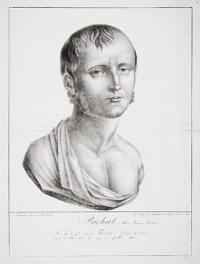
Bichat (Marie; Francois Xavier) Ne le 11. 9bre. 1771 a Thoirette, Dept. de l'ain, mort a Paris dans le mois de Juillet 1802.
Dumont, eleve de Mr. David. Imp. Lithogr. de G. Engelmann, rue Cassette N.18 a Paris.
Rare lithograph. 552 x 368mm (21¾ x 14½"). Some tears and nicks to the edges. Horizontal crease through centre.
A very striking portrait of Marie François Xavier Bichat (1771-1802), French anatomist and physiologist. Bichat is best remembered as the father of modern histology and pathology. Not in Wellcome.
[Ref: 14574] £240.00
(£288.00 incl.VAT)

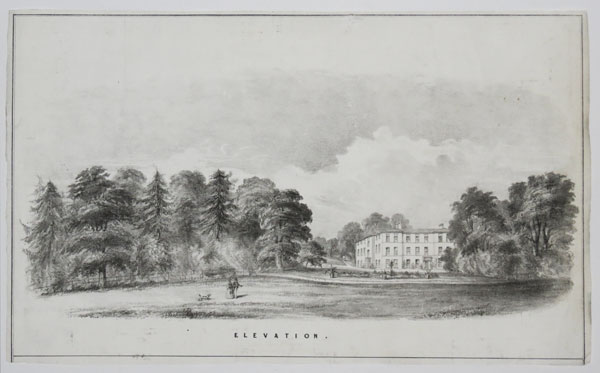
Elevation. ['Birches Green/ occupied by Brueton Gibbins' in ink mss. below.]
Lithographic illustration to the sale particulars of the property [Birmingham, n.d., but 1848]. Thin paper, scarce Fold creases as normal; a little soiled, with slightly frayed extremities.
View of a substantial property in its grounds in the Erdington district of Birmingham; figures and a dog walking in the gardens. It was bought by Brueton Gibbins in 1819, a local business man and Quaker philanthropist who owned the Aston Glass and Flintworks. It was put up for sale by auction in 1848. The mansion was later known as 'Rookery House' and was purchased by the municipal council in the early 20th century to serve as a recreational park. Birmingham Archives & Heritage: Sales catalogues/Robins Vol 2, p.21.
[Ref: 24612] £130.00
(£156.00 incl.VAT)

James Bick ye Famous Mimick Trumpetter of Oxford 1712.
[engraved by John Faber snr.]
[Published by Faber.]
Scarce mezzotint. Each sheet: 115 x 105mm (4½ x 4¼"). Trimmed into plate at top, thread margins elsewhere, top left corner torn.
A very rare portrait of James Bick (d.1734), set in a circle. He was a ventriloquist and imitator of musical instruments, especially the trumpet, touring the public houses of Oxford. CS: 5, i and ii of ii. Ex: collection of The Hon. Christopher Lennox-Boyd.
[Ref: 67607] £280.00
(£336.00 incl.VAT)
![James Bick ye Famous Mimick Trumpetter of Oxford 1712 [two states].](img-thumbnail/jpegs/43734.jpg)
James Bick ye Famous Mimick Trumpetter of Oxford 1712 [two states].
[engraved by John Faber snr.]
[Published by Faber.] [&] Sold by Tim: Iordan & Tho: Bakewell at ye Golden Lion in Fleet Street.
Mezzotint. Each sheet: 120 x 100mm (4¾ x 4"). Trimmed and laid on card.
A pair of both states of this very rare portrait of James Bick (d.1734, set in an circle. He was a ventriloquist and imitator of musical instruments, especially the trumpet, touring the public houses of Oxford. CS: 5, i and ii of ii.
[Ref: 43734] £520.00
view all images for this item
![[Trade Card of George Bickham the Elder.]](img-thumbnail/jpegs/65059.jpg)
[Trade Card of George Bickham the Elder.]
Sold by C. Dicey & Co, in Aldermary Church Y.d [n.d., published by Dicey c.1760, this example later c. 1820's].
Engraving with etching. 335 x 250mm (13¼ x 9¾"). Narrow margins, mounted on album paper.
The trade card of George Bickham the Elder, with his address at Hoop Alley, Old Street. It is a medley including a portrait, a ballad 'The Scotch Wedding', a playing card and a sheet with 'Graven, Written & Sold by George Bickham'. BM: Heal,59.16.
[Ref: 65059] £320.00
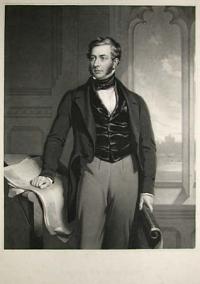
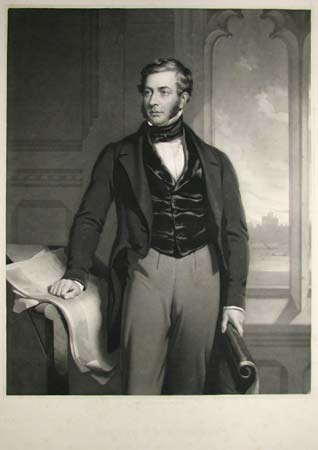
George P. Bidder, Esqre.
Painted & Engraved by John Lucas. Proof.
London: Published January 1st. 1848, By Henry Graves & Compy. Printsellers To The Queen & H.R.R. Prince Albert, 6.Pall Mall.
Mezzotint. 518 x 360mm.
George Parker Bidder (1806-1878).was the son of a stonemason and born at Mortonhampstead in Devon. While still a young child his father took him to local fairs and then around the country showing off his mathematical skills where he earned a good living. In 1819 he came to the attention of Sir Henry Jardine and was tutored privately, by 1820 he was attending Edinburgh University. He settled in Lambeth and became a very successful engineer.
[Ref: 3964] £320.00

George Bidder. The Calculating phenomenon of England. Who at eight years of age & having received no instruction ina rthmatic possessed the power of resolvin difficult arithmetical questions without hesitatin or shewing any appearance if mental operation Which power continues and improves. He was born at Morton Hampstead in Devonshire June 14.th. 1806.
Engraved July 1815 by Freeman from a picture by John King.
Stipple. Sheet: 155 x 195mm (6 x 7¾"). Trimmed within plate.
A portrait of George Bidder (1806-1878) who was exhibited by his father around the country on account of his fascinating mental skills. Thanks to an education provided by figures such as Sir J. Herschel and Sir H. Jardine, Bidder went on to be a successful engineer who worked alongside the Stephensons advising on the creation of the railways. For a portrait of Bidder as an adult see ref: 3964. For another portrait of Bidder as a boy see ref: 31184.
[Ref: 35729] £95.00
(£114.00 incl.VAT)
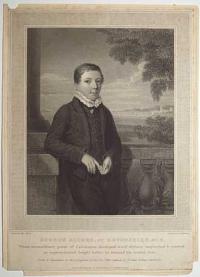
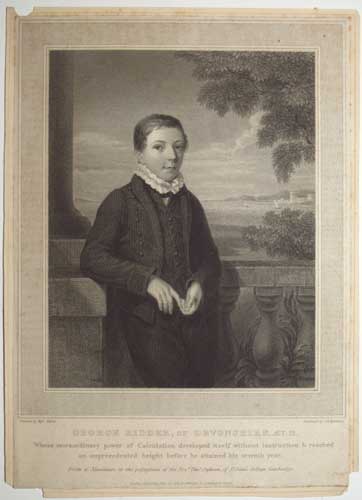
George Bidder, of Devonshire, AET.13. Whose extraordinary power of Calculation developed itself without instruction & reached an unprecedented height before he attained his seventh year. From a Miniature in the possession of the Rev.d Tho.s Jephson, of St. John's College Cambridge.
Painted by Miss Hayter. Engraved by J.H. Robinson.
London, Published June 25, 1819, by Colnaghi & Co. Cockspur Street.
Proof. Engraving. 245 x 175mm (9½ x 7"). Cut inside platemark. Some foxing. Laid on album sheet at edges.
George Parker Bidder (1806-1878), the English engineer, architect and calculating prodigy. In 1834 Robert Stephenson, whose acquaintance he had made in Edinburgh, offered him an appointment on the London & Birmingham Railway, and in the succeeding year or two he began to assist George Stephenson in his parliamentary work, which at that time included schemes for railways between London and Brighton and between Manchester and Rugby via the Potteries. In 1837 he was engaged with Stephenson in building the Blackwall Railway, and it was he who designed the peculiar method of disconnecting a carriage at each station while the rest of the train went on without stopping, which was employed in the early days of that line when it was worked by means of a cable. He also advised on the construction of the Belgian railways; with Robert Stephenson he made the first railway in Norway, from Christiania to Eidsvold; he was engineer-in-chief of the Danish railways, and he was largely concerned with railways in India, where he strongly and successfully opposed break of gauge on through routes. In 1860 he was elected president of the Institution of Civil Engineers. He was also one of the founders of the Electric Telegraph Company, which enabled the public generally to enjoy the benefits of telegraphic communication. In hydraulic engineering, he was the designer of the Victoria Docks (London). Bidder also investigated the practicality of steam trawlers in conjunction with Samuel Lake.
[Ref: 55257] £180.00
(£216.00 incl.VAT)
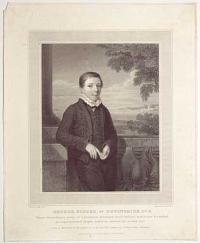
George Bidder, of Devonshire, AET.13. Whose extraordinary power of Calculation developed itself without instruction & reached an unprecedented height before he attained his seventh year. From a Miniature in the possession of the Rev.d Tho.s Jephson, of St. John's College Cambridge.
Painted by Miss Hayter. Engraved by J.H. Robinson.
London, Published June 25, 1819, by Colnaghi & Co. Cockspur Street.
Engraving. 245 x 175mm (9½ x 7"). Thread margins.
George Parker Bidder (1806-1878), the English engineer, architect and calculating prodigy. In 1834 Robert Stephenson, whose acquaintance he had made in Edinburgh, offered him an appointment on the London & Birmingham Railway, and in the succeeding year or two he began to assist George Stephenson in his parliamentary work, which at that time included schemes for railways between London and Brighton and between Manchester and Rugby via the Potteries. In 1837 he was engaged with Stephenson in building the Blackwall Railway, and it was he who designed the peculiar method of disconnecting a carriage at each station while the rest of the train went on without stopping, which was employed in the early days of that line when it was worked by means of a cable. He also advised on the construction of the Belgian railways; with Robert Stephenson he made the first railway in Norway, from Christiania to Eidsvold; he was engineer-in-chief of the Danish railways, and he was largely concerned with railways in India, where he strongly and successfully opposed break of gauge on through routes. In 1860 he was elected president of the Institution of Civil Engineers. He was also one of the founders of the Electric Telegraph Company, which enabled the public generally to enjoy the benefits of telegraphic communication. In hydraulic engineering, he was the designer of the Victoria Docks (London). Bidder also investigated the practicality of steam trawlers in conjunction with Samuel Lake. See Ref: 55257 for another version.
[Ref: 56988] £280.00
(£336.00 incl.VAT)
![[''Biddie and Beauty Queen''.]](img-thumbnail/jpegs/47833.jpg)
[''Biddie and Beauty Queen''.]
[Cynthia Harnett and George Vernon Stokes.]
[n.d., c.1944.)
Drawing. Sheet: 205 x 185mm (8 x 7¼"). On board with pencil annotations.
A scene showing a young girl chasing after a lead. An original illustration by illustrator and author Cynthia Harnett (1893-1981) and animal artist George Vernon Stokes (1873-1954) for Muriel Denison's 'Happy Tramp: the Story of a Little Girl and Her Old English Sheep Dog', 1944. After her father is wounded as a soldier in World War II and her mother is killed by in a German air raid Biddie and her Old English Sheepdog are evacuated to America where her father has found work as a kennel man for a wealthy New York dog breeder.
[Ref: 47833] £30.00
(£36.00 incl.VAT)
![[Colonel Biddulph.]](img-thumbnail/jpegs/2817.jpg)
[Colonel Biddulph.]
[Painted by the Honorable Henry Graves. Engraved by Thomas L.Atkinson Esq.r.]
[London, Published by Henry Graves & Comp.y Oct 11. 1870; Printsellers to the Queen _ 6 Pall Mall.]
Proof mezzotint on india, with Printsellers' Association blindstamp.530 x 385mm.
Probably Sir Michael Anthony Shrapnel Biddulph (1823-1904). Ex: Collection of The Hon. C. Lennox-Boyd.
[Ref: 2817] £190.00
(£228.00 incl.VAT)
![[William III arriving in Honslaarsdijk in the Hague, in his carriage]](img-thumbnail/jpegs/42415.jpg)
[William III arriving in Honslaarsdijk in the Hague, in his carriage] Aenkomst van S.K. Maj. op Honslerdyk [parallel text in French].
[Romeyn de Hooghe, published the Hague by Arnold Leers, 1691]
Etching, 17th century watermark; platemark 330 x 440mm (13 x 17¼"). Fold through centre as normal.
Illustration to Govert Bidloo's 'Komste van Zyne Majesteit Willem III in Holland' (1691), etched by Romeyn de Hooghe (1645-1708), exponent of the late Dutch Baroque best known for his political caricatures of Louis XIV and his prints glorifying William III and the Glorious Revolution. De Hooghe's output as an artist was broad, however, and he had other talents and responsibilities: in 1689 he was placed in charge of obtaining building materials for the royal hunting lodge of Het Loo; the same year he became a Doctor of Law at Harderwijk University; he designed ceiling paintings for municipal buildings and church windows; and he wrote several political and historical treatises. Landwehr: 79
[Ref: 42415] £320.00





![[Adrian Beverland.]](jpegs/65532.jpg)
![[Playbill] Theatre, Beverley,](jpegs/65955.jpg)
![Thomas Bewick [facsimile siganture.]](jpegs/29928.jpg)

![[Thomas Bewick.]](jpegs/7377.jpg)




![[Bhutan] A Temple of Bode.](jpegs/52892.jpg)
![[Bhutan] View of Choka.](jpegs/52891.jpg)
![[Bhutan] View between Murichom & Choka.](jpegs/52893.jpg)

![[Biplane dogfight] S.E.5a.](jpegs/10907.jpg)
![Auszug aus einer See-Charte die Andreas Bianco im I[ahr] 1436 zu Venedig verfertigte...](jpegs/53128.jpg)

![[Bias of Priene.] Bias weinet, indem er jemanden zum Tode verurtheilet. Bias, capitis aliquem damnans, lacrymatur. vid. Srobaeus sermone 44.](jpegs/60188.jpg)


![[A collection of Christian broadsides.]](jpegs/48163.jpg)
![[Illustrations to Edward Spark's bible]](jpegs/68178.jpg)
![[20 Illustrations to the Book of Common Prayer] [&]](jpegs/68193.jpg)
![[Frontispiece to Part VII of the Bibliotheca Chalcographica]](jpegs/46378.jpg)


![James Bick ye Famous Mimick Trumpetter of Oxford 1712 [two states].](jpegs/43734.jpg)
![[Trade Card of George Bickham the Elder.]](jpegs/65059.jpg)


![[''Biddie and Beauty Queen''.]](jpegs/47833.jpg)
![[Colonel Biddulph.]](jpegs/2817.jpg)
![[William III arriving in Honslaarsdijk in the Hague, in his carriage]](jpegs/42415.jpg)