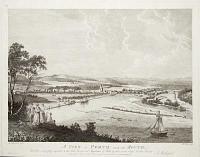
A View of Perth from the South. This Plate is respectfully inscribed to the Lord Provost and Magistsrates fo Perth by Their Much obliged humble Servant.
A. Rutherford Delint. V.M.Picot Sculpt.
To be had of Picot No.16 Strand. London & Rutherford Edinburgh.
Engraving 520 x 405mm
John Knox began the Scottish Reformation from grass-roots level with a sermon against 'idolatry' in the burgh kirk of St. John the Baptist in 1559. Oliver Cromwell's Parliamentarians, fresh from victory in the English Civil War, came to Perth. Cromwell established a fortified citadel on the South Inch (a large park south of the town) in 1652, one of five built around Scotland at this time to overawe and hold down the country. Perth's hospital, bridge and several dozen houses were demolished to provide building materials for this fort. Even graveslabs from the Greyfriars cemetery were used. It was given to the town in 1661 not long after Cromwell's death, and began almost immediately to be dismantled. The ditch, originally filled with water from the Tay, was still traceable in the late 18th century, but there are now no visible remains. The restoration of Charles II was not without incident, and with the Act of Settlement, came the Jacobite uprisings, to which Perth was supportive. The town was occupied by Jacobite supporters thrice in total (1689, 1715 and 1745). The Royal Burgh of Perth, sitting on the banks of the River Tay, increased with prestige throughout the 18th Century. In 1760, Perth Academy was founded, and major industry came to the town, now with a population of 15,000. Linen, leather, bleached products and whisky were its major exports, although the town had been a key port for centuries.
[Ref: 5315] £400.00
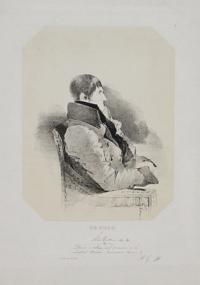
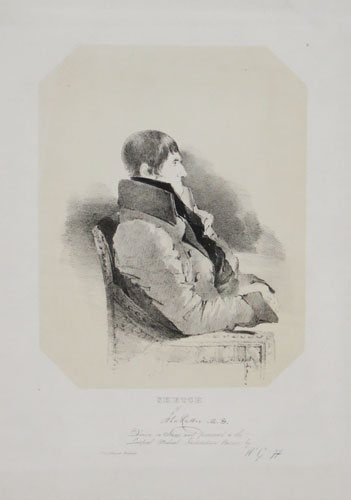
Sketch of John Rutter M.D.
Drawn on stone and presented to the Liverpool Medical Institution Bazaar by W G H.
P by T. Physick Manchester. [n.d., c.1850].
Lithograph with large margins, rare. Sheet size: 385 x 280mm. (15¼ x 11").
A portrait, seated, in profile to the right, of John Rutter, one of the founders of the Liverpool Medical Institution. Liverpool Medical Institution is one of the oldest medical societies in the world, tracing its origins to the founding of the Liverpool Medical Library in 1779. For 50 years the Liverpool Medical Library was situated variously at the Liverpool Infirmary on Shaw's Brow, and the Liverpool Dispensary in Church Street. In the 1830s a campaign masterminded by Dr John Rutter, led to the raising of sufficient funds to erect the present building, which was opened in May 1837. Not in Wellcome.
[Ref: 31687] £160.00
(£192.00 incl.VAT)
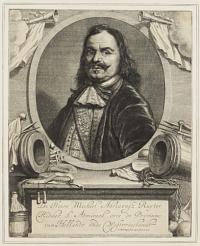
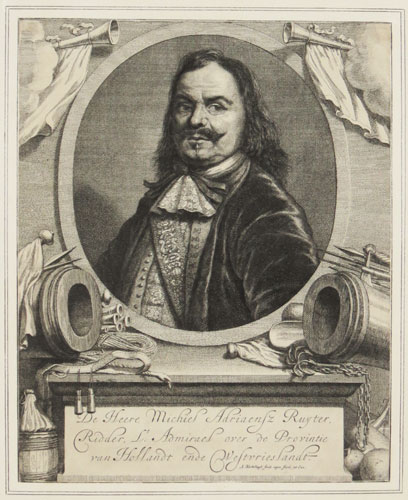
De Heere Michiel Adriansz Ruyter, Ridder, Lt. Admirael over de Provintie van Hollandt ende Westvrieslandt.
A: Blooteligh fecit aqua forti et Exc. [c.1680.]
Engraving. Sheet 270 x 215mm (10½ x 8½"), with 17th century watermark. Trimmed; tipped into backing sheet.
Michiel de Ruyter (1607-1676), one of the greatest Dutch admirals. De Ruyter is most famous for his brilliant victories in the Second and Third Anglo-Dutch Wars with England, the best known probably being the Raid on the Medway. Engraved by Abraham Blooteling (1640-90), Dutch printmaker who spent time in London (c.1672-8) where he created some of the early masterpieces in the new printmaking technique of mezzotint, before returning to his native Amsterdam. For the Raid on the Medway see ref. 18857.
[Ref: 43010] £180.00
(£216.00 incl.VAT)
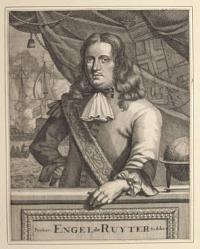
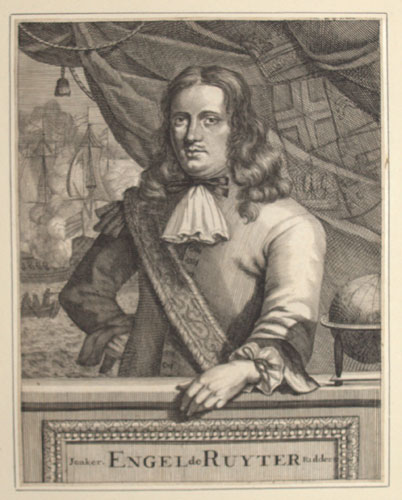
Jonker. Engel de Ruyter, Ridder.
[1676.]
Engraving. 175 x 135mm (7½ x 5¼"). Trimmed within plate, mounted in album paper at edges.
Michiel de Ruyter (1607-1676), one of the greatest Dutch admirals. De Ruyter is most famous for his brilliant victories in the Second and Third Anglo-Dutch Wars with England, the best known probably being the Raid on the Medway. From 'Leeven en Daden Der Doorluchtghste Zee-helden En Ontdeckers van Landen'.
[Ref: 53034] £50.00
(£60.00 incl.VAT)
![[Netherlands] Ruiter, Amiral Hollandois. Tire a l'Histoire general de Hollande.](img-thumbnail/jpegs/28434.jpg)
[Netherlands] Ruiter, Amiral Hollandois. Tire a l'Histoire general de Hollande.
[Touze]
A Paris chez Duflos rue St. Victor. A.P.D.R. [n.d. c.1780]
Engraving with strong contemporary hand-colouring and gold leaf surround, 279 x 167mm. (11 x 6½").
Michiel Adriaenszoon de Ruyter (1607 - 1676) is the most famous and one of the most skilled admirals in Dutch history. De Ruyter is most famous for his role in the Anglo-Dutch Wars of the 17th century. He fought the English and French and scored several major victories against them, the best known probably being the Raid on the Medway. From 'Recueil d'estampes représentant les grades, les rangs et les dignités suivant le costume de toutes les nations existantes' by Pierre Duflos, published 1779-84. The original colour is particularly fine, with gold leaf highlights.
[Ref: 28434] £80.00
(£96.00 incl.VAT)
![[Mr Shoole and Mrs Lydia Rybot] No. XXIX. The Winning Client. No. XXX. The Special Pleader.](img-thumbnail/jpegs/38594.jpg)
[Mr Shoole and Mrs Lydia Rybot] No. XXIX. The Winning Client. No. XXX. The Special Pleader.
Published by A. Hamilton Jun.r. Fleet Street, 1.st. Nov.r. 1790.
Engraving. Plate: 170 x 110mm (6¾ x 4¼"). Small margins on 3 sides; cut at top.
Two portrait busts set in ovals. On the right a Mr Shoole and on the left Mrs Lydia Rybot, formerly Mrs Fowler, wife of Francis Thomas Rybot a silk-mercer in Cheapside. Mrs Rybot was tried for criminal conversation with Mr Shoole. From 'Histories of the Tête à Tête annexed...' series that appeared in 'Town and Country Magazine', a monthy magazine which featured articles on the scandals and romantic affairs of nobility. BM Satire 7707.
[Ref: 38594] £50.00
(£60.00 incl.VAT)
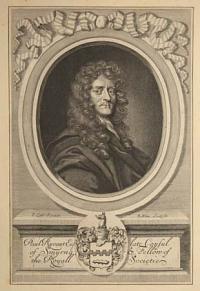
Paul Rycaut Esq. late Consul of Smyrna; & Fellow of the Royall Societies.
After P Lely pinxit., R. White sculp
Engraving. Sheet 235 x 155mm (9¼ x 6"). Trimmed to image and laid on album paper. Toning
Sir Paul Rycaut (1629-1700) was a British diplomat, spending much of his career in (now) Anatolia. He was a historian, specialising in the Ottoman Empire.
[Ref: 53747] £130.00
(£156.00 incl.VAT)
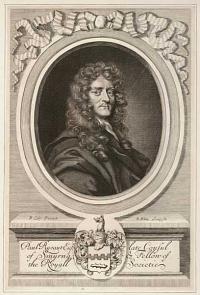
Paul Rycaut Esq.r late Consul of Smyrna; & Fellow of the Royall Societie.
P. Lelÿ Pinxit. R. White Sculpsit.
[n.d. c.1679.]
Very fine engraving, sheet 240 x 160mm (9½ x 6¼"). Trimmed to plate, glued on album sheet at edges.
Half-length portrait of historian Sir Paul Rycaut (1628-1700), in an oval on a pedestal, wearing long wig and cloak and with a coat of arms below. The portrait was the frontispiece to Rycaut's 'History of the Turkish Empire' (London, 1680), and his translation of Lorenzo Gracian's 'The Critick' (London, 1681). O'Donoghue 1.
[Ref: 59513] £180.00
(£216.00 incl.VAT)
![[Martin Rychart]](img-thumbnail/jpegs/55689.jpg)
[Martin Rychart] Engraved from a [most capital] Painting of Vandyck in the collection of the Right Hon.ble the Earl of Warwick by J.R. Smith & publish'd by him Novem.r 20 1779 at No 10 in Batemans Buildings Soho Square London.
Mezzotint, First state with scratched letter title, 18th century watermark. 380 x 275mm (15 x 10¾"), with very large margins. Pair of worm holes in margins, some lettering abraded.
Maerten Rÿckaert (1587-1631), landscape painter and friend of Anthony van Dyck. He had only one arm, explaining the unusual framing of this portrait. Engraved by the leading mezzotint engraver John Raphael Smith after a portrait by van Dyck now in the Museo Nacional del Prado, Madrid. CS: 144, i of iii; Frankau: 302; D'Oench 139.
[Ref: 55689] £390.00

Ryde, Isle of Wight.
[n.d., c.1860.]
Coloured lithograph. Sheet 180 x 420mm (7 x 16½"). Original folds, stains in margins.
A view of Ryde from a pier, probably the Victoria Pier, opened in 1854 but was destroyed in 1859.
[Ref: 64349] £140.00
(£168.00 incl.VAT)

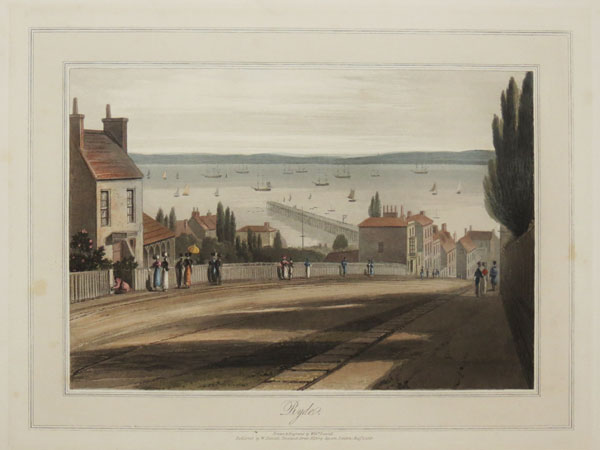
Ryde.
Drawn & Engraved by Will.m Daniell.
Published by W. Daniell, Cleveland Street, Fitzroy Square, London, Aug.t 1, 1823.
Aquatint with fine original hand colour J. Whatman Turkey Mill 1823 watermark. 230 x 300mm (9 x 12"), with large margins.
A view from Ryde on the Isle of Wight, looking across the Solent to Hampshire. From William Daniell's 'A Voyage Round Great Britain', a series of 308 aquatints published in eight volumes between 1814-1825, described by R.V. Tooley as 'the most important colour plate book on British Topography'. Abbey: Scenery, 16; Tooley: Books with Coloured Plates 177.
[Ref: 47153] £230.00
(£276.00 incl.VAT)
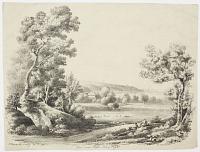
View near Ryde, Isle of Wight.
On Stone by Will.m Varley.
J. Boosey & Co, Lithog. 310 Strand.
Lithograph; watermark 1816; Sheet 315 x 410mm (12¼ x 16"). Torn. Bit messy.
From Varley's 'Four Views in the Isle of Wight'. Abbey: 346. Ex: Collection of Hon. Christopher Lennox-Boyd.
[Ref: 40635] £120.00
(£144.00 incl.VAT)

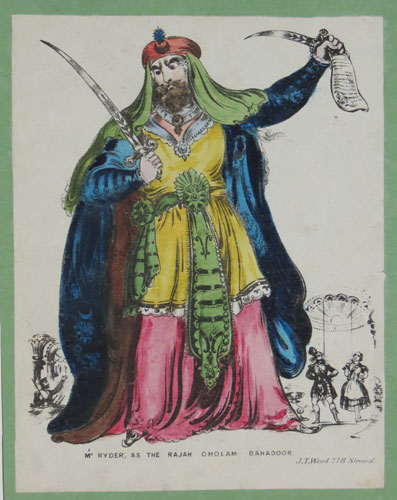
Mr Ryder, as the Rajah Cholam Bahadoor.
J.T. Wood, 278 Strand. [n.d., c.1860.]
Coloured wood engraving. Sheet 220 x 170mm (10½ x 6¾"). Trimmed and laid on album paper.
John Nicholas Robins Ryder (1814-85), an actor known for his powerful voice, height and imposing physique, on stage in elaborate oriental costume. During the 1850s Ryder played in many of Charles Kean's productions at the Princes Theatre.
[Ref: 33216] £70.00
(£84.00 incl.VAT)
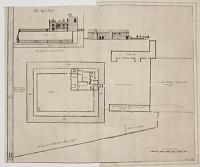
The Rye House.
J. Oliver Sculp [1686].
Very rare etching; sheet 370 x 440mm (14½ x 17¼"). Repaired tears. Trimmed; folded down centre; glued to backing sheet.
Small elevation and plan of the Rye House near Hoddesdon, Hertfordshire, where in 1683 plans were developed to assassinate Charles II and his brother James, duke of York. Illustration to Thomas Sprat's 'A true account and declaration of the horrid conspiracy against the late king, His present Majesty, and the government' (1686).
[Ref: 42568] £180.00
(£216.00 incl.VAT)
![[The Lindgate, Rye.] 39.](img-thumbnail/jpegs/14620.jpg)
[The Lindgate, Rye.] 39. [Rye was on the places which was added, with Winchelsea, to the confederation of the Cinque Ports of Henry II. in the thirteenth century. The Lindgate, or as it is now called the Landgate, is the only survival of the three portals which were built by Edward III. in 1360 as a part of Rye's fortifications. It is a beautifully proportioned massive building consisting of a broad archway flanked by massive towers with upper chambers. The Gate, although well preserved, shows many scars of battle, proving it was built for use and not ornament. Some years ago it was renovated with great care, and now forms a picturesque and interesting relic.]
Arthur Spencer [pencil signature to the bottom left-hand side outside the image]
[n.d. c.1920.] Copyright. F. & M. Ltd., Bedford, Eng.
Etching. 256 x 282mm. 10 x 11".
[Ref: 14620] £35.00
(£42.00 incl.VAT)
![[Mermaid Inn, Rye.] 40.](img-thumbnail/jpegs/14621.jpg)
[Mermaid Inn, Rye.] 40. [The Mermaid Inn is a rambling, half-timbered building, and one of the best examples of old English domestic architecture in existence. It has broad open fireplaces, with great beams over its rafted ceilings, Dutch tiling and fine panelled rooms. Although the Inn has been modernized and is now a private hotel, the restoration work has been sympathetically done, and it still retains the atmosphere of a seafarers' inn of the old times. The Inn has many literary and historical associations, and was almost certainly known to John Fletcher, the well known Elizabethan dramatist, was was born in Rye. One of the interesting stories of the Inn is that concerning the ghost which is said to appear at midnight. Many writers and artists have lived in the town, including William Thackeray, Millais, Ruskin and Henry James.]
Arthur Spencer [pencil signature to the bottom left-hand side outside the image]
[n.d. c.1920.] Copyright. F. & M. Ltd., Bedford, Eng.
Etching. 280 x 260mm. 11 x 10¼".
[Ref: 14621] £35.00
(£42.00 incl.VAT)
![[Courtyard of the Mermaid Inn, Rye.] 43.](img-thumbnail/jpegs/62270.jpg)
[Courtyard of the Mermaid Inn, Rye.] 43. [The best view of the Mermaid Inn from the exterior is of the courtyard, which is of typical sixteenth century construction, and has been described as the most photographed inn in Sussex. It is certainly one of the most famous, for as far back as can be traced there has always been a Mermaid Inn at Rye. The town was for many years the headquarters of gangs of smugglers, who committed many violent crimes in the neighbourhood, and who used to frequent this famous inn. Many exciting stories are told of their association with the place. It is reported to have a secret staircase and a hidden well used by the smugglers. Whether all the stories are true or not, the Inn is still a most picturesque and fascinating survival from a very early age.]
Arthur Spencer [pencil signature to the bottom left-hand side outside the image]
Copyright. F. & M. Ltd., Bedford, Eng. [n.d. c.1920.]
Etching. 280 x 255mm (11 x 10"), very large margins. Mint.
[Ref: 62270] £60.00
(£72.00 incl.VAT)
![[Ypres Tower, Rye.] 42.](img-thumbnail/jpegs/14623.jpg)
[Ypres Tower, Rye.] 42. [Ypres Tower is the oldest secular building in the Cinque Ports, with the exception of Dover Castle. At the time of its erection by William de Ypres, Earl of Kent, in the twelfth century, it was the only protection of the town, the walls and gateways being of a later date. The Tower was the last retreat of the people of Rye on the many occassions when the French sacked the town. Built on the summit of a rock rising sheer out of the sea, it was of great strength as a fortress. It is built of sandstone, with four circular turrets, of two stories and a basement. From the corners of each room massive iron-studded doors lead to the towers, the walls of which are four feet thick. For some two hundred years the tower was in use as a prison; to-day it stands as a picturesque reminder of the long history of the small town.]
Arthur Spencer [pencil signature to the bottom left-hand side outside the image]
[n.d. c.1920.] Copyright. F. & M. Ltd., Bedford, Eng.
Etching. 256 x 284mm. 10 x 11¼".
[Ref: 14623] £30.00
(£36.00 incl.VAT)

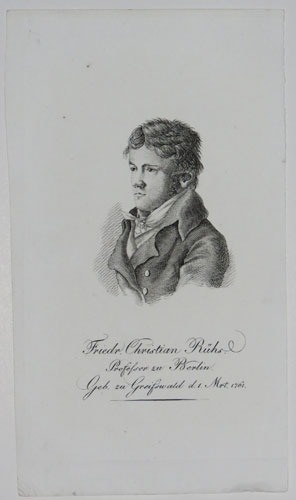
Friedr. Christian Rühs. Professr zu Berlin. Geb. Zu Greifswald d.1. Mrt. 1761.
[n.d. c.1820.]
Etching. 196 x 112mm. 7¾ x 4½".
Christian Friedrich Rühs (1781-1820) was a German historian and anti-Jewish writer. As professor of history at the universities of Greifswald, Göttingen (1801-9), and Berlin (1810-1820), and as historiographer of the Prussian state, he wrote a number of works, especially on the history and literature of the northern countries of Europe.
[Ref: 26004] £50.00
(£60.00 incl.VAT)
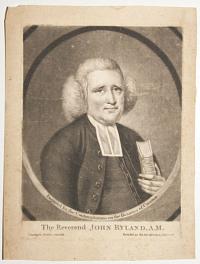
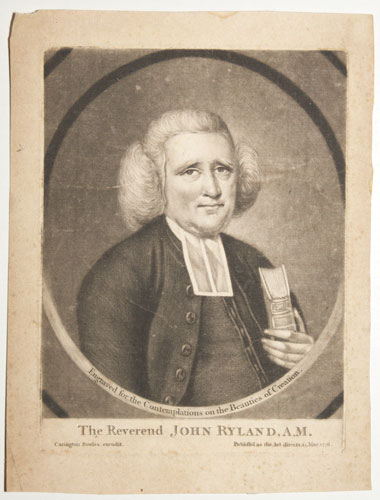
The Reverend John Ryland, A.M. Engraved for the Contemplations on the Beauties of Creation.
Carington Bowles, excudit. Publish'd as the Act directs, 14. Mar. 1778.
Rare mezzotint. 150 x 110mm (6 x 4¼"), with large margins. Bit time stained.
Portrait of the Baptist Minister John Ryland. He learnt Hebrew when only five years old and Greek when he was only nine, and by fifteen was teaching in his father's school. He was minister of the Broadmead Chapel at Bristol and was one of the twelve ministers who founded the Baptist Missionary Society.
[Ref: 53158] £220.00
(£264.00 incl.VAT)
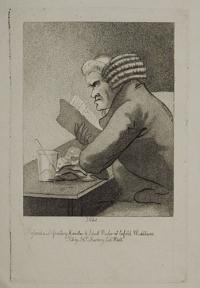
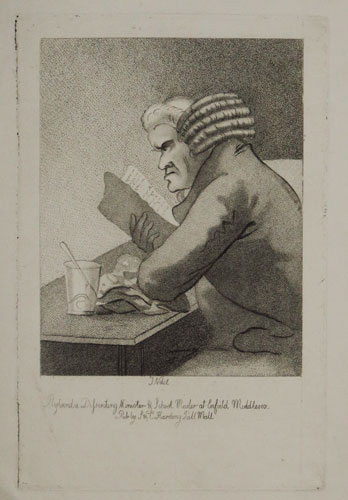
Ryland a Dissenting Minister & School Master at Enfield Middlesex.
JN del.
Pub. by S. & E. Harding Pall Mall. [n.d., c.1800.]
Stipple. Plate: 230 x 150mm (9 x 6''), with large margins.
A portrait of Baptist minister and teacher John Ryland (1723-1792) shown reading at a table.
[Ref: 49133] £50.00
(£60.00 incl.VAT)
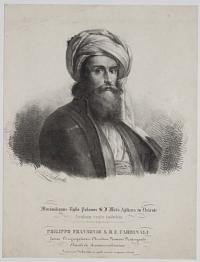
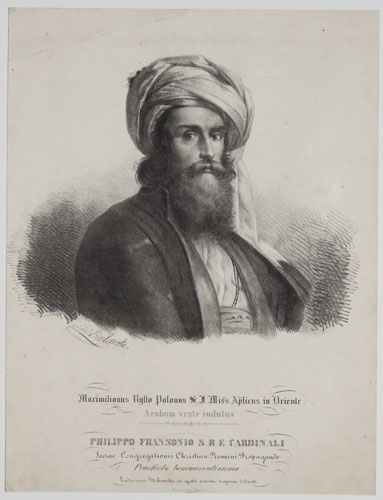
Maximilianus Ryllo Polonus S.J. Miss. Aplicus in Oriente Arabum veste indutus. Philippo Fransonio S.R.E. Cardinali. Sacrae Congregationis Christian Nomini Propagando Praefecto benemerentissimo.
Lud. Bulewski [facsimile].
Ludovicus Bulewski in grati animi signum dedicat. [n.d. c.1850.]
Rare lithograph. 330 x 254mm. 13 x 10". Crease and scuffing.
Fr. Maximilian Ryllo, S.J. (d.c.1851), the Pro-Vicar Apostolic of Central Africa, and Polish Jesuit. Ryllo left Cairo in 1847 in the company of Ignatius Knoblecher and four other missionaries, and arrived at Khartoum in 1828. They established a school for young Africans whom they had purchased in the slave-market and who subsequently assisted him on their missions.
[Ref: 24940] £280.00
(£336.00 incl.VAT)
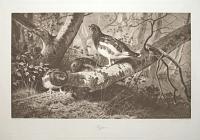
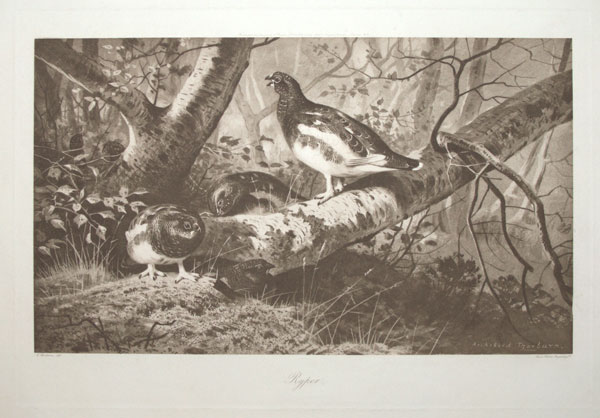
Ryper.
Archibald Thorburn. Drawn by A. Thorburn. Swan Electric Engraving Co.
Published by Lawrence & Bullen Ltd, 16, Henrietta Street, Covent Garden WC.
Photogravure. 305 x 445mm (12 x 17½"), with large margins. Crease in margin.
Rock ptarmigan in summer plumage. Archibald Thorburn (1860-1935), Scottish artist specialising in painting animals and birds, especially in a sporting context.
[Ref: 52176] £95.00
(£114.00 incl.VAT)

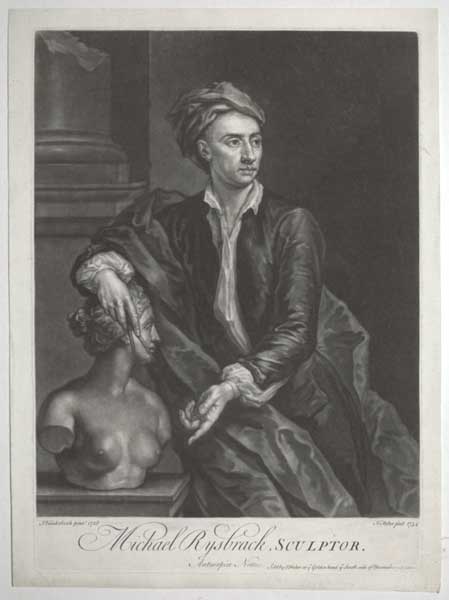
Michael Rysbrack, Sculptor. Antwerpiae Natus.
J: Vanderbank pinx.t 1728 J: Faber fecit 1734
Very fine mezzotint. 360 x 255mm (14 x 10"). Narrow margins, stain lower left.
A three-quarter portrait of Michael Rijsbrack (1693-1770), Antwerp-born sculptor resident in England from 1720 until his death. It is based on the portrait by Vanderbank now in the National Portrait Gallery (currently exhibited at Beningbrough Hall, Yorkshire). CS: 314.i
[Ref: 27207] £280.00
(£336.00 incl.VAT)

Michael Rysbrack, Sculptor. Antwerpiae Natus.
J: Vanderbank pinx.t 1728 J: Faber fecit 1734.
Sold by J. Faber at ye Golden Head ye South side of Bloomsbury Square.
Fine mezzotint. 360 x 255mm (14 x 10").
A three-quarter portrait of Flemish sculptor Michael Rijsbrack (1693-1770), who worked in England from 1720 until his death. It is based on the portrait by Vanderbank now in the National Portrait Gallery (currently exhibited at Beningbrough Hall, Yorkshire). CS: 314. ii of iii.
[Ref: 68808] £320.00
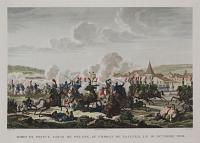
Mort du Prince Louis de Prusse, Au Combat de Saalfed, Le 10 Octobre 1806.
Swebach del. Couche fils aqua forti. Pigeot sculp.t.
[n.d., c.1840.]
Hand coloured engraving. Sheet size: 305 x 465mm (12 x 18¼"). Trimmed inside plate at top and bottom.
The battle of Saalfeld was the first major clash during the War of the Fourth Coalition, including Prussia, Russia, Saxony, Sweden, and Great Britain, and saw a French column defeat a smaller Prussian force under Prince Louis Ferdinand. Prince Louis decided to lead five squadrons into battle, and with the French cavalry responding, he was wounded, but refused to surrender, and was killed in single combat by Quartermaster Guindet of the 10th Hussars, under the command of Napoleon Bonaparte.
[Ref: 36161] £130.00
(£156.00 incl.VAT)
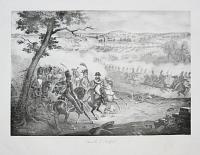
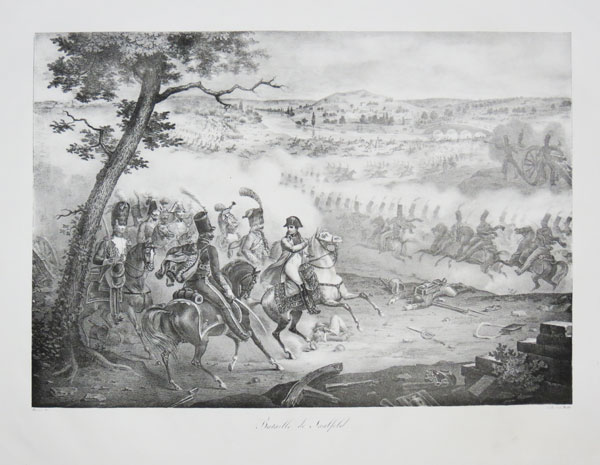
Bataille de Saalfeld.
Feucher (?) del. Litho: de C. Motte.
[n.d. c.1826.]
Lithograph, very large margins. Sheet 443 x 596mm (17½ x 23½").
Napoleon arriving at the Battle of Saalfeld (10 October 1806), where he witnessed the French victory led by Jean Lannes over the strong Prussian force of Prince Louis Ferdinand. Published in A.V. Arnault's 'Vie politique et militaire de Napoléon', Paris, 1822-1826.
[Ref: 30787] £160.00
(£192.00 incl.VAT)

5345. Saas-Fee.
[n.d., c.1890.]
Collotype. Sheet 250 x 300mm (9¾ x 11¾"). Notch in top edge.
A photographic view looking up from the valley to the mountain snows. Saas-Fee is a resort village in the Swiss Alps near the Italian border.
[Ref: 59880] £160.00
(£192.00 incl.VAT)

5346. Saas-Fee et les Mischabels.
[n.d., c.1890.]
Collotype. Sheet 250 x 300mm (9¾ x 11¾"). Some creasing.
A photographic view of Saas-Fee, including the Hotel Belle Vue, a resort village in the Swiss Alps near the Italian border.
[Ref: 59884] £140.00
(£168.00 incl.VAT)
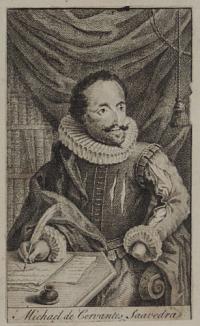
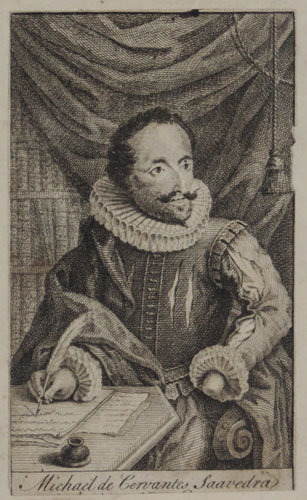
Michael de Cervantes Saavedra.
[after William Kent]
[n.d. c.1768.]
Engraving, very scarce. 129 x 76mm (5 x 3"). Cut & damaged, laid on backing sheet.
Miguel de Cervantes Saavedra (c.1547-1616) the Spanish novelist, poet and playwright, famed for his magnum opus 'Don Quixote'. He took part in the Battle of Lepanto, and in fighting against the Ottoman Empire he sustained serious injuries; he suffered two chest wounds and his left hand was completely maimed, as shown in this portrait showing his left hand having been amputated. Another version of this portrait (Jacob Folkema, illustration to 'Nouvelles de Michel de Cervantes Saavedra', Amsterdam and Leipzig 1768) shows Cervantes with his left hand.
[Ref: 29571] £140.00
(£168.00 incl.VAT)
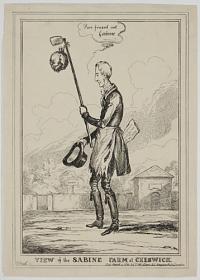
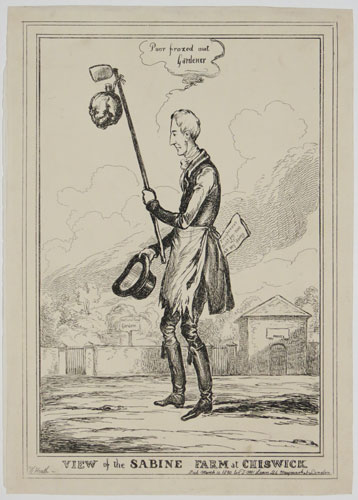
View of the Sabine Farm at Chiswick.
W. Heath.
Pub March 10 1830 by T. McLean 26 Haymarket London.
Etching. Plate 361 x 254mm (14¼ x 10").
Satire on natural historian Joseph Sabine's (1770-1837) expenditure as honorary secretary of the Horticultural Society. Sabine holds out his hat for alms; in his right hand is a hoe, to the head of which is tied a cabbage, and over his fashionable dress he wears a gardener's (tattered) green apron. From his coat-tail pocket projects a paper: 'Prosperous Debt £19.000 All my doing'. Behind is a garden wall with two gates and a gatehouse; above it are trees and a placard: 'Horticultural Garden'. Sabine served as Honorary Secretary of the Horticultural Society 1810-1830, incurring debts of more than £18,000. In 1830 a committee of inquiry was appointed and Sabine subsequently resigned. The society's garden was based in Chiswick. BM Satires: 16417; for Sabine see also ref. 30761 and 30762
[Ref: 30760] £80.00
(£96.00 incl.VAT)
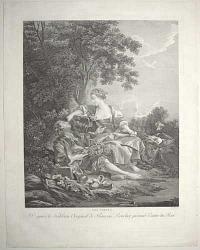
Les Sabots. D'après le Tableau Original de François Boucher premier Peintre du Roi.
F. Boucher pinx. R. Gaillard Sculp.
[n.d., 1773.] but later.
Etching. 495 x 380mm (19½ x 15"), with very large margins.
'The wooden shoes'. A young couple pick and feed each other cherries, having kicked off their shoes under the tree. A reversed copy of François Boucher's 1768 oval painting, now in the Art Gallery of Ontario (Object number 78/6).
[Ref: 61255] £160.00
(£192.00 incl.VAT)
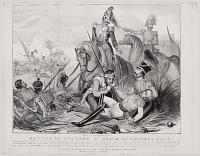
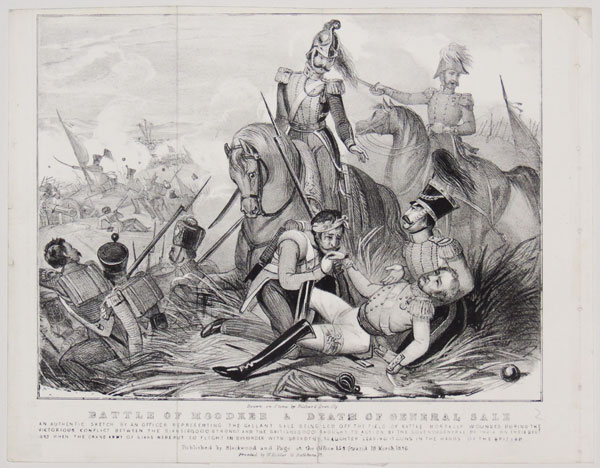
Battle of Sobraon. A Faithful Representation of the Storming of the Sikhs' Position at the Bridge of Boats at Sobraon by the British Army on the Sutlej, February 10th 1846.
[Lithographed by Richard Evan Sly?]
[Published by Blackwood & Page, n.d., c.1846.]
Lithograph. Sheet 240 x 300mm (9½ x 11¾"). Binding folds worn, as normal.
The Battle of Sobraon, between the forces of the East India Company and the Sikh Empire of the Punjab during the First Sikh War (1845-6). The Sikhs were completely defeated, making this the decisive battle of the First Anglo-Sikh War. This scene shows the Sikh retreat over the single pontoon bridge over the Sutlej River; when the bridge collapsed under the weight of the troops, those Sikhs trapped with the British refused to surrender and fought to the death.
[Ref: 32024] £160.00
(£192.00 incl.VAT)
![[Antonio] Sacchini.](img-thumbnail/jpegs/62403.jpg)
[Antonio] Sacchini.
Dess. au Physionotrace d'ap. le buste et Gravé par Quenedey rue neuve des petits champs no.15 à Paris [n.d., c.1808].
Se vend chez Quenedey rue neuve-des-Petits-Champs N.º 15 à Paris'. Dép. à la Bib. Imp.]
Aquatint with etching. 250 x 190mm (9¾ x 7½"), with very large margins.
Profile portrait of Antonio Maria Gasparo Gioacchino Sacchini (1730-1786), Italian composer of operas. Frenchman Gilles-Louis Chrétien invented the 'physionotrace' in the 1780s to draw the outlines of silhouettes, which were then completed by the artist and transferred to aquatint printing plates using another pantograph. The published of this print, Edme Quenedey, was Chrétien's first business partner: a drawing he made of the device in 1788 is now in the Bibliothèque Nationale de France..
[Ref: 62403] £180.00
(£216.00 incl.VAT)
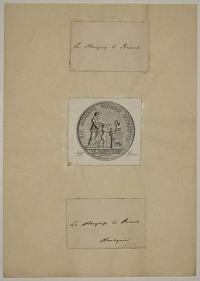
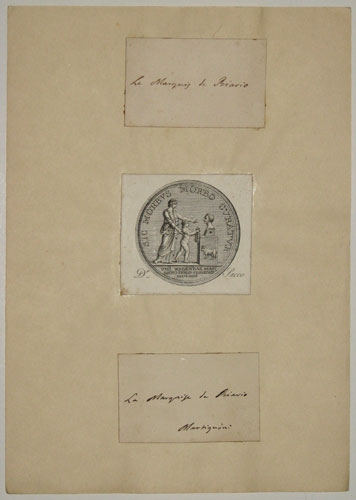
Sic Morbus Morbo Curatur. VIII Calend.Maii anno I Reip. MDCCCII. [With two signature cards in ink:] Le Marquis de Riario. [&] La Marquise de Riario. Martignori.
Engraving. Sheet 249 x 179mm. 9¾ x 7".
Luigi Sacco (1769-1836) was the first Italian physician to understand the value of vaccination, discovered first by Edward Jenner in 1798. He successfully spread the new method around northern Italy and from 1803 he became physician in chief of l'Ospedale Maggiore in Milan. This particular medal was struck in Sacco's honour by the municipality of Bologna.
[Ref: 17497] £140.00
(£168.00 incl.VAT)
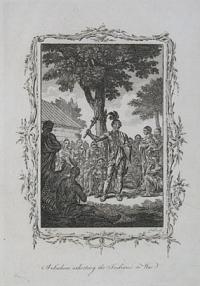
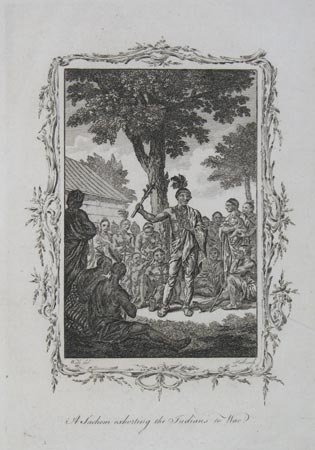
A Sachem exhorting the Indians to War.
Wale del. Hall sculp.
[n.d., c.1790.]
Engraving. 250 x 175mm. Very slight creasing.
'Sachem' means chief in the Algonquin language of the American natives of the Massachusetts region, as reported by Captain John Smith in the early C17th.
[Ref: 7122] £140.00
(£168.00 incl.VAT)

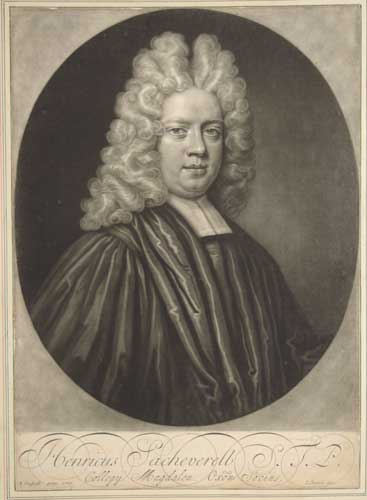
Henricus Sacheverell S.T.P. Collegÿ Magdalen: Oxõn Socius.
A. Russell pinx. 1710. I. Smith fec.
Mezzotint. Image 351 x 253mm. 13¾ x 10". Trimmed to just outside the platemark.
Henry Sacheverell (1674-1724) was an English High Church clergyman and politician. He came to fame when preacher at St Saviour's, Southwark. His famous sermons on the church in danger from the neglect of the Whig ministry to keep guard over its interests were preached, the one at Derby on 15 August 1709, the other at St Paul's Cathedral on 5 November 1709. They were immediately reprinted, the latter being dedicated to the lord mayor and the former to the author's kinsman, George Sacheverell who was high sheriff of Derbyshire that year, and, as the passions of the whole British population were at this period keenly exercised between the rival factions of Whig and Tory; Sacheverell's arguments on behalf of the church which supplied the Tories with most of their support made him their idol. CS:219: ii of ii. In the NPG. W: 220.
[Ref: 12936] £220.00
(£264.00 incl.VAT)
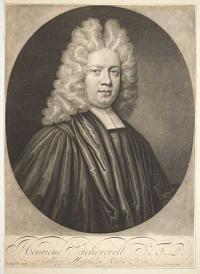
Henricus Sacheverell S.T.P. Collegÿ Magdalen: Oxõn Socius.
A. Russell pinx. 1710. I. Smith fec.
Mezzotint, sheet 345 x 250mm (13½ x 9¾"). Trimmed to plate, glued on album sheet at edges. 18th century watermark. Some creases on inscription area.
Half-length portrait of Henry Sacheverell (1674-1724), in an oval. He was an English High Church clergyman and politician. He came to fame when preacher at St Saviour's, Southwark. His famous sermons on the church in danger from the neglect of the Whig ministry to keep guard over its interests were preached, the one at Derby on 15 August 1709, the other at St Paul's Cathedral on 5 November 1709. They were immediately reprinted, the latter being dedicated to the lord mayor and the former to the author's kinsman, George Sacheverell who was high sheriff of Derbyshire that year, and, as the passions of the whole British population were at this period keenly exercised between the rival factions of Whig and Tory; Sacheverell's arguments on behalf of the church which supplied the Tories with most of their support made him their idol. CS 219.II. See Ref: 12936 for duplicate.
[Ref: 59377] £180.00
(£216.00 incl.VAT)
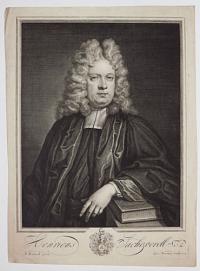
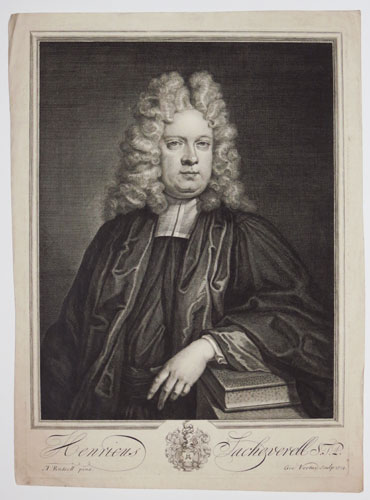
Henricus Sacheverell S.T.P.
A. Russell pinx. Geo: Vertue sculp: 1714.
Engraving. Plate: 370 x 260mm (14½ x 10¼''), with large margins.
A portrait of Anglican clergyman Henry Sacheverell (1674-1724) whose impeachment in 1710 led to rioting and the Tories gaining power in the following year.
[Ref: 48795] £180.00
(£216.00 incl.VAT)
![[Untitled portrait of Tory churchmen]](img-thumbnail/jpegs/69021.jpg)
[Untitled portrait of Tory churchmen]
[n.d., c.1710]
Rare engraving. Sheet 355 x 265mm (14 x 10½"). Trimmed to image, mounted in album paper.
Medallion portraits of Tory churchmen who voted against the impeachment of Henry Sacheverell (1674-1724) for undermining the post-1688 settlement. They are: John Sharp (1645-1714), Archbishop of York; Henry Compton (1632-1713), Bishop of London; Nathaniel Crew (1633-1721), Bishop of Durham; Thomas Sprat (c.1635-1713), Bishop of Rochester; Sir William Dawes (1671-1724), Archbishop of York; & George Hooper (1640-1727, Bishop of Bath and Wells.
[Ref: 69021] £290.00
(£348.00 incl.VAT)

Henricus Sacheverell S.T.P. Collegii Magdal: Oxon Socius.
[after Anthony Russell.]
Christopher Weigel exec [Nuremberg, n.d., c.1715].
Scarce mezzotint. Sheet 390 x 260mm (15¼ x 10¼"). Trimmed to image.
Half-length portrait in oval of Henry Sacheverell (1674-1724), High Church clergyman and popular preacher at Oxford University, who came to fame with sermons on the church in danger from the neglect of the Whig ministry in 1709. A copy of John Smith's mezzotint (CS 219). Ex: Collection of The Hon. Christopher Lennox-Boyd.
[Ref: 65021] £160.00
(£192.00 incl.VAT)

Henricus Sacheverell S.T.P. Collegÿ Magdalen: Oxõn Socius.
A. Russell pinx. 1710. I. Smith fec.
Fine mezzotint, sheet 350 x 250mm (13¾ x 9¾"). Trimmed and tipped into album paper at edges.
Henry Sacheverell (1674-1724) was an English High Church clergyman and politician. He came to fame when preacher at St Saviour's, Southwark. His famous sermons on the church in danger from the neglect of the Whig ministry to keep guard over its interests were preached, the one at Derby on 15 August 1709, the other at St Paul's Cathedral on 5 November 1709. They were immediately reprinted, the latter being dedicated to the lord mayor and the former to the author's kinsman, George Sacheverell who was high sheriff of Derbyshire that year, and, as the passions of the whole British population were at this period keenly exercised between the rival factions of Whig and Tory; Sacheverell's arguments on behalf of the church which supplied the Tories with most of their support made him their idol. CS:219 II of II. In the NPG. W: 220.
[Ref: 65780] £180.00
(£216.00 incl.VAT)
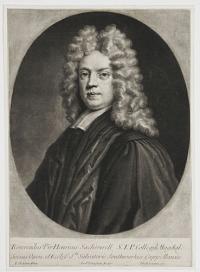
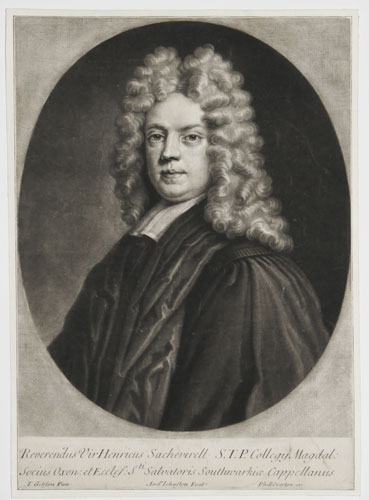
Reverendus Vir Henricus Sacheverell S.T.P. Collegij. Magdal: Socius Oxon: et Eccles:Sti Salvatoris Southwarkiae Cappellanus.
T. Gibson Pinx: Andr: Iohnston Fecit.
Phill:Overton exc: [British, n.d., c.1710.]
Mezzotint, sheet 345 x 245mm. 13½ x 9¾". Trimmed to the plate.
Henry Sacheverell (1674-1724), High Church clergyman and politician; in an oval frame, head turned towards the viewer, wearing academic gown, bands and light brown wig to the shoulders. Sacheverell came to fame when preacher at St Saviour's, Southwark. His famous sermons on the church in danger from the neglect of the Whig ministry to keep guard over its interests were preached at Derby on 15 August 1709, and at St Paul's Cathedral on 5 November 1709. They were immediately reprinted, the latter being dedicated to the lord mayor and the former to the author's kinsman, George Sacheverell, who was high sheriff of Derbyshire that year. Sacheverell's arguments on behalf of the church supplied the Tories with considerable support. After Thomas Gibson (c.1680 - 1751). Chaloner Smith 3, I of II.
[Ref: 26131] £180.00
(£216.00 incl.VAT)
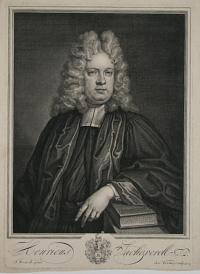
Henricus Sacheverell S.T.P.
A. Russell pinx: Geo: Vertue Sculp: 1714.
Fine engraving. 375 x 267mm (14¾ x 10½"). Trimmed close the plate along lower edge.
Henry Sacheverell (1674-1724) was an English High Church clergyman and politician. He came to fame when preacher at St Saviour's, Southwark. His famous sermons on the church in danger from the neglect of the Whig ministry to keep guard over its interests were preached, the one at Derby on 15 August 1709, the other at St Paul's Cathedral on 5 November 1709. They were immediately reprinted, the latter being dedicated to the lord mayor and the former to the author's kinsman, George Sacheverell who was high sheriff of Derbyshire that year, and, as the passions of the whole British population were at this period keenly exercised between the rival factions of Whig and Tory; Sacheverell's arguments on behalf of the church which supplied the Tories with most of their support made him their idol. NPG: D31484.
[Ref: 19089] £180.00
(£216.00 incl.VAT)
![[Lucy Sacheverell] Lady Lucasta Schrevell.](img-thumbnail/jpegs/67436.jpg)
[Lucy Sacheverell] Lady Lucasta Schrevell.
P. Lilly [Sir Peter Lely] Inv. Paris. W. Faithorne sculp.
[n.d., c.1660.]
Engraving. 135 x 85mm (5¼ x 3¼"). Slight stains at corner.
A full-length seated portrait of Lucy Sacheverell, believed to be the inspiration for 'To Lucasta, Going to the Warres' (1649) by poet Richard Lovelace (1617-57). BM P,3.348. Fagan p.58
[Ref: 67436] £160.00
(£192.00 incl.VAT)

Sack, Cloth and Ashes. A Sketch from Life, taken while the Friar was Stealing a Nap. 192
Finucane delin.t.
Published 7th. August 1797, by Laurie & Whittle, 53 Fleet Street. London.
Hand-coloured engraving, 250 x 200mm (9¾ x 8"), with large margins.
A satirical portrait of a large friar, fast asleep, holding a mug in one hand and a pipe in the other, quite content, far from the debased figure of a man the title 'Sack, Cloth and Ashes' would suggest. Not in BM.
[Ref: 66872] £260.00
(£312.00 incl.VAT)
![[John Frederick Sackville, 3rd Duke of Dorset. & Miss G.]](img-thumbnail/jpegs/67337.jpg)
[John Frederick Sackville, 3rd Duke of Dorset. & Miss G.] Miss G_ The Noble Cricketer.
Published as the Act directs by A.Hamilton, Jun.r near St.John's Gate, Nov.r, 1, 1776.
Stipple engraving. Sheet 175 x 105mm (6¾ x 4¼"). Trimmed.
Portraits of John Frederick Sackville, 3rd Duke of Dorset (1745 - 1799), British courtier and diplomat and Miss G. Dorset is remembered for his love of cricket. He was a good player and an important patron, but his interest was sharpened by gambling, cricket being a major attraction for gamblers throughout the 18th century. BM 5355.
[Ref: 67337] £160.00
(£192.00 incl.VAT)

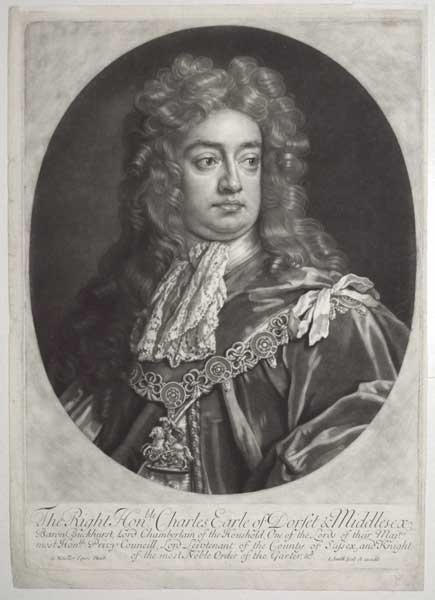
The Right Hon:ble Charles Earle of Dorset & Middlesex, Baron Buckhurst, Lord Chamberlain of the Houshold, One of the Lords of their Maj:ties most Hon:ble Privy Councill, Lord Lieutenant of the County of Sussex and Knight of the most Noble Order of the Garter. &et.
G. Kneller Eques Pinxit.
I. Smith fecit et excudit. [n.d. c.1694]
Fine mezzotint, 18th century watermark; 345 x 245mm (13½ x 9¾"), with very large margins.
Portrait of Charles Sackville, 6th Earl of Dorset and 1st Earl of Middlesex (1643-1706), shown half-length within an oval, wearing a wig, lace cravat, robes, and the Order of the Garter chain with the George. Sackville was a prominent English courtier, poet, and politician, celebrated for his wit and his patronage of the arts during the reigns of Charles II and William III. A member of the Merry Gang, which was a group of aristocrats associated with the court of Charles II of England during the Stuart Restoration of 1660. He assisted in the flight of Princess Anne (later Queen Anne) from London to Nottingham during the Revolution of 1688 to support the Williamite cause. He was rewarded with the position of Lord Chamberlain of the Household from 1689 to 1697 under King William III and Queen Mary II. He was also admired for his literary talents, particularly his ballad "To all you Ladies now at Land." CS 82 II of II. Ex: Collection of the Hon. Christopher Lennox-Boyd & J.B.
[Ref: 68756] £280.00
(£336.00 incl.VAT)

The Right Hon:ble Charles Earle of Dorset & Middlesex, Baron Buckhurst, Lord Chamberlain of the Houshold, One of the Lords of their Maj:ties most Hon:ble Privy Councill, Lord Lieutenant of the County of Sussex and Knight of the most Noble Order of the Garter. &et.
G. Kneller Eques Pinxit.
I. Smith fecit et excudit. [n.d. c.1694]
Mezzotint, 345 x 245mm (13½ x 9¾"), Collector's stamp 'E.M.H.' on reverse. Small margins repaired.
Portrait of Charles Sackville, 6th Earl of Dorset and 1st Earl of Middlesex (1643-1706), shown half-length within an oval, wearing a wig, lace cravat, robes, and the Order of the Garter chain with the George. Sackville was a prominent English courtier, poet, and politician, celebrated for his wit and his patronage of the arts during the reigns of Charles II and William III. A member of the Merry Gang, which was a group of aristocrats associated with the court of Charles II of England during the Stuart Restoration of 1660. He assisted in the flight of Princess Anne (later Queen Anne) from London to Nottingham during the Revolution of 1688 to support the Williamite cause. He was rewarded with the position of Lord Chamberlain of the Household from 1689 to 1697 under King William III and Queen Mary II. He was also admired for his literary talents, particularly his ballad "To all you Ladies now at Land." CS 81 II of II. Ex: collection of Mrs. E.M. Hamilton.
[Ref: 68830] £190.00
(£228.00 incl.VAT)
![[The Right Honble Lord George Sackville, Lieutenant General of His Majesty's Forces, Lieutt General of the Ordnance.]](img-thumbnail/jpegs/52497.jpg)
[The Right Honble Lord George Sackville, Lieutenant General of His Majesty's Forces, Lieutt General of the Ordnance.]
[Sir J Reynolds. McArdell.]
[n.d. c.1759.]
Very fine mezzotint, proof before letters. 400 x 275mm (15¾ x 10¾"). Trimmed at bottom. Thread margins on 3 sides.
Portrait after Reynolds (Mannings 1565); standing three-quarter length to right beside horse, eyes to front, wearing fur-trimmed overcoat, sash and his hair powdered, sword in his left hand; proof before letters. George Sackville Germain, 1st Viscount Sackville (1716-1785); third son of Lionel Cranfield Sackville, 1st Duke of Dorset; George I was his godfather; entered the army and served at Dettingen and Fontenoy; Commander of the British Forces, under Prince Ferdinand of Brunswick, in 1758 where his behaviour at the battle of Minden resulted in a scandal and his dismissal from the army; Secretary of State for the Colonies, 1775-1782. Fought in America. CS: 161. Goodwin: 73. Hamilton: 9.62.
[Ref: 52497] £360.00

![[Netherlands] Ruiter, Amiral Hollandois. Tire a l'Histoire general de Hollande.](jpegs/28434.jpg)
![[Mr Shoole and Mrs Lydia Rybot] No. XXIX. The Winning Client. No. XXX. The Special Pleader.](jpegs/38594.jpg)


![[Martin Rychart]](jpegs/55689.jpg)



![[The Lindgate, Rye.] 39.](jpegs/14620.jpg)
![[Mermaid Inn, Rye.] 40.](jpegs/14621.jpg)
![[Courtyard of the Mermaid Inn, Rye.] 43.](jpegs/62270.jpg)
![[Ypres Tower, Rye.] 42.](jpegs/14623.jpg)





![[Antonio] Sacchini.](jpegs/62403.jpg)


![[Untitled portrait of Tory churchmen]](jpegs/69021.jpg)


![[Lucy Sacheverell] Lady Lucasta Schrevell.](jpegs/67436.jpg)

![[John Frederick Sackville, 3rd Duke of Dorset. & Miss G.]](jpegs/67337.jpg)

![[The Right Honble Lord George Sackville, Lieutenant General of His Majesty's Forces, Lieutt General of the Ordnance.]](jpegs/52497.jpg)