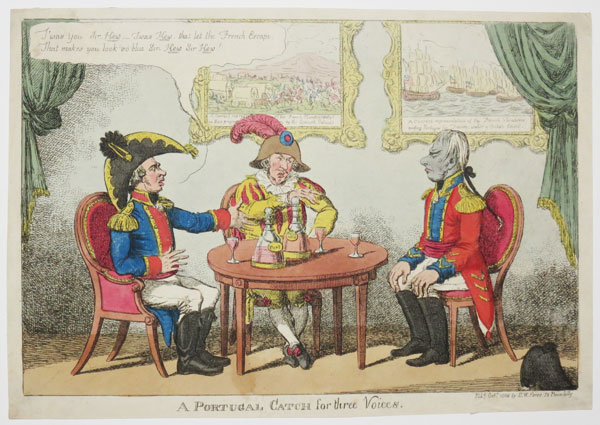
A Portugal Catch for three Voices.
Pub.d Oct.r 1808 by S.W. Fores 50 Picadilly.
Hand-coloured etching. Watermark: Russel & Co. 1806. Sheet: 250 x 360mm (9¾ x 14¼"). Trimmed within plate.
A satirical scene, showing an army officer, Sir Hew Dalrymple and a figure in Portuguese dress, sitting around a round table drinking port. The print refers to the Convention of Cintra which allowed the return of the French troops back to France, transported in British ships, following their defeat by the Anglo-Portuguese force at the Battle of Vimeiro in 1808. The convention was seen as an embarassment, with the French essentially being allowed to escape back to France. BM Satire 11042.
[Ref: 46628] £180.00
(£216.00 incl.VAT)

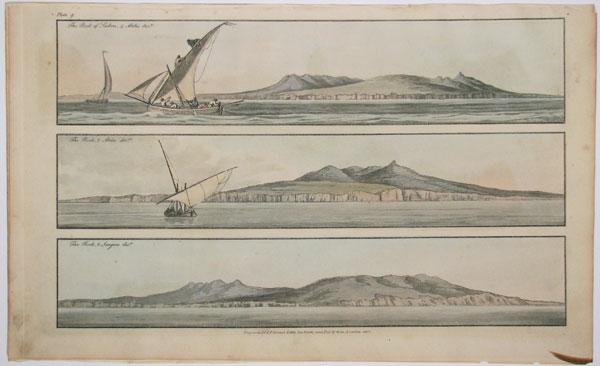
The Rock of Lisbon, 4 Miles dis.t. The Rock, 2 Miles dis.t. The Rock, 2 Leagues dis.t.
[Engraved by J.C. Stadler after John Thomas Serres.]
Engrav'd for I.T. Serres's Little Sea Torch, & Pub.d by him, London, 1801.
Aquatint, printed in blue and hand finished. 240 x 390mm, 9½ x 15¼". Occasional spots. Colour smear in margin.
Three finely-coloured coastal profiles around Lisbon in Portugal. Published in Serres's scarce marine pilot, 'The Little Sea Torch', an acknowledged English edition of Bougard's 'Le Petit Flambeau de la Mer', although extensively revised by Serres. Abbey Life: 344.
[Ref: 13480] £260.00
(£312.00 incl.VAT)

Jardin de Serra. Madeira.
Drawn from Nature by J.B. On stone by Villeneuve.
Printed by Engelman, Graf, Coindet & Co [n.d., c.1830].
Hand-coloured lithograph. Sheet size: 265 x 325mm (10¼ x 12¾").
A picturesque scene depicting a few small buildings in a fertile, mountainous landscape, with two figures in the foreground collecting wood. Jardin da Serra (Portuguese meaning "mountain garden") is a civil parish in the municipality of Câmara de Lobos in the archipelago of Madeira. Not in Abbey.
[Ref: 32144] £240.00
(£288.00 incl.VAT)
Lisbon.
[Engraved by J. Luffman for Mr Serres, Little Sea Torch. Published June 1801.]
Engraving with fine hand colour. Printed area 130 x 165mm, 5¼ x 6½".
A chart of Lisbon in Portugal, published while England was at war with Revolutionary France. From Serres's scarce marine pilot, 'The Little Sea Torch', an acknowledged English edition of Bougard's 'Le Petit Flambeau de la Mer', although extensively revised by Serres. Abbey Life: 344.
[Ref: 13665] £120.00
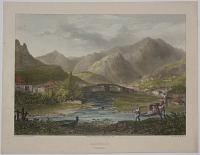
Machico. Madeira.
Drawn from Nature by J.B. / On stone by W. Gauci.
Printed by Engelman, Graf, Coindet & Co. [n.d., c.1830].
Hand-coloured lithograph. Sheet size: 260 x 340mm (10¼ x 13½").
A view of a river in the city of Machico, Portugal. To the right, a women in a white, hooded robe is being carried in a sedan chair by two men in traditional costume. A bridge can be seen in the middle ground and a mountainous landscape in the distance. Machico is a city and municipality in the northeastern part of the island of Madeira, in the Autonomous Region of Madeira. Not in Abbey.
[Ref: 32141] £330.00

The Church of Nossa Sen.a Do Livramento, In the Curral. Madeira.
Drawn from Nature by J.B. On stone by F. Nicholson.
Printed by Engelman, Graf, Coindet & Co. [n.d., c.1830].
Hand-coloured lithograph. Sheet size: 275 x 330mm (10¾ x 13").
A picturesque view of the church of Nossa Senhora do Livramento, Curral das Freiras, a civil parish in the Portuguese archipelago of Madeira. The church can be seen in the centre of a fertile and mountainous landscape, with three figures in the foreground and a waterfall near the top of the mountains in the distance. Not in Abbey.
[Ref: 32143] £240.00
(£288.00 incl.VAT)
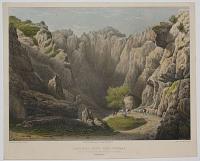
Descent into the Curral. From the ridge under Pico Grande. Madeira.
Drawn from Nature by J.B. On stone by E. Nash.
Printed by Engelman, Graf, Coindet & Co. [n.d., c.1830]
Hand-coloured lithograph. Sheet size: 270 x 335mm (10¾ x 13¼").
A dramatic and picturesque view of the Pico Grande, Madeira, Portugal. Two figures on Donkeys can be seen on a path to the right, descending into the valley of the mountain, whilst a flock of birds fly over ahead in the distance. Not in Abbey.
[Ref: 32145] £240.00
(£288.00 incl.VAT)

Pico Ruivo, the Torrinhas &.c &.c. From the Paul de Serra. Madeira.
Drawn from nature by J.B. On stone by F. Nicholson.
Printed by Engelman, Graf, Coindet & Co. [n.d., c.1830]
Hand-coloured lithograph. Sheet size: 285 x 360mm (11¼ x 14¼").
A landscape view of the Pico Ruivo, the highest peak on the Madeira Islands, Portugal. Four figures can be seen on a path in the foreground, carrying large bags across their shoulders, with dramatic mountains in the distance. Not in Abbey.
[Ref: 32146] £240.00
(£288.00 incl.VAT)
![[Collection of 48 plates of Portugese costume & trades.]](img-thumbnail/jpegs/4653.jpg)
[Collection of 48 plates of Portugese costume & trades.]
Palhares lith. T. da Palha 15.
48 coloured lithographs with gum arabic highlights, each c. 245 x 320mm. Some plates with minor stains 6 laid on board.
[Ref: 4653] £2,800.00
view all images for this item
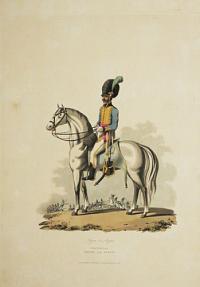
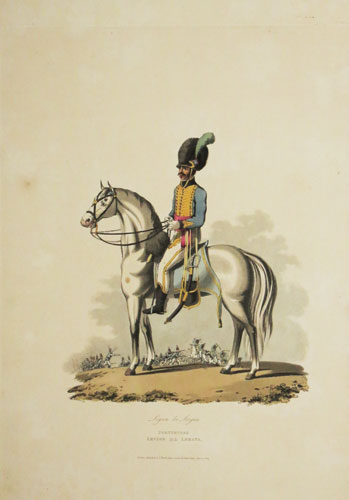
Légion da Lorgna. Portuguese Legion da Lorgna.
H. Michel del. T. Clark sculp.
London, Published by J. Booth, Duke Street Portland Place, Nov.r 20, 1809.
Hand-coloured aquatint. Plate: 380 x 280mm (15 x 11''), with very large margins. Slight fox marks on horse.
A portrait of a mounted soldier in the midst of a battle. A plate from the Rev. William Bradford's 'Sketches of the country, character and costume in Portugal and Spain' first published in 24 parts between 1809 and 1810 published in the aftermath of the Peninsula War the series was hugely popular and it was re-issued in 1812 1813 and 1823. Abbey Travel 135.
[Ref: 50641] £140.00
(£168.00 incl.VAT)
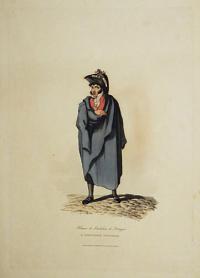
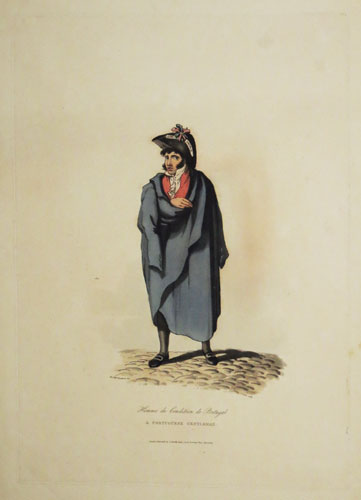
Homme de Condition de Portugal. A Portuguese Gentleman.
H. Michel del. T. Clark sculp.
London, Published by J. Booth, Duke Street Portland Place, June 1, 1809.
Hand-coloured aquatint. Plate: 380 x 280mm (15 x 11''), with very large margins. Slight staining.
A portrait of a Portuguese man in a cloak. A plate from the Rev. William Bradford's 'Sketches of the country, character and costume in Portugal and Spain' first published in 24 parts between 1809 and 1810 published in the aftermath of the Peninsula War the series was hugely popular and it was re-issued in 1812 1813 and 1823. Abbey Travel 135.
[Ref: 50643] £95.00
(£114.00 incl.VAT)
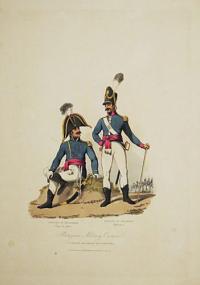
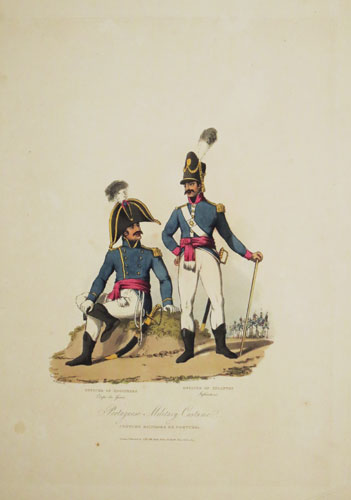
Portuguese Military Costume. Costume Militaire de Portugal.
H. Michel del. I. Clark sculp.
London, Published by J. Booth, Duke Street Portland Place, Dec.r 7. 1809.
Hand-coloured aquatint. Plate: 380 x 280mm (15 x 11''), with very large margins Slight crease upper right.
A portrait of two Portuguese soldiers. A plate from the Rev. William Bradford's 'Sketches of the country, character and costume in Portugal and Spain' first published in 24 parts between 1809 and 1810 published in the aftermath of the Peninsula War the series was hugely popular and it was re-issued in 1812 1813 and 1823. Abbey Travel 135.
[Ref: 50645] £140.00
(£168.00 incl.VAT)

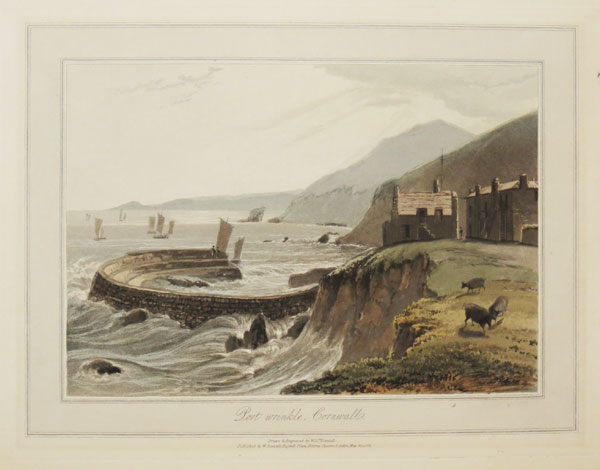
Port wrinkle, Cornwall.
Drawn & Engraved by Will.m Daniell.
Published by W. Daniell, Russell Place, Fitzroy Square, London May 20. 1825.
Aquatint with fine original hand colour, J. Whatman Turkey Mill 1823 watermark. 230 x 300mm (9 x 12"), with large margins.
A view of the small fishing village of Portwrinkle. From William Daniell's 'A Voyage Round Great Britain', a series of 308 aquatints published in eight volumes between 1814-1825, described by R.V. Tooley as 'the most important colour plate book on British Topography'. Abbey: Scenery, 16; Tooley: Books with Coloured Plates 177.
[Ref: 47138] £230.00
(£276.00 incl.VAT)
![[Porus in battle]](img-thumbnail/jpegs/45147.jpg)
[Porus in battle] La vraye valeur est toujours invincible / Porus abandonné des siens blessa plusieurs de ceux qui l'environnoient [...]
Car. le Brun pinxit J. Audran excudit
Se vend à Paris chez B. Audran au Palais de Luxembourg et Chez J. Audran a l'entrée du Faubourg St. Jaque vis a vis l'Ygret. [c.1750]
Engraving, platemark 290 x 600mm (11½ x 23½"). Folded as issued.
King Porus distinguishing himself in the Battle of the Hydaspes against Alexander the Great in the ancient kingdom of Pauravas (now part of the Punjab province of Pakistan). One of a series of engravings reproducing a famous set of paintings by Charles Le Brun depicting the battles of Alexander (now in the Louvre). From the Library of Pitsligo
[Ref: 45147] £360.00
![[The Posada Kitchen, Pancorbo]](img-thumbnail/jpegs/2509.jpg)
[The Posada Kitchen, Pancorbo]
W.Russell Flint [Ink signature]
XX [Ink edition number]
Drypoint, 1928, state iii of iii, the published state, edition of 75. 230 x 300mm.
The second plate depicting this scene. Wright: 10.
[Ref: 2509] £480.00

Vue d'une partie de la Coste de Pausilipe, prise du dessus de la Grotte de Pouzzoles en alland au Tombeau de Vergile. Dessinée d'après Nature par Robert peintre [de Roy.]
Gravé a l'Eau-forte par Weisbrod. Terminé par le [Roy].
[Paris: Clousier, 1781-6.]
Engraving with etching, 18th century watermark. 250 x 375mm (9¾ x 14¾") very large margins Tear with loss in top margin. Two areas of inscription scratched out.
A view of Posillipo, a rocky outcrop on the edge of Naples. From Jean Claude Richard Saint Non's monumental 'Voyage pittoresque ou description des royaumes de Naples et de Sicile'. In the spirit of French republicanism, any mention of the king has been erased, even the name of the engraver, Julien Le Roy. From the Airlie collection, Cortachy Castle.
[Ref: 57525] £220.00
(£264.00 incl.VAT)
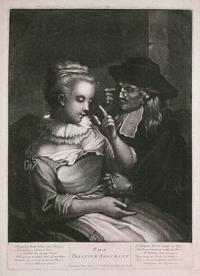
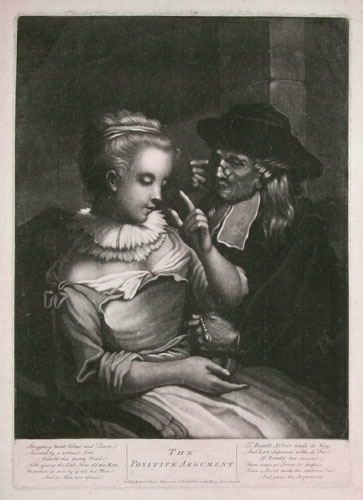
The Positive Argument.
Sold by Ryland & Bryer, Engravers & Printsellers, at the Kings Arms Cornhill. [n.d. c.1775]
Mezzotint on pink-stained paper. 360 x 250mm.
Struggling twixt Virtue and Desire, / Accosted by a rev'rend Sire, / Behold this pretty Maid. / How young the Lass, How old the Man, / What then to win by Gold's his Plan / And so She's not afraid: / To Beauty Av'rice lends its Key / And Law dispenses with its Fee, / If Beauty but consent. / The cease, ye lovers, to despair, Since a Purse melts the stubborn Fair, / And gains the Argument.
[Ref: 5318] £380.00
![Pursuit [&] Possession.](img-thumbnail/jpegs/22611.jpg)
Pursuit [&] Possession.
Taylor, Holborn, excudit. [n.d. c.1820.]
Pair of stipples, each plate 177 x 114mm. 7 x 4½".
Pursuit: a young boy and girl running in the field with their hats in the one hand, in pursuit of a flying butterfly. Possession: the butterfly has been caught. Charles Taylor printmaker and publisher, 1756 - 1823, in Holborn London from 1779.
[Ref: 22611] £130.00
(£156.00 incl.VAT)
view all images for this item

The General Post Office.
Sutton Nicholls delin: et Sculp.
Sold by John Bowles Print & Map=Seller over against Stocks Market [n.d., c.1730].
Etching and engraving, 340 x 465mm. 13¼ x 18¼". Centrefold as issued.
View of the inner courtyard in the General Post Office, Lombard Street in the City of London, with figures. The General Post Office was officially established in England in 1660 by Charles II.
[Ref: 9131] £320.00

The Post Office. Plate 63.
Pugin & Rowlandson del.t et sculp.t. aquat.
London. Pub 1st April 1809, at R. Ackermann’s Repository of Arts 101, Strand.
Hand coloured aquatint, plate 240 x 280mm (9½ x 11"), with very large margins
An interior view of the busy Post Office when it was housed in Sir Robert Vyner's house in Lombard Street. It was here that letters were sorted for delivery in the morning and newspapers were sorted in the evening. Published in Ackermann's famous work, the 'Microcosm of London', the figures were drawn by the famous caricaturist Thomas Rowlandson and the architecture by Augustus Pugin. Abbey, Scenery: 212.
[Ref: 62695] £150.00
(£180.00 incl.VAT)
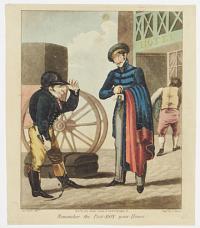
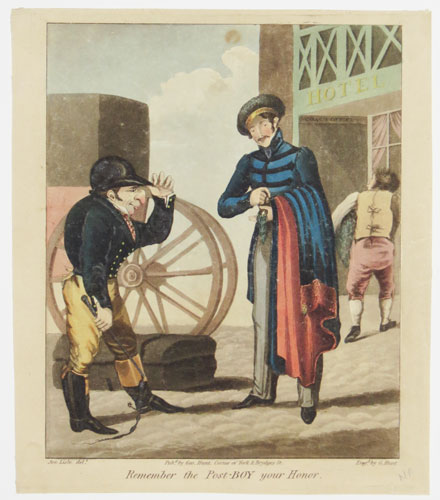
Remember the Post-Boy your Honor.
Joe Lisle, del.t Eng.d by G. Hunt.
Pub.d by Geo. Hunt, Corner of York & Brydges St.
Aquatint with hand-colouring, sheet 240 x 210mm (9½ x 8¼"). Trimmed inside platemark.
A post-boy (or postilion), who guides the team of horses drawing a coach, waits for his tip. Coach and hotel (with coach office) behind. Aquatint after Joseph Lisle (1828 - 1830; fl), satirical designer and lithographic draughtsman. He worked for Tregear, and occasionally published his own work. Hickman: p. 101
[Ref: 40569] £160.00
(£192.00 incl.VAT)
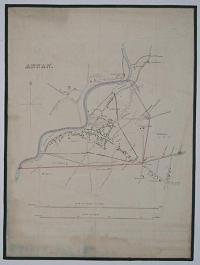
Annan.
J.Gardner, Sc.t.
[London: House of Commons, 1832.]
Coloured engraving. 260 x 250mm, 10¼ x 9¾". Laid on and edged with linen. Some wear and surface dirt.
The former royal burgh of Annan, Dumfriesshire, Scotland, on a scale is 6 inches to a mile. Originally published at the time of the Reform Act (which adjusted the boundaries of parliamentary constituencies to take account of the urban drift caused by the Industrial Revolution), this map has been updated with manuscript to determine the extent of free delivery for mail, part of the Great Post Office Reform of 1839-40, championed by Rowland Hill. Another part of this reorganisation was the introduction of the Penny Black, the world's first postage stamp.
[Ref: 10179] £120.00
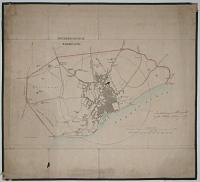
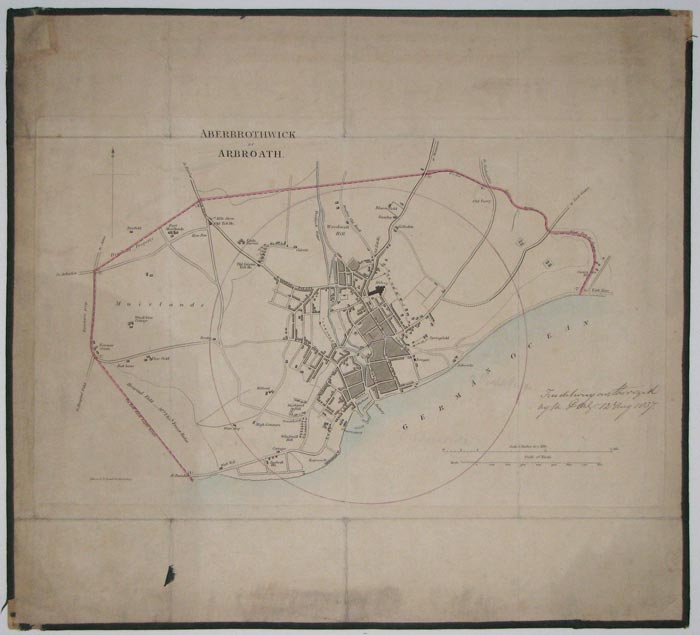
Aberbrothwick or Arbroath.
Ellis sc. 61 Gr. Russell Str. Bloomsbury.
[London: House of Commons, 1832.]
Coloured engraving. 330 x 355mm (8½ x 13"). Laid on and edged with linen. Some wear and surface dirt.
Falkirk, a former royal burgh in Angus, Scotland, on a scale is 6 inches to a mile. Originally published at the time of the Reform Act (which adjusted the boundaries of parliamentary constituencies to take account of the urban drift caused by the Industrial Revolution), this map has been updated with manuscript to determine the extent of free delivery for mail, part of the Great Post Office Reform of 1839-40, championed by Rowland Hill. Another part of this reorganisation was the introduction of the Penny Black, the world's first postage stamp.
[Ref: 10163] £130.00
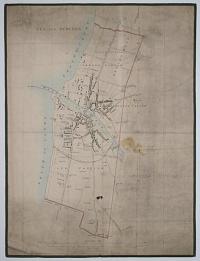
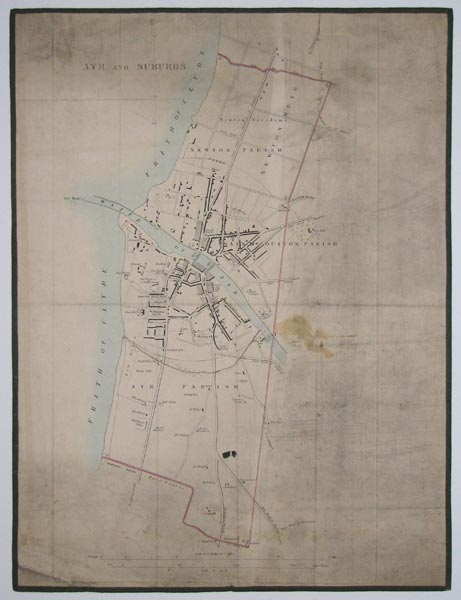
Ayr and Suburbs.
[London: House of Commons, 1832.]
Engraved map with hand colour, laid on & edged with linen. 430 x 240mm (17 x 9½"). Some wear and surface dirt.
Ayr, on the coast of the Firth of Clyde, Scotland, on a scale is 6 inches to a mile. Originally published at the time of the Reform Act (which adjusted the boundaries of parliamentary constituencies to take account of the urban drift caused by the Industrial Revolution), this map has been updated with manuscript to determine the extent of free delivery for mail, part of the Great Post Office Reform of 1839-40, championed by Rowland Hill. Another part of this reorganisation was the introduction of the Penny Black, the world's first postage stamp.
[Ref: 10186] £90.00
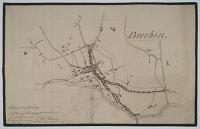
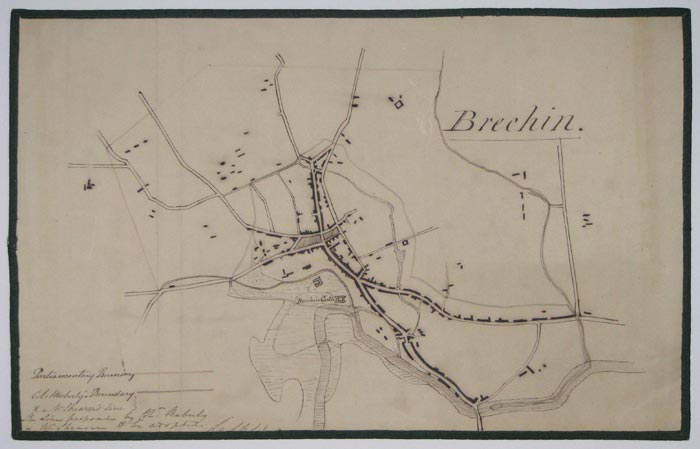
Brechin.
[n.d., c.1840.]
Ink sketch map. Sheet 205 x 320mm (8 x 12½"). Laid on and edged with linen. Some wear and surface dirt.
Brechin, a former Royal burgh in Angus, Scotland. This map was drawn to determine the extent of free delivery for mail, part of the Great Post Office Reform of 1839-40, championed by Rowland Hill. Another part of this reorganisation was the introduction of the Penny Black, the world's first postage stamp.
[Ref: 10189] £260.00
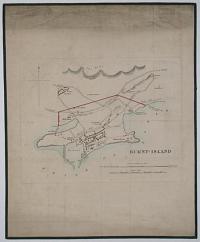
Burnt-Island.
[London: House of Commons, 1832.]
Coloured engraving. 185 x 240mm, 7¾ x 9½". Laid on and edged with linen. Some wear and surface dirt.
Burntisland, a former royal burgh in Fife, Scotland, on a scale is 6 inches to a mile. A truly historic town: there are rock carvings thought to be 4000 years old; St Columba's Church (founded 1592) is the oldest post-Reformation church still in use; in 1601 the General Assembly of the Church of Scotland met at St. Columba's and proposed a new English translation of the Bible, which became the King James Version. Originally published at the time of the Reform Act (which adjusted the boundaries of parliamentary constituencies to take account of the urban drift caused by the Industrial Revolution), this map was used in the Great Post Office Reform of 1839-40, championed by Rowland Hill, to determine the extent of free delivery for mail. Another part of this reorganisation was the introduction of the Penny Black, the world's first postage stamp.
[Ref: 10175] £120.00
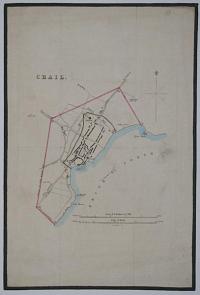
Crail.
J.Gardner, Sculp.
[London: House of Commons, 1832.]
Coloured engraving. 215 x 190mm, 8½ x 7½". Laid on and edged with linen. Some wear and surface dirt.
Crail, former royal burgh in the East Neuk of Fife, Scotland, on a scale is 6 inches to a mile. Originally published at the time of the Reform Act (which adjusted the boundaries of parliamentary constituencies to take account of the urban drift caused by the Industrial Revolution), this map has been updated with manuscript to determine the extent of free delivery for mail, part of the Great Post Office Reform of 1839-40, championed by Rowland Hill. Another part of this reorganisation was the introduction of the Penny Black, the world's first postage stamp.
[Ref: 10171] £120.00
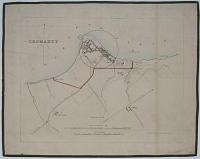
Cromarty.
Henry Martin sculp, 4 Swinton Street, London.
[London: House of Commons, 1832.]
Coloured engraving. 210 x 280mm, 8¼ x 11". Laid on and edged with linen. Some wear and surface dirt.
The Royal Burgh of Cromarty in the Highlands of Scotland, on a scale is 6 inches to a mile. Originally published at the time of the Reform Act (which adjusted the boundaries of parliamentary constituencies to take account of the urban drift caused by the Industrial Revolution), this map has been updated with manuscript to determine the extent of free delivery for mail, part of the Great Post Office Reform of 1839-40, championed by Rowland Hill. Another part of this reorganisation was the introduction of the Penny Black, the world's first postage stamp.
[Ref: 10178] £130.00
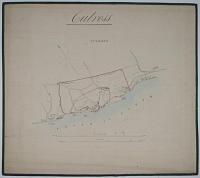
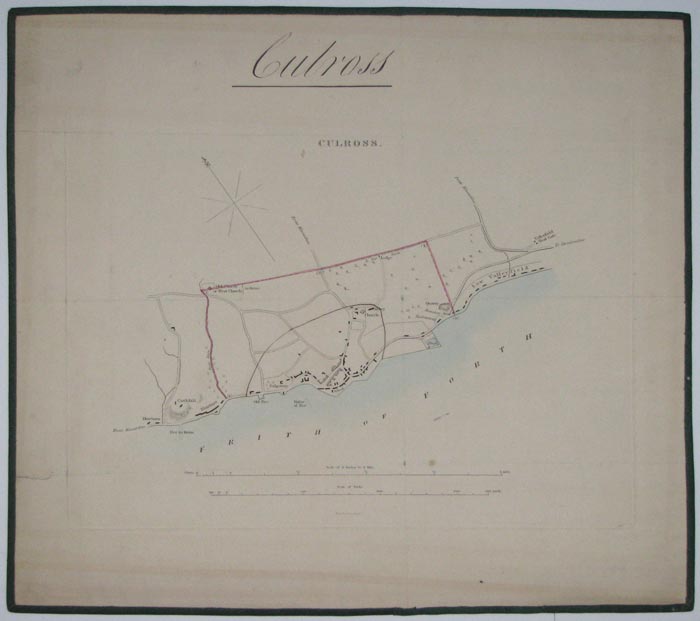
Culross.
R.R.Davies sculp.
[London: House of Commons, 1832.]
Coloured engraving. 240 x 320mm, 9½ x 12½". Laid on and edged with linen. Some wear.
Culross, a former royal burgh in Fife, Scotland, on a scale is 6 inches to a mile. Originally published at the time of the Reform Act (which adjusted the boundaries of parliamentary constituencies to take account of the urban drift caused by the Industrial Revolution), this map has been updated with manuscript to determine the extent of free delivery for mail, part of the Great Post Office Reform of 1839-40, championed by Rowland Hill. Another part of this reorganisation was the introduction of the Penny Black, the world's first postage stamp.
[Ref: 10144] £130.00
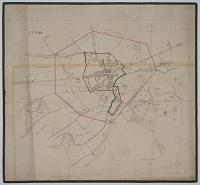
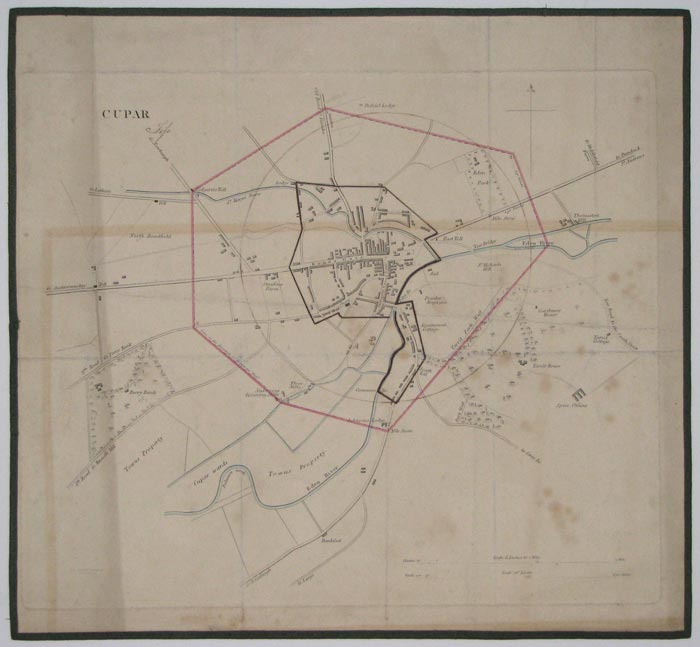
Cupar.
Ellis sc. 61 Gr. Russell Str. Bloomsbury.
[London: House of Commons, 1832.]
Coloured engraving. 255 x 305mm (9¾ x 12"). Laid on and edged with linen. Some wear and surface dirt.
Cupar, a former royal burgh in Fife, Scotland, on a scale is 6 inches to a mile. Originally published at the time of the Reform Act (which adjusted the boundaries of parliamentary constituencies to take account of the urban drift caused by the Industrial Revolution), this map has been updated with manuscript to determine the extent of free delivery for mail, part of the Great Post Office Reform of 1839-40, championed by Rowland Hill. Another part of this reorganisation was the introduction of the Penny Black, the world's first postage stamp.
[Ref: 10168] £95.00
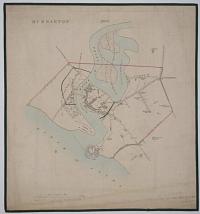
Dumbarton.
J. Hensall Sculp.
[London: House of Commons, 1832.]
Coloured engraving. 330 x 300mm, 13 x 11¾". Laid on and edged with linen. Some wear and surface dirt.
Dumbarton, former Royal burgh and county town of Dumbartonshire, Scotland, on a scale is 6 inches to a mile. Originally published at the time of the Reform Act (which adjusted the boundaries of parliamentary constituencies to take account of the urban drift caused by the Industrial Revolution), this map has been updated with manuscript to determine the extent of free delivery for mail, part of the Great Post Office Reform of 1839-40, championed by Rowland Hill. Another part of this reorganisation was the introduction of the Penny Black, the world's first postage stamp.
[Ref: 10157] £130.00
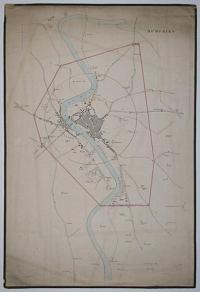
Dumfries.
Ellis sc. 61 Gr. Russell Str. Bloomsbury.
[London: House of Commons, 1832.]
Coloured engraving. 460 x 300mm (18 x 11¾"). Laid on and edged with linen. Some wear and surface dirt.
Dumfries, a former former royal burgh in southern Scotland on a scale is 6 inches to a mile. The town was home to Robert Burns from 1791 until his death in 1796. Originally published at the time of the Reform Act (which adjusted the boundaries of parliamentary constituencies to take account of the urban drift caused by the Industrial Revolution), this map has been updated with manuscript to determine the extent of free delivery for mail, part of the Great Post Office Reform of 1839-40, championed by Rowland Hill. Another part of this reorganisation was the introduction of the Penny Black, the world's first postage stamp.
[Ref: 10164] £130.00
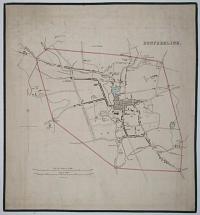
Dunfermline.
J.Gardner, Sculp.
[London: House of Commons, 1832.]
Coloured engraving. 180 x 240mm, 7 x 9½". Laid on and edged with linen. Some wear and surface dirt.
Dunfermline in Fife, one of the ancient capitals of Scotland, on a scale is 6 inches to a mile. Originally published at the time of the Reform Act (which adjusted the boundaries of parliamentary constituencies to take account of the urban drift caused by the Industrial Revolution), this map was used in the Great Post Office Reform of 1839-40, championed by Rowland Hill, to determine the extent of free delivery for mail. Another part of this reorganisation was the introduction of the Penny Black, the world's first postage stamp.
[Ref: 10160] £130.00
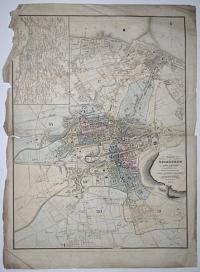
Plan of Edinburgh and Leith. From the Best Authorities.
Engraved Expressly for the Letter Carriers Directory by W.H.Lizars. 1836.
Coloured engraving. 560 x 420mm, 22 x 16½". Damaged.
Scotland's capital, with fine colour and an inset on its environs. This map was apparently used in part of the Great Post Office Reform started 1839, championed by Rowland Hill. Two extra manuscript circles of red probably marks the extent of free postal delivery. With manusript on verso: 'to be put with Regl. St. 6061 Minute [?] 5th. May 1836.'
[Ref: 10217] £220.00
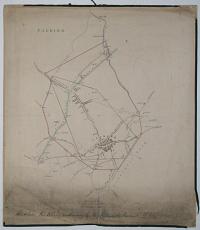
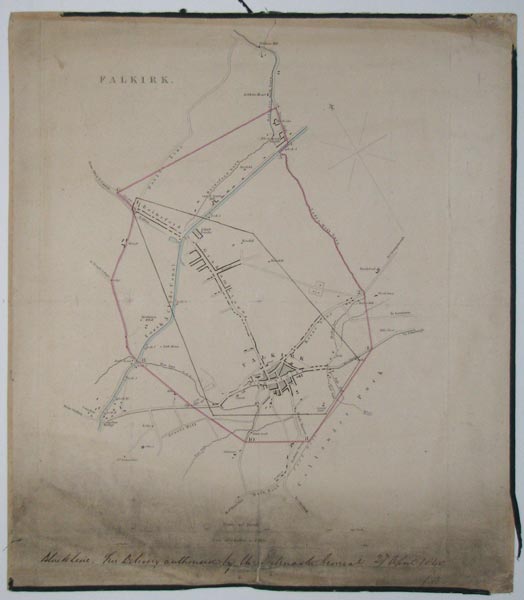
Falkirk.
J.Gardner, Sc.t.
[London: House of Commons, 1832.]
Coloured engraving. 380 x 285mm, 15 x 11¼". Laid on and edged with linen, frayed. Some wear and surface dirt.
Falkirk, cradle of Scotland's industrial revolution, on a scale is 6 inches to a mile. Originally published at the time of the Reform Act (which adjusted the boundaries of parliamentary constituencies to take account of the urban drift caused by the Industrial Revolution), this map has been updated with manuscript to determine the extent of free delivery for mail, part of the Great Post Office Reform of 1839-40, championed by Rowland Hill. Another part of this reorganisation was the introduction of the Penny Black, the world's first postage stamp.
[Ref: 10161] £130.00
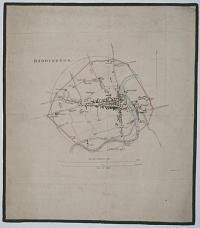
Haddington.
J.Henshall sculp.
[London: House of Commons, 1832.]
Coloured engraving. 190 x 240mm, 7½ x 9½". Laid on and edged with linen. Some wear and surface dirt.
Haddington, a former Royal Burgh in East Lothian, Scotland, on a scale is 6 inches to a mile. Originally published at the time of the Reform Act (which adjusted the boundaries of parliamentary constituencies to take account of the urban drift caused by the Industrial Revolution), this map has been updated with manuscript to determine the extent of free delivery for mail, part of the Great Post Office Reform of 1839-40, championed by Rowland Hill. Another part of this reorganisation was the introduction of the Penny Black, the world's first postage stamp.
[Ref: 10137] £120.00

Inveraray
J.Gardner, Sc.t.
[London: House of Commons, 1832.]
Coloured engraving. 190 x 275mm, 7½ x 10½". Laid on and edged with linen. Some wear and surface dirt.
Inveraray, a former Royal Burgh on the shores of Loch Fyne in Argyll and Bute, Scotland, on a scale is 6 inches to a mile. Originally published at the time of the Reform Act (which adjusted the boundaries of parliamentary constituencies to take account of the urban drift caused by the Industrial Revolution), this map has been updated with manuscript to determine the extent of free delivery for mail, part of the Great Post Office Reform of 1839-40, championed by Rowland Hill. Another part of this reorganisation was the introduction of the Penny Black, the world's first postage stamp.
[Ref: 10182] £130.00
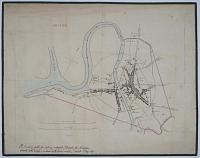
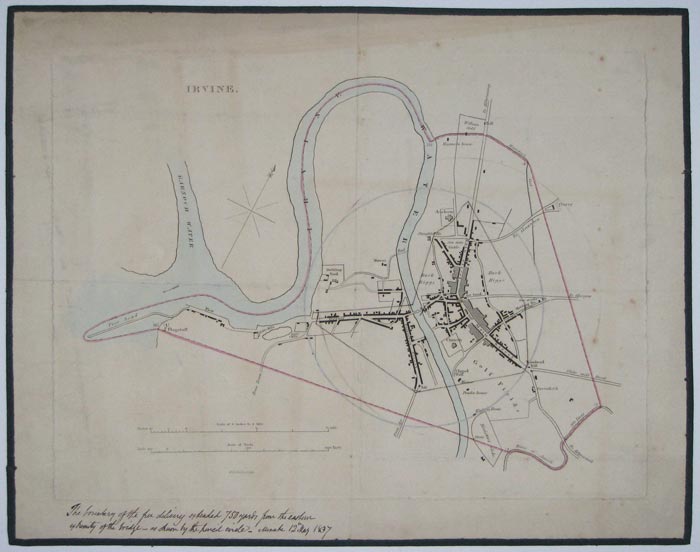
Irvine.
Davies sculp. 4 Compton Str. Bruns.k Square.
[London: House of Commons, 1832.]
Coloured engraving. 240 x 320mm, 9½ x 12½". Laid on and edged with linen. Some wear and surface dirt.
Irvine in Ayrshire, on a scale is 6 inches to a mile. Originally published at the time of the Reform Act (which adjusted the boundaries of parliamentary constituencies to take account of the urban drift caused by the Industrial Revolution), this map has been updated with manuscript to determine the extent of free delivery for mail, part of the Great Post Office Reform of 1839-40, championed by Rowland Hill. Another part of this reorganisation was the introduction of the Penny Black, the world's first postage stamp.
[Ref: 10151] £130.00
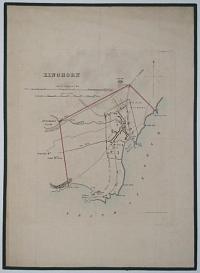
Kinghorn.
Engraved & Printed by H.y Martin, London.
[London: House of Commons, 1832.]
Coloured engraving. 230 x 205mm, 9 x 8". Laid on and edged with linen. Some wear and surface dirt.
Dumfries, a former former royal burgh in southern Scotland, on a scale is 6 inches to a mile. Originally published at the time of the Reform Act (which adjusted the boundaries of parliamentary constituencies to take account of the urban drift caused by the Industrial Revolution), this map has been updated with manuscript to determine the extent of free delivery for mail, part of the Great Post Office Reform of 1839-40, championed by Rowland Hill. Another part of this reorganisation was the introduction of the Penny Black, the world's first postage stamp.
[Ref: 10166] £95.00
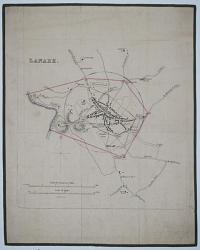
Lanark.
J. Gardner Sculp.
[London: House of Commons, 1832.]
Engraved map with hand colour, laid on & edged with linen. 240 x 240mm (9½ x 9½"). Some wear and surface dirt.
Lanark, former county town of Lanarkshire, Scotland, on a scale is 6 inches to a mile. Originally published at the time of the Reform Act (which adjusted the boundaries of parliamentary constituencies to take account of the urban drift caused by the Industrial Revolution), this map has been updated with manuscript to determine the extent of free delivery for mail, part of the Great Post Office Reform of 1839-40, championed by Rowland Hill. Another part of this reorganisation was the introduction of the Penny Black, the world's first postage stamp.
[Ref: 10155] £120.00
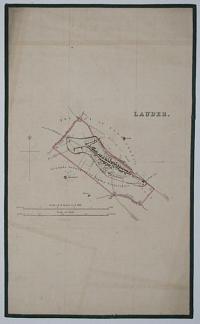
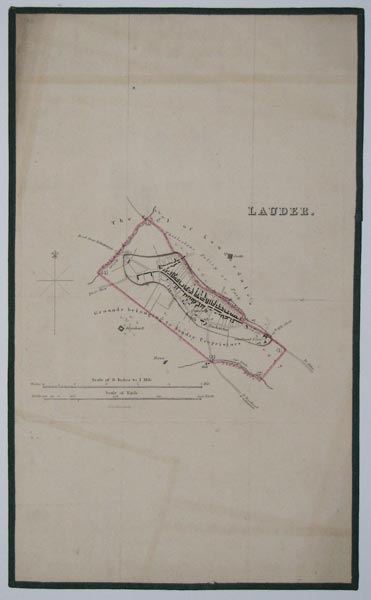
Lauder.
J.Gardner, Sculp.
[London: House of Commons, 1832.]
Coloured engraving. 150 x 190mm, 6 x 7½". Laid on and edged with linen. Some wear and surface dirt.
Lauder, a former royal burgh in Berwickshire, Scotland, on a scale is 6 inches to a mile. Originally published at the time of the Reform Act (which adjusted the boundaries of parliamentary constituencies to take account of the urban drift caused by the Industrial Revolution), this map was used in the Great Post Office Reform of 1839-40, championed by Rowland Hill, to determine the extent of free delivery for mail. Another part of this reorganisation was the introduction of the Penny Black, the world's first postage stamp.
[Ref: 10165] £95.00
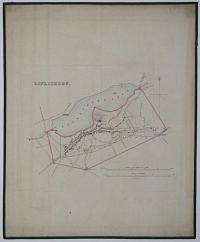
Linlithgow.
J.Gardner, Sc.t.
[London: House of Commons, 1832.]
Coloured engraving. 180 x 240mm, 7 x 9½". Cropped on left, laid on and edged with linen. Some wear and surface dirt.
Linlithgow, a former Royal Burgh in West Lothian, Scotland, on a scale is 6 inches to a mile. Originally published at the time of the Reform Act (which adjusted the boundaries of parliamentary constituencies to take account of the urban drift caused by the Industrial Revolution), this map was used in the Great Post Office Reform of 1839-40, championed by Rowland Hill, to determine the extent of free delivery for mail. Another part of this reorganisation was the introduction of the Penny Black, the world's first postage stamp.
[Ref: 10152] £120.00
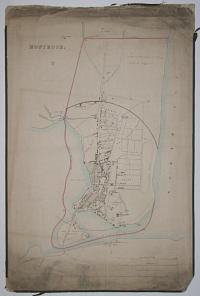
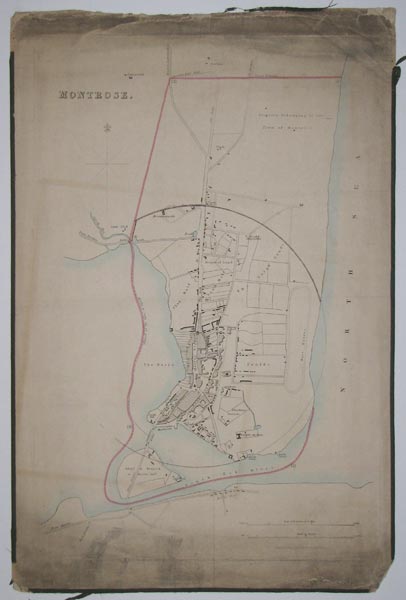
Montrose.
Engraved by J.Gardner, 163 Regent Street.
[London: House of Commons, 1832.]
Coloured engraving. 460 x 310mm, 18 x 12¼". Laid on and edged with linen. Some wear.
Montrose, in Angus, Scotland, on a scale is 6 inches to a mile. Originally published at the time of the Reform Act, which adjusted the boundaries of parliamentary constituencies to take account of the urban drift caused by the Industrial Revolution, this map has been updated with manuscript to determine the extent of free delivery for mail, part of the Great Post Office Reform of 1839-40, championed by Rowland Hill. Another part of this reorganisation was the introduction of the Penny Black, the world's first postage stamp.
[Ref: 10047] £120.00
![[Moy.]](img-thumbnail/jpegs/10190.jpg)
[Moy.]
[n.d., c.1840.]
Engraved map. Sheet 340 x 230mm, 13½ x 9". Three maps, trimmed, joined, laid on and edged with linen. Some wear and surface dirt.
Moy, near Dungannon in County Tyrone, Northern Ireland. The creator of this amalgam of three maps needed to join them to show the extent of free delivery for mail, part of the Great Post Office Reform of 1839-40, championed by Rowland Hill. Another part of this reorganisation was the introduction of the Penny Black, the world's first postage stamp.
[Ref: 10190] £45.00
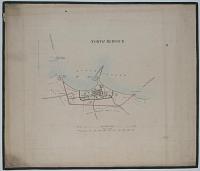
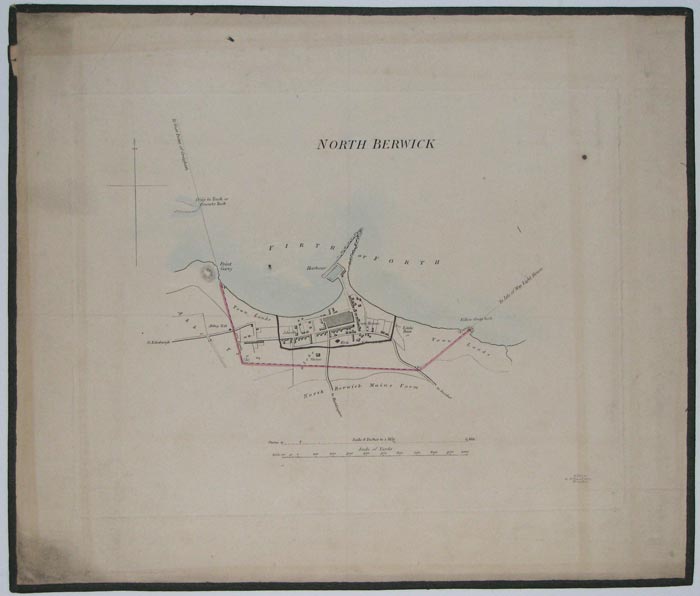
North Berwick.
T.Ellis sc. 6, Gr.t Russell Street, Bloomsbury.
[London: House of Commons, 1832.]
Coloured engraving. 215 x 280mm (8½ x 9¾"). Laid on and edged with linen. Some wear and surface dirt.
The Royal Burgh of North Berwick in East Lothian, Scotland, on a scale is 6 inches to a mile. (Not Berwick-on-Tweed.) Originally published at the time of the Reform Act (which adjusted the boundaries of parliamentary constituencies to take account of the urban drift caused by the Industrial Revolution), this map was used in the Great Post Office Reform of 1839-40, championed by Rowland Hill, to determine the extent of free delivery for mail. Another part of this reorganisation was the introduction of the Penny Black, the world's first postage stamp.
[Ref: 10147] £120.00
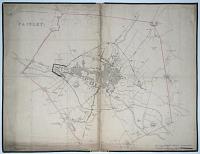
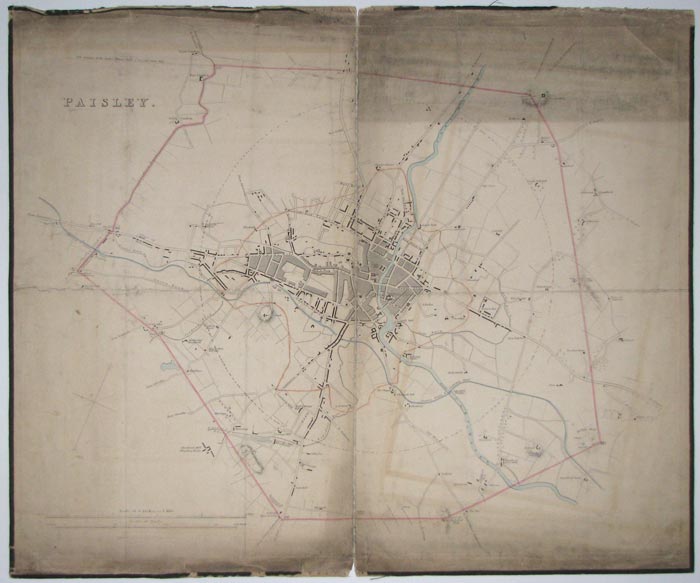
Paisley.
[London: House of Commons, 1832.]
Coloured engraving. 440 x 580mm, 17¼ x 22¾". Laid on and edged with linen. Some wear and surface dirt.
Paisley, a former Royal burgh in Renfrewshire, Scotland, on a scale is 6 inches to a mile. Originally published at the time of the Reform Act (which adjusted the boundaries of parliamentary constituencies to take account of the urban drift caused by the Industrial Revolution), this map has been updated with manuscript to determine the extent of free delivery for mail, part of the Great Post Office Reform of 1839-40, championed by Rowland Hill. Another part of this reorganisation was the introduction of the Penny Black, the world's first postage stamp.
[Ref: 10183] £170.00
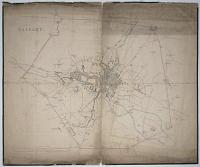
Paisley.
Engraved by J.Gardner, 163 Regent Street.
[London: House of Commons, 1832.]
Coloured engraving. 460 x 570mm, 18 x 22½". Laid on and edged with linen, folded. Some wear and surface dirt.
Paisley in Renfrewshire, Scotland, on a scale is 6 inches to a mile. Originally published at the time of the Reform Act (which adjusted the boundaries of parliamentary constituencies to take account of the urban drift caused by the Industrial Revolution), this map has been updated with manuscript to determine the extent of free delivery for mail, part of the Great Post Office Reform of 1839-40, championed by Rowland Hill. Another part of this reorganisation was the introduction of the Penny Black, the world's first postage stamp.
[Ref: 10135] £130.00
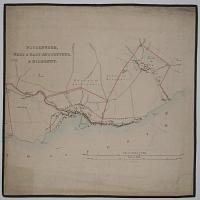
Pittenweem, West & East Anstruther, & Kilrenny.
J.Gardner, sc.t.
[London: House of Commons, 1832.]
Coloured engraving. 235 x 340mm, 9¼ x 13¼". Cropped on left, laid on and edged with linen. Some wear and surface dirt.
The environs of Pittenweem in Fife, Scotland, on a scale is 6 inches to a mile. Originally published at the time of the Reform Act (which adjusted the boundaries of parliamentary constituencies to take account of the urban drift caused by the Industrial Revolution), this map was used in the Great Post Office Reform of 1839-40, championed by Rowland Hill, to determine the extent of free delivery for mail. Another part of this reorganisation was the introduction of the Penny Black, the world's first postage stamp.
[Ref: 10149] £130.00
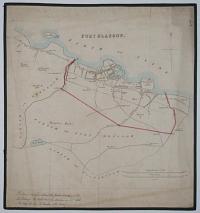
Port Glasgow.
J.Gardner, Sc.t.
[London: House of Commons, 1832.]
Engraved map with hand colour, laid on & edged with linen. 270 x 310mm (10½ x 12¼"). Some wear and surface dirt.
Port Glasgow, former Royal burgh of Renfewshire, Scotland, on a scale is 6 inches to a mile. Originally published at the time of the Reform Act (which adjusted the boundaries of parliamentary constituencies to take account of the urban drift caused by the Industrial Revolution), this map has been updated with manuscript to determine the extent of free delivery for mail, part of the Great Post Office Reform of 1839-40, championed by Rowland Hill. Another part of this reorganisation was the introduction of the Penny Black, the world's first postage stamp.
[Ref: 10158] £130.00
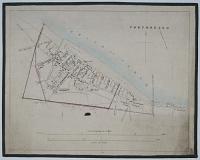
Portobello.
[n.d., c.1840.]
Coloured engraving. 210 x 270mm, 8¼ x 10½". Laid on and edged with linen. Some wear and surface dirt.
Portobello, now a coastal suburb of Edinburgh, on a scale is 6 inches to a mile. This map has been updated with manuscript to determine the extent of free delivery for mail, part of the Great Post Office Reform of 1839-40, championed by Rowland Hill. Another part of this reorganisation was the introduction of the Penny Black, the world's first postage stamp.
[Ref: 10184] £130.00


![[Collection of 48 plates of Portugese costume & trades.]](jpegs/4653.jpg)
![[Porus in battle]](jpegs/45147.jpg)
![[The Posada Kitchen, Pancorbo]](jpegs/2509.jpg)

![Pursuit [&] Possession.](jpegs/22611.jpg)












![[Moy.]](jpegs/10190.jpg)