![[Chart containing the greater part of the South Sea to the South of the Line, with the Islands dispers'd throu' the same.]](img-thumbnail/jpegs/44645.jpg)
[Chart containing the greater part of the South Sea to the South of the Line, with the Islands dispers'd throu' the same.]
[Engraved by Thomas Jefferys after Braddock Mead.]
Publish'd according to Act of Parliament and Printed for Robert Sayer in Fleet Street and Thomas Jefferys in the Strand. [n.d., 1768.]
One sheet only (of six). Engraved map with border, scarce but damaged. Sheet 440 x 545mm (17¼ x 21½"). Trimmed into plate, losing title above top border, damage in plate. Laid onto old canvas, in turn glued to board. Tears.
The bottom left sheet of Braddock Mead's important six-sheet map, 'A Chart of North and South America including the Atlantic and Pacific Oceans with the nearest coasts of Europe, Africa and Asia.' It shows the pre-Cook outline of New Zealand, Espiritu Santo (then posited to be the east coast of Australia), the Solomon Islands and Marquesas, with the routes of the major explorers marked. Despite being designed to be joined, each sheet had a printed border and an individual title, missing in this example, allowing the sheets to be sold separately. The map was originally published by Jefferys alone in 1753 but, after backruptcy in 1766 forced him to take on partners, this second edition was published with Sayer, apparently unrevised. A third state, published by Sayer and Bennett in 1775, has Cook's mapping of New Zealand.
[Ref: 44645] £680.00
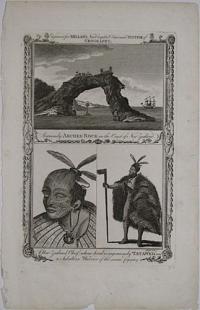
A curiously Arched Rock on the Coast of New Zealand. A New Zealand Chief whose head is ingeniously Tatawed, and a Subaltern Warrior of the same Country. Engraved for Millar's New, Complete & Universal System of Geography.
Page sculp.
[London: A. Hogg, c.1782.]
Copper engraving, 285 x 190mm. 11¼ x 7½".
New Zealand Maoris, showing costume, weaponry, and tattoos. Three images from one plate in distinctive decorative border, from George Henry Millar's 'The new and universal System of Geography, being a complete history and description of the whole world. ...' 1782.
[Ref: 16688] £70.00
(£84.00 incl.VAT)
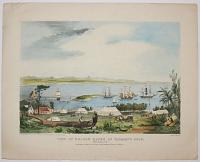
View of Nelson Haven, in Tasman's Gulf, New Zealand, including a Part of the Site of the intended Town of Nelson.
On Stone by T. Allom from a Drawing made in November 1841 by C. Heaphy Draftsman to the New Zealand Company. Printed by C. Hullmandel.
[n.d, 1891?]
Lithograph with hand colour. Printed area 410 x 520mm (16 x 20½"). Tears in margins.
A later strike of Charles Heaphy's view of Nelson Haven, New Zealand, slightly redrawn (lacking the faint sunbeams of the original). Originally published by Trelawny Saunders for the New Zealand Company c.1845, it has been suggested that the series was reprinted in 1891 to mark the 50th anniversary of the expedition this view depicts. Major Charles Heaphy (1821-81) arrived in New Zealand in 1839, going to work for the New Zealand Company; in 1841 he joined Arthur Wakefield on the expedition that led to the founding of Nelson, from where he took part in several expeditions to explore the north west corner of the South Island. In 1864 he was awarding the Victoria Cross for rescuing a wounded comrade during the Maori Wars. The four lithographs of this series are among the best known and most valuable New Zealand prints.
[Ref: 31249] £240.00
(£288.00 incl.VAT)
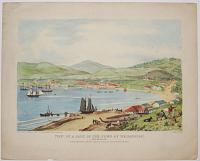
View of a Part of the Town of Wellington, New Zealand, looking towards the South East comprising about one third of the Water Frontage.
On Stone by T. Allom from a Drawing made in September 1841 by C. Heaphy Draftsman to the New Zealand Company. Printed by C. Hullmandel.
[n.d., 1891?]
Lithograph with hand colour. Printed area 410 x 520mm (16 x 20½"). Slight foxing.
A later strike of Charles Heaphy's view of Wellington, New Zealand, slightly redrawn (one building has three windows to the original four). Originally published by Trelawny Saunders for the New Zealand Company c.1845, it has been suggested that the series was reprinted in 1891 to mark the 50th anniversary of the expedition this view depicts. Major Charles Heaphy (1821-81) arrived in New Zealand in 1839, going to work for the New Zealand Company; in 1841 he joined Arthur Wakefield on the expedition that led to the founding of Nelson, from where he took part in several expeditions to explore the north west corner of the South Island. In 1864 he was awarding the Victoria Cross for rescuing a wounded comrade during the Maori Wars. The four lithographs of this series are among the best known and most valuable New Zealand prints.
[Ref: 31255] £450.00
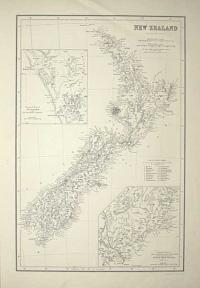
New Zealand.
By W. Hughes F.R.G.S. George Philip & Son, London & Liverpool.
[London. Sampson Low, Marston, Searle & Rivington. 1877.]
Lithograph. 560 x 435mm (22 x 17"), large margins.
A detailed map of New Zealand, with insets of the environs of Auckland and Dunedin.
[Ref: 61030] £180.00

Roto Iti. Freemans Bay, Auckland Harbour. Coromandel Harbour. Roto Rua.
C.D. Barraud del. C.F. Kell Lithographer, Castle S.t Holborn, London E.C.
[London. Sampson Low, Marston, Searle & Rivington. 1877.]
Four tinted lithographs on one sheet. 435 x 560mm (17 x 22") very large margins.
From 'New Zealand Graphic and Descriptive. The Illustrations by C.W. Barraud'. Charles Decimus Barraud (1822-97) emigrated to New Zealand in 1849, opening a pharmacy in Wellington with such success that he opened branches in other towns.
[Ref: 61032] £180.00
(£216.00 incl.VAT)

Te Anan. Wai-An River. The Bluff Harbour. Lake Manipori.
C.D. Barraud del. R.K. Thomas Lith. C.F. Kell Lithographer, Castle S.t Holborn, London E.C.
[London. Sampson Low, Marston, Searle & Rivington. 1877.]
Four tinted lithographs on one sheet. 435 x 560mm (17 x 22") very large margins. Stains in margins on right.
From 'New Zealand Graphic and Descriptive. The Illustrations by C.W. Barraud'. Charles Decimus Barraud (1822-97) emigrated to New Zealand in 1849, opening a pharmacy in Wellington with such success that he opened branches in other towns.
[Ref: 61033] £95.00
(£114.00 incl.VAT)
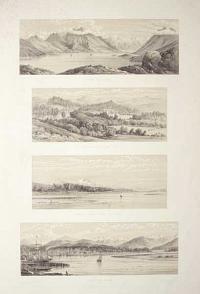
Lake Coleridge. Cheviot Hills Station. Mount Cook from Hokitika. Hokitika Harbour.
C.D. Barraud del. R.K. Thomas Lith. C.F. Kell Lithographer, Castle S.t Holborn, London E.C.
[London. Sampson Low, Marston, Searle & Rivington. 1877.]
Four tinted lithographs on one sheet. 435 x 560mm (17 x 22") very large margins. Foxing top left in margins.
From 'New Zealand Graphic and Descriptive. The Illustrations by C.W. Barraud'. Charles Decimus Barraud (1822-97) emigrated to New Zealand in 1849, opening a pharmacy in Wellington with such success that he opened branches in other towns.
[Ref: 61034] £120.00
(£144.00 incl.VAT)

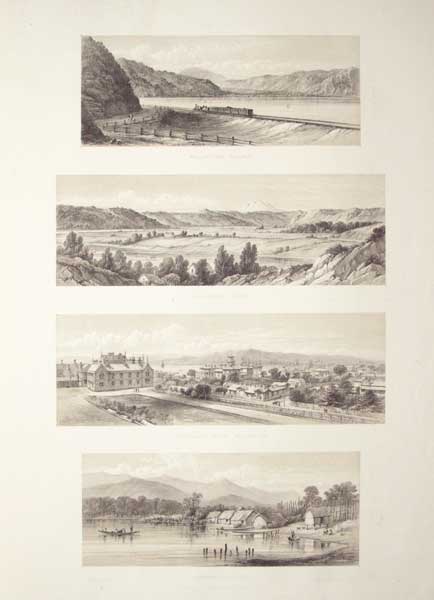
Wellington Railway. Whanganui River. Government House, Wellington. Horowhenua Lake.
C.D. Barraud del. R.K. Thomas Lith. C.F. Kell Lithographer, Castle S.t Holborn, London E.C.
[London. Sampson Low, Marston, Searle & Rivington. 1877.]
Four tinted lithographs on one sheet. 435 x 560mm (17 x 22").
From 'New Zealand Graphic and Descriptive. The Illustrations by C.W. Barraud'. Charles Decimus Barraud (1822-97) emigrated to New Zealand in 1849, opening a pharmacy in Wellington with such success that he opened branches in other towns.
[Ref: 61035] £160.00
(£192.00 incl.VAT)
![[Carrying Wool - Canterbury, New Zealand.] New Zealand Wool Team [ink mss.]](img-thumbnail/jpegs/63083.jpg)
[Carrying Wool - Canterbury, New Zealand.] New Zealand Wool Team [ink mss.]
HD. Herbert Dicksee [pencil signature.]
[n.d., c.1890.]
Etching, signed by the artist in pencil, remarque of a pair of kiwis. 315 x 500mm (12 x 19¾"), very large margins. Paper toned, glue stains in margins. Slight split in platemark bottom right.
A cart of wool bales pulled by oxen across a rugged landscape. One of Dicksee's earliest works. Provenance: From the Descendants of Herbert Dicksee.
[Ref: 63083] £450.00
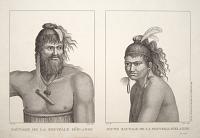
Sauvage de la Nouvelle Zéelande. Jeune Sauvage de la Nouvelle Zéelande. Atlas du Voyage à la recherche de la Pérouse. No 25.
Piron delin. Copia sculp. Dien Scripsit.
[Paris: H.J.Jansen, 1800.]
Engraving. 305 x 445mm (12 x 17½").
Romanticized portraits of two Maoris. Both have hair decorated with feathers, one wearing a necklace, the other long earrings; neither have tattoos. In 1788 Jean-Francois de Galaup, comte de La Pérouse set sail from Botany Bay and was never seen again. Despite the upheaval of the French Revolution the National Assembly was moved to send an expedition in search of their lost hero, 1791-3, under Chevalier Bruni d'Entrecasteaux. Despite finding no trace of La Perouse, losing its commander and many crew to scurvy, and finally splitting between royalist and republican factions, the expedition was judged a success because of the important observations made by the expedition's scientists, especially in Australia. This account, compiled by the expedition's botanist, Jacques Julien Houtou de Labillardière, was published as 'Relation du voyage à la recherche de La Pérouse', with natural history plates by Redouté and Audebert. The work even has its own abbreviation in botantical literature, 'Voy.Rech.Perouse'.
[Ref: 52620] £190.00
(£228.00 incl.VAT)
![[Carrying Wool - Canterbury, New Zealand.] New Zealand Wool Team [ink mss.]](img-thumbnail/jpegs/52126.jpg)
[Carrying Wool - Canterbury, New Zealand.] New Zealand Wool Team [ink mss.]
HD. Herbert Dicksee [pencil signature.]
[n.d., c.1890.]
Etching on chine collé, signed by the artist in pencil, remarque of a pair of kiwis. 315 x 500mm (12 x 19¾"). Faint spotting on backing paper.
A cart of wool bales pulled by oxen across a rugged landscape. One of Dicksee's earliest works. From the celebrated collection of Bryan & Valerie Steele.
[Ref: 52126] £880.00
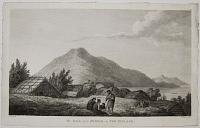
The Inside of a Hippah in New Zeeland.
J. Webber del. B.T. Pouncy sculp.
[London: Nicol & Cadell, n.d., c.1785.]
Engraving. Sheet 260 x 410mm (10¼ x 16"). Trimmed to the plate.
The interior of a pa, a fortified Maori village. Engraved by Benjamin Thomas Pouncy after John Webber for 'A Voyage to the Pacific Ocean' (1784), the official account of Captain Cook's Third and final voyage.
[Ref: 51214] £160.00
(£192.00 incl.VAT)
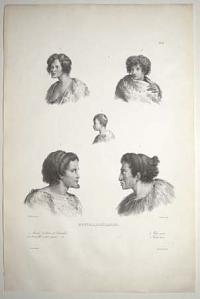
Nouvelle-Zélande. 1. Femme de l'Anse de l'Astrolabe. 2.3. Jeune fille et petit garçon id. 4. Cehi-noui. 5. Koki-horé.
de Sainson pinx. A. Maurin lith.
J. Tastu Editeur. Lith. de Lemercier. [Paris, 1830-5.]
Lithograph. Printed area 380 x 280mm (15 x 11"), with publisher's blindstamp, very large margins.
The heads of two Maori men with tattoos, two women and a boy. From 'Voyage de la Corvette l'Astrolabe', the account of Jules Dumont D'Urville's important expedition to the South Seas between 1826 and 1829. Ellis: Early Prints of New Zealand, 89.
[Ref: 53430] £230.00
(£276.00 incl.VAT)
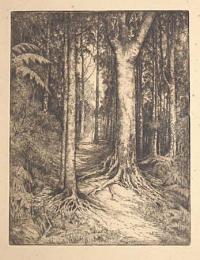
Woodland scene, New Zealand.
H. Wallace.
[n.d., c.1910.]
Etching. 250 x 190mm (9¾ x 7½") large margins.
Woodland scene in New Zealand.
[Ref: 53560] £120.00
(£144.00 incl.VAT)
![[Trees in New Zealand]](img-thumbnail/jpegs/19115.jpg)
[Trees in New Zealand]
H. Wallace.
[n.d., c.1910.]
Etching, signed in pencil. 250 x 150mm, 9¾ x 6". Staining on verso only.
A woodland scene in New Zealand.
[Ref: 19115] £80.00
(£96.00 incl.VAT)
![[Trees, with a rickety footbring over a small waterfall, New Zealand]](img-thumbnail/jpegs/19116.jpg)
[Trees, with a rickety footbring over a small waterfall, New Zealand]
H. Wallace.
[n.d., c.1910.]
Etching. 220 x 180mm, 8½ x 7". Top margin toned.
A woodland scene in New Zealand.
[Ref: 19116] £80.00
(£96.00 incl.VAT)
![[Trees of New Zealand]](img-thumbnail/jpegs/19113.jpg)
[Trees of New Zealand]
H. Wallace.
[n.d., c.1910.]
Etching. 250 x 180mm, 9¾ x 7".
A woodland scene in New Zealand.
[Ref: 19113] £95.00
(£114.00 incl.VAT)
![Woodland scene, New Zealand]](img-thumbnail/jpegs/19120.jpg)
Woodland scene, New Zealand]
H. Wallace.
[n.d., c.1910.]
Etching, printed in sepia. 250 x 190mm, 9¾ x 7½".
Woodland scene in New Zealand.
[Ref: 19120] £80.00
(£96.00 incl.VAT)
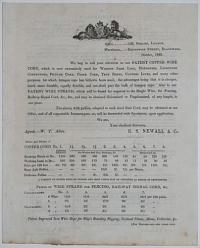
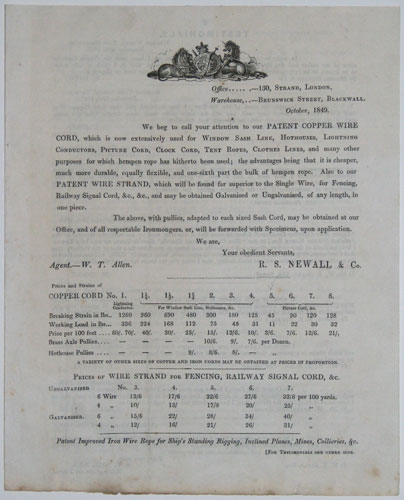
We beg to call your attention to our Patent Copper Wire Cord, which is now extensively used for Window Sash Line, Hothouses, Lightening Conductors, Picture Cord, Clock Cord, Tent Ropes, Clothes Lines, and many other purposes... Also to our Patent Wire Strand.... R.S. Newall & Co. Office 130 Strand, London, October, 1849.
[London, 1849.]
Broadsheet advertisement, promotional four-page leaflet (forth page blank), letterpress with coat of arms. Page 245 x 205mm, 9¾ x 8". Tatty extremities; folds.
A scarce and interesting piece of industrial ephemera, consisting largely of a series of 'Testimonials' from satisfied customers. Engineer Robert Stirling Newall (1812 - 1889) invented wire-ropes in 1840. His company developed the machinery and techniques for laying underwater telegraph cables beneath the oceans. A keen astronomer, Newall was also responsible for a series of drawings of the Sun made between 1848 and 1852. Provenance: from a scrap album compiled c.1840 - 1880 by Alfred Towgood of Riverside, a paper mill owner at St. Neots, Huntingdon. He was also a Lieutenant in the Duke of Manchester's Light Horse.
[Ref: 16461] £240.00
(£288.00 incl.VAT)
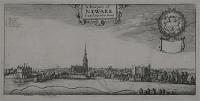
A Prospect of Newark From Lincolne Road.
R: Hall delin:
W: Hollar sculp: 1676. [c.1800?]
Etching, later impression on coarse laid paper. 150 x 295mm. (6 x 11½").
Prospect of Newark-on-Trent, Nottinghamshire; key upper left, arms and unlettered banner cartouche upper right. Etched by Wenceslaus Hollar (1607-77) and originally published in Thoroton's ''Nottinghamshire''. Pennington: 1047.
[Ref: 13865] £50.00
(£60.00 incl.VAT)
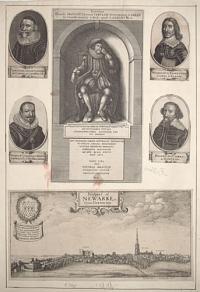
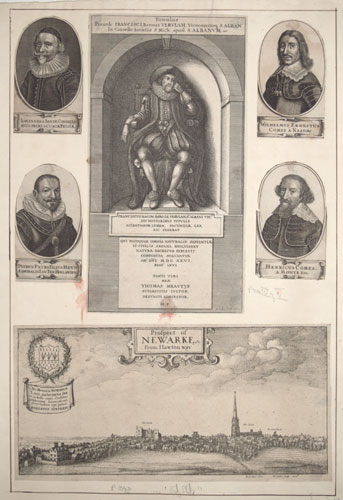
A Prospect of Newark from Hawton Way.
R: Hall delin: W: Hollar sculp: 1676.
Etching. Sheet 150 x 295mm. (6 x 11½"). Trimmed to plate and laid on album paper with five other etchings.
Prospect of Newark-on-Trent, Nottinghamshire, etched by Wenceslaus Hollar (1607-77) for Thoroton's ''Nottinghamshire''. The other prints include a view of Francis Bacon's Tomb by Hollar (Pennington 2273, state iv of v, c.1740), and four small Dutch portrait. Pennington: 1047.
[Ref: 52268] £360.00
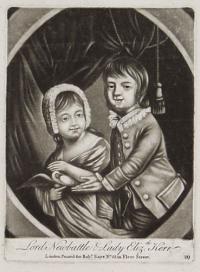
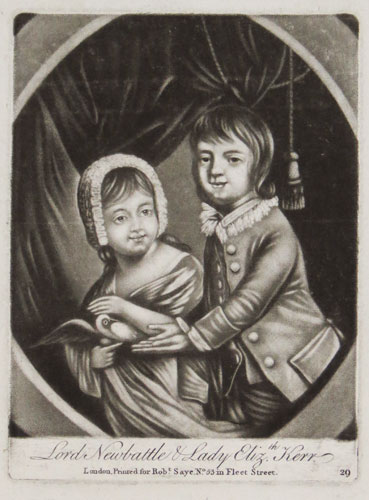
Lord Newbattle and Lady Eliz.th Kerr.
London, Printed for Rob.t Saye, No. 53 in Fleet Street.
Mezzotint with large margins, platemark 150 x 115mm (6 x 4½"). Rubbed. Slight creasing.
Double portrait of William and Elizabeth Kerr (holding a dove). Probably copied from the larger mezzotint which Valentine Green made of Catherine Read's painting. Lennox-Boyd database ii/ii; for Green's mezzotint of this portrait see ref. 25242
[Ref: 31379] £95.00
(£114.00 incl.VAT)
![[The Newbury Coat.] To Robert Throckmorton Esq.re Buckland House Farringdon This Print respresenting the beginning progress & completion of an extraordinary undertaking](img-thumbnail/jpegs/31236.jpg)
[The Newbury Coat.] To Robert Throckmorton Esq.re Buckland House Farringdon This Print respresenting the beginning progress & completion of an extraordinary undertaking to prove the possibility if Wool being manufactured into cloth and made into a coat between sunrise and sunset, which was successfully accomplished on Tuesday 25th June 1811, Is respectfully dedicated his most obliged and humble Servant John Williams Sand Steward to the late Sir John Throckmorton.
Drawn on Stone by J.W. Giles
London Published by John Mitchell, 33 Old Bond Street.
Lithograph with large margins. Printed area 540 x 740mm (21¼ x 29"). A few creases in the sky.
A composite image showing a race to create a wool hunting coat from scratch in one day, held in Newbury Berkshire. The origin of the event was a comment made by John Coxeter, owner of Greenham Mills in Newbury to Sir John Throckmorton: 'So great are the improvements in machinery I have lately introduced into my mill, that I believe that in twenty-four hours I could take the coat off your back, reduce it to wool, and turn it back into a coat again'. Throckmorton calculated the time required for the various processes, accepting it could be done. Shortly after Throckmorton made a wager a thousand guineas that at eight o'clock in the evening of June the 25th, 1811, he would sit down to dinner in a well-woven, properly-made coat, the wool of which formed the fleeces of sheep's backs at five o'clock that same morning. A holiday was declared so the town could watch (greasy-pole climbing and fencing competitions can be seen to the right), and the race was on. Starting at five in the morning, Coxeter presented the coat to Throckmorton at 6.20, who put the garment on before over five thousand people, and sat down to dinner at eight o'clock in the evening. The sheep that provided the wool were roasted for the spectators. The 'Newbury Coat' is still owned by the Throckmorton family; an identical coat, made in a 1991 re-enactment, is in the West Berkshire Museum in Newbury.
[Ref: 31236] £850.00
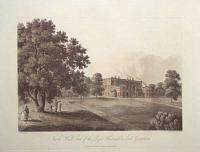
Newby Hall, Seat of the Right Honourable Lord Grantham.
R. Dunning Pinx.t. Engraved by R. & D. Havell.
Published May 1st 1813 by R. Dunning, Ripon, Yorkshire.
Coloured aquatint, printed in brown and hand finished. 260 x 350mm (10¼ x 13¾") very large margins.
A view of the exterior of Newby Hall in North Yorkshire, as remodelled by William Weddell (1736-92), including interiors by Robert Adam, to house his collection of Roman antiquities. After his death owners included Lord Grantham, his nephew, and the 2nd Earl of Ripon. The present owners are matrilineal descendants of William Weddell. The hall was used as a location for ITV's production of Jane Austen's 'Mansfield Park' in 2007. Not in Abbey.
[Ref: 59170] £280.00
(£336.00 incl.VAT)
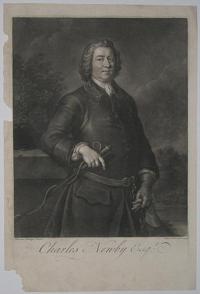
Charles Newby Esqr:
Charles Philips Pinxt. John Faber fecit 1744.
Rare Mezzotint, 360 x 250mm. 14¼ x 9¾". Missing lower left corner. Tatty and chipped left margin. Slightly soiled.
Charles Newby d.1750, sportsman of Hooton Roberts, Yorkshire. He wears a black coat with plain belt, from which hangs a chain, and holds a whip. After Charles Philips (1708 - 1747), portrait painter, and court painter to the Prince of Wales. C.S. 254 only state.
[Ref: 10014] £120.00
(£144.00 incl.VAT)

Charles Newby Esqr:
Charles Philips Pinxt. John Faber fecit 1744.
Fine mezzotint, platemark 355 x 250mm (14¼ x 9¾"). Small margins.
Charles Newby (d.1750), sportsman of Hooton Roberts, Yorkshire, wearing black coat from which hangs a chain, and holding a whip. After Charles Philips (1708 - 1747), portrait painter and court artist to the Prince of Wales. CS 254.
[Ref: 40248] £240.00
(£288.00 incl.VAT)
![[Eastern entrance to Newcastle.]](img-thumbnail/jpegs/8390.jpg)
[Eastern entrance to Newcastle.]
T.M. Richardson del.t S. Humble sculpt.
[n.d., c.1815.]
Engraving, 305 x 370mm. Proof before title. Uncut sheet.
The eastern entrance to Newcastle on Tyne, with a horse-drawn cart in the foreground.
[Ref: 8390] £220.00
(£264.00 incl.VAT)

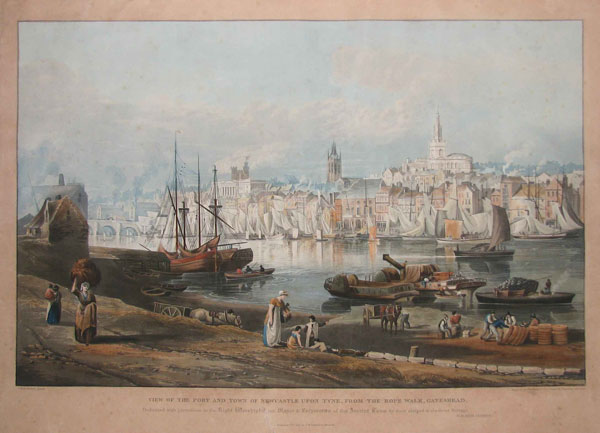
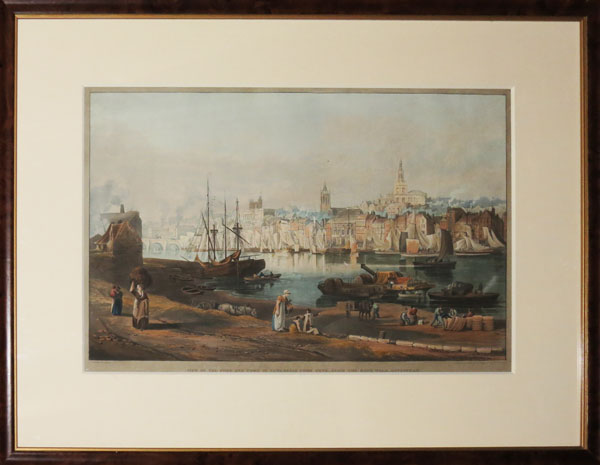
View of the Port and Town of Newcastle upon Tyne, from the Rope Walk Gateshead. Dedicated with Permission to the Right Worshipful the Mayor & Corporation of that Ancient Town by Their obliged and Obedient Servant. T.M. Richardson.
T.M.Richardson pinxit. Engraved by Rob.t Havell & Son. 3 Chapel Str. Tottenham Court Road.
Published Feb.y 1819 by T. M. Richardson, Newcastle.
Coloured aquatint with washed borders. 670 x 470mm. Two tears effecting the washed margins. Reverse has worn areas from an old card backing.
Thomas Miles Richardson, (1784-1848) Having revealed a deep love of drawing he didn't follow this passion until after his fathers death when he accepted a position as Drawing Master at a Newcastle school. In 1813, after six years as both master of St Andrew's and a private drawing master, he resigned his school position to devote his life to painting. Initially his work attracted little local interest, and he found it difficult to make a living as an artist. However, from 1814, he began to gain a wide reputation as a result of his exhibiting works in London, at the Royal Academy and the British Institution. In 1813, after six years as both master of St Andrew's and a private drawing master, he resigned his school position to devote his life to painting. Initially his work attracted little local interest, and he found it difficult to make a living as an artist. However, from 1814, he began to gain a wide reputation as a result of his exhibiting works in London, at the Royal Academy and the British Institution. Richardson continued to live in Newcastle, and so dominate the local art scene. In 1822, his own house in Brunswick Place was used as the venue for the first fine art exhibition to be staged in the North of England. The success of the exhibition led to the foundation of first the Northumberland Institution for the Promotion of Fine Arts, and later the Northern Academy of Arts. In 1831, he also helped to launch the Northern Society of Painters in Water-Colours. A leading exhibiting member of these organisations, he made a particularly notable contribution to the Northern Academy in 1830 with four large paintings. Moot Hall, the Castle Keep, the neo-Gothic spire of St. Nicholas' church ar all visible in this view. Gateshead was a prosperous settlement in the Roman Times, and during the Industrial Revolution and Victorian Era it became one of the focal points for industries in the North East due to its easily accessible port.
[Ref: 4886] £800.00
![[Four Views of Newcastle.]](img-thumbnail/jpegs/57636.jpg)
[Four Views of Newcastle.]
T.M. Richardson Del.t. S. Humble Sculp.t.
[n.d., c.1815.]
Set of four engraving, proofs before titles. Printed areas 225 x 315mm (9 x 12½"). Trimmed within plates.
All four engravings from a set of view of Newcastle, showing: the city from the wharves; the eastern entrance to the city; the Assembly Rooms; and Elswick Hall. The titled versions were published by Stephen Humble in 1815. Alexander: Biographical Dictionary of British & Irish Engravers, p.488-9. Provenance: Thomas Davidson Album. See: Ref: 57646 for similar.
[Ref: 57636] £560.00
(£672.00 incl.VAT)
view all images for this item
![[High Level Bridge] To George Hudson Esquire, M.P.](img-thumbnail/jpegs/56771.jpg)
[High Level Bridge] To George Hudson Esquire, M.P. This Print Representing a View of the High-Level-Bridge, Newcastle-on-Tyne, is with Permission, Respectfully Dedicated By his Most Obedient Humble Servant, John Christie.
Newcastle, Engraved & Published by John Christie, No 3 Nelson Street [n.d., c.1850].
Rare coloured steel engraving. Sheet 290 x 380mm (11½ x 15"). Trimmed within plate, laid on card. Repaired tear in title.
The High Level Bridge, over the Tyne between Newcastle upon Tyne and Gateshead, built by Robert Stephenson, completed 1849 and opened by Queen Victoria the following year. Still in use, it is now listed Grade I.
[Ref: 56771] £260.00
(£312.00 incl.VAT)
![[Thomas Pelham-Holles, Duke of Newcastle] The Compleat Vermin-Catcher of G-B-n, or the Old Trap New Baited.](img-thumbnail/jpegs/68928.jpg)
[Thomas Pelham-Holles, Duke of Newcastle] The Compleat Vermin-Catcher of G-B-n, or the Old Trap New Baited.
Publish'd according to Act of Parliament April 18th. 1754.
Etching with engraving. 245 x 345mm (9½ x 13½"). Narrow top margin, tear in top of image taped, creasing. Small margins
A satire on parliamentary corruption. The new prime minister, the Duke of Newcastle, sits by the House of Commons, using a fishing rod to lure parliamentary candidates (all on horseback) to support him with promises of advancement. The riders all express their interests, including one saying 'Jews, & no Jews'. This image reflects popular backlash against England’s highly unpopular Jewish Naturalisation Act of 1753, often called the “Jew Bill.” The law allowed Jews to apply for naturalisation through Parliament. It passed easily in the Lords but faced strong Tory opposition in the Commons. Despite this, the Whigs, supporting broader religious tolerance, secured its passage, and it received royal assent. A surge of public antisemitism followed, prompting its repeal in 1754. BM Satires 3269.
[Ref: 68928] £690.00
(£828.00 incl.VAT)
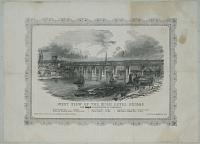
West View of the High Level Bridge Now....Constructed at Newcastle. Length of Water Way......512 Feet. Between the Triumphal Arches..137 Feet 5 Inches. Span of the Arches.. 125 Feet. Extreme Height....131 Feet. High Water ot Level of Rails..112 Feet 6 Inches. High Water to Carriage Way .. 86 Feet.
From the Sunderland and Durham County Herald.]
[of Friday, March 19, 1847.
Wood engraving. 285 x 385mm (11¼ x 15¼"). Laid down on album sheet.
The High Level Bridge is a road and railway bridge over the River Tyne. It was designed by Robert Stephenson and built between 1847 and 1849 and was the first major example of a wrought iron tied arch or bow-string girder bridge.
[Ref: 18387] £120.00
(£144.00 incl.VAT)
![[Four Views in Newcastle.]](img-thumbnail/jpegs/57646.jpg)
[Four Views in Newcastle.]
T.M. Richardson Del.t. S. Humble Sculp.t.
[Published 34, Harleyford Place, Kennington Common, n.d., c.1815.]
Set of four engraving, proofs before titles. printed on chine collé. Printed areas 225 x 315mm (9 x 12½"). Two plates trimmed within plate.
All four engravings from a set of view of Newcastle, showing: the city from the wharves; the eastern entrance to the city; the Assembly Rooms; and Elswick Hall. The titled versions were published by Stephen Humble in 1815. Alexander: Biographical Dictionary of British & Irish Engravers, p.488-9. Provenance: Thomas Davidson Album. See Ref: 57636 for similar.
[Ref: 57646] £850.00
view all images for this item
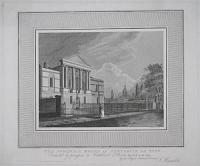
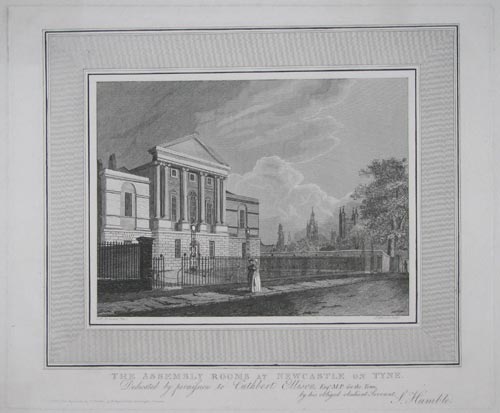
The Assembly Rooms at Newcastle on Tyne Dedicated by permission to Cuthbert Ellison, Esq.r M.P. for the Town, by his obliged obedient Servant, S. Humble.
T.M. Richardson Del.t. S. Humble Sculpt.
London, Pub. Aug. 21 1815 by S. Humble, 34 Horleyford Place, Kennington Common.
Engraving, 305 x 370mm. Uncut sheet.
Open to both men and women, Assembly Rooms held concerts, balls and other entertainments for the upper classes. The Newcastle Assembly Rooms were built in 1776 in the city's historic Grainger Town district.
[Ref: 8389] £220.00
(£264.00 incl.VAT)
![[The Assembly Rooms at Newcastle on Tyne.]](img-thumbnail/jpegs/8395.jpg)
[The Assembly Rooms at Newcastle on Tyne.]
T.M. Richardson Del.t. S. Humble Sculp.t.
[n.d., c.1815.]
Engraving, 305 x 370mm. Proof before title. Uncut sheet.
Open to both men and women, Assembly Rooms held concerts, balls and other entertainments for the upper classes. The Newcastle Assembly Rooms were built in 1776 in the city's historic Grainger Town district.
[Ref: 8395] £220.00
(£264.00 incl.VAT)
![[A Grand House, Newcastle.]](img-thumbnail/jpegs/8612.jpg)
[A Grand House, Newcastle.]
T.M. Richardson del.t S. Humble Scul.t
[n.d., c.1815.]
Proof before letters. 305 x 370mm (12 x 14½"). Uncut sheet.
A country house.
[Ref: 8612] £220.00
(£264.00 incl.VAT)
![[Elswick Hall.]](img-thumbnail/jpegs/19133.jpg)
[Elswick Hall.]
T.M. Richardson Del.t. S. Humble Sculp.t.
[n.d., c.1815.]
Engraving. Sheet 250 x 310mm (9¾ x 12¼"). Repaired tear, trimmed.
Elswick Hall. now Elswick Park, a ward of western Newcastle-upon Tyne.
[Ref: 19133] £95.00
(£114.00 incl.VAT)
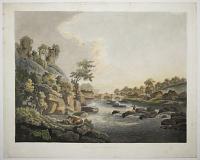
New Castle Emblyn, Cardiganshire.
Drawn & Engraved by J. Hassell.
Published April 18th 1804 by Tegg and Castleman 111 Cheapside, London.
Aquatint, printed in colours and finished by hand. 450 x 570mm (17¾ x 22½"). Repaired tears, laid on card.
Newcastle Emlyn, with the 13th-century castle overlooking the bridge. Once owned by Edward, the Black Prince, it was still occupied at the start of the Civil War, but was captured in 1645 by parliamentary troops and slighted.
[Ref: 47820] £260.00
(£312.00 incl.VAT)
![[GreyFriars or Anderson Place] This House was Originally the Monastry of Grey Friers _ New Castle upon Tyne.](img-thumbnail/jpegs/57778.jpg)
[GreyFriars or Anderson Place] This House was Originally the Monastry of Grey Friers _ New Castle upon Tyne.
G. Sonander fecit.
[n.d., c.1790.]
Scarce aquatint, printed in sepia. 380 x 505mm (15 x 20"). Trimmed to plate.
A view of GreyFriars, founded 1237, bought by a merchant Robert Anderson after the Dissolution of the Monasteries. It was here that Charles I was held after he surrendered to the Scots Army in 1646, before being handed to Parliament. This view shows the building when owned by Newcastle builder George Anderson (between 1782 and his death in 1798), who converted it into three residences. In 1835 it was demolished by another Newcastle builder, Richard Grainger, during the construction of Grey Street. Newcastle-upon-Tyne. From the Davidson album.
[Ref: 57778] £320.00
![Central Railway Station, Newcastle. (Uniform with a View of the Interior.) [&] Interior of the Central Railway Station, Newcastle. (Uniform with a View of the Exterior.)](img-thumbnail/jpegs/27411.jpg)
Central Railway Station, Newcastle. (Uniform with a View of the Interior.) [&] Interior of the Central Railway Station, Newcastle. (Uniform with a View of the Exterior.)
John Dobson, Esq. Archt.
Published by Andrew Reid, Lithographer, 117, Pilgrim Street, Newcastle.
Pair of lithographs on india paper, scarce; each sheet 280 x 380mm. 11 x 15". Margins slightly soiled and stained; generally good copies with large margins.
The interior view shows a steam locomotive at the station on the Newcastle & Carlisle Railway designed by John Dobson (1787-1865). It was opened on 29 August 1850 by Queen Victoria. Not in Abbey.
[Ref: 27411] £320.00
view all images for this item
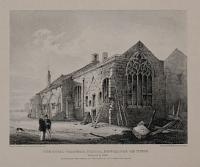
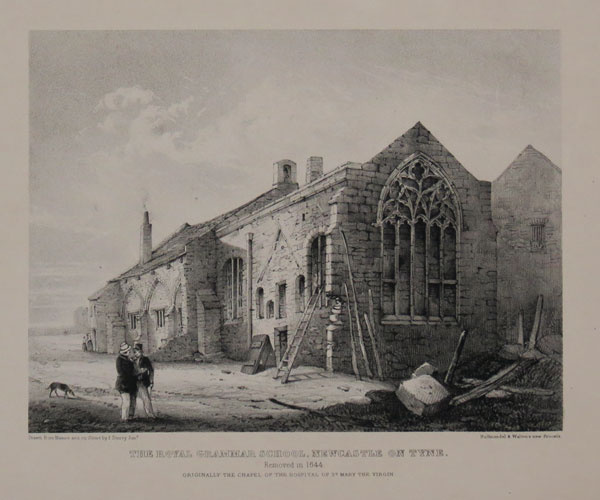
The Royal Grammar School. Newcastle on Tyne. Removed in 1844. Originally the Chapel of the Hospital of St Mary the Virgin.
Drawn from Nature and on Stone by J. Storey Jun.r. Hullmandel & Walton's new Process.
Lithograph. Printed area 185 x 220mm (7¼ x 8½").
'Hullmandel & Walton's new Process' must have been a new technique in lithography.
[Ref: 34611] £120.00
(£144.00 incl.VAT)
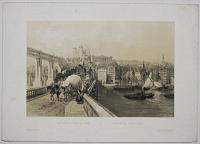
Newcastle Sur La Tyne. Newcastle upon Tyne. 34.
Dessiné et lith par J. Arnout. Imp. Lemercier, Paris.
Paris, Bulla Frères & Jouy éditeurs. Berlin, F.d Ebner, 196 Friedrichsstrasse. London, E. Gambart & Co. 25 Berners St. Oxf. St. New-York. Emile Seitz, 413 Broadway. [n.d. c.1850.]
Tinted lithograph with very large margins. 400 x 570mm (15¾ x 22½"). Some foxing off image. Uncut.
View across the Tyne towards Newcastle. A merchant with a laden carriage crosses the bridge, where the new Swing Bridge stands today; to the left stands the High Level Bridge of 1781, with the old castle keep towering in the background. Steamer and other vessels on the river.
[Ref: 29988] £260.00
(£312.00 incl.VAT)
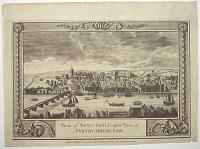
View of Newcastle, upon Tyne, in Northumberland.
London: Published as the Act directs, by Alexr. Hogg, at the Kings Arms, No.16, Paternoster Row. [n.d., c.1795.]
Engraving, sheet 240 x 330mm (9½ x 13"). Trimmed to lower platemark.
A view of the river Tyne and the city of Newcastle. From 'The New and Complete English Traveller' published by Alexander Hogg (1784 - 1794; fl).
[Ref: 56067] £60.00
(£72.00 incl.VAT)
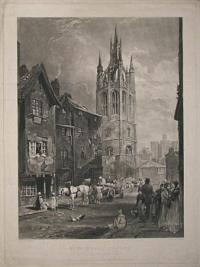
St. Nicholas' Church. Newcastle upon Tyne.
Painted by T.M. Richardson. Engraved by T. Hodgetts.
Published, Dec 15, 1828 by M.A. Richardson, Newcastle and by Moon, Boys & Greaves, Printsellers to His Majesty Pall Mall London. Proof [lower right].
Mezzotint with etching on india laid paper, 500 x 370mm. 19¾ x 14½". Two horizontal creases through image.
A very rare view in Newcastle. After Thomas Miles Richardson (1784 - 1848), locally published.
[Ref: 9176] £350.00

View of the Port and Town of Newcastle upon Tyne, from the Rope Walk Gateshead. Dedicated with Permission to the Right Worshipful the Mayor & Corporation of that Ancient Town by Their obliged and Obedient Servant. T. M.Richardson.
T.M.Richardson pinxit. Engraved by Robt. Havell & Son. 3 Chapel Str. Tottenham Court Road.
Published Feby. 1819 by T. M. Richardson, Newscastle.
Coloured aquatint with washed borders. 670 x 470mm, 26½ x 18½". Framed. Unexamined out of frame.
Thomas Miles Richardson, (1784-1848) Having revealed a deep love of drawing he didn't follow this passion until after his fathers death when he accepted a position as Drawing Master at a Newcastle school. In 1813, after six years as both master of St Andrew's and a private drawing master, he resigned his school position to devote his life to painting. Initially his work attracted little local interest, and he found it difficult to make a living as an artist. However, from 1814, he began to gain a wide reputation as a result of his exhibiting works in London, at the Royal Academy and the British Institution. Richardson continued to live in Newcastle, and so dominated the local art scene. In 1822, his own house in Brunswick Place was used as the venue for the first fine art exhibition to be staged in the North of England. The success of the exhibition led to the foundation of first the Northumberland Institution for the Promotion of Fine Arts, and later the Northern Academy of Arts. In 1831, he also helped to launch the Northern Society of Painters in Water-Colours. A leading exhibiting member of these organisations, he made a particularly notable contribution to the Northern Academy in 1830 with four large paintings. Moot Hall, the Castle Keep, the neo-Gothic spire of St. Nicholas' church ar all visible in this view. Gateshead was a prosperous settlement in the Roman Times, and during the Industrial Revolution and Victorian Era it became one of the focal points for industries in the North East due to its easily accessible port.
[Ref: 28107] £650.00
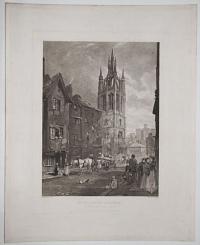
St Nicholas Church. Newcastle upon Tyne.
Painted by T.M. Richardson. Engraved by T. Hodgetts.
Published Dec.15.1828 by M.A. Richardson, Newcastle, and by Moon, Boys & Graves, Printsellers to His Majesty. Pall Mall, London.
Mezzotint and etching with very large margins, rare. Plate 495 x 374mm. 19½ x 14¾". Laid on card.
View of the church, looking diagonally from the left foreground towards the church tower, which is surmounted by an open crown turret and four pinnacles; townsfolk in the street, including a man talking to another sitting in a horse-drawn cart, and a woman who leans out of an upper window holding a large basket-cage.
[Ref: 27568] £280.00
(£336.00 incl.VAT)
![[The Duke of Newcastle's stud.]](img-thumbnail/jpegs/50352.jpg)
[The Duke of Newcastle's stud.]
Abr. à Diepenbeke delin. Petr. Clouwet Sculpsit.
[London: John Brindley, 1743.]
Engraving. 390 x 520mm (15½ x 20½"). Centre fold as usual. Narrow lateral margins.
Mares and foals in the fields of the stud of William Cavandish, 1st Duke of Newcastle, at Welbeck Abbey, Nottinghamshire. Plate 42 of the Duke of Newcastle's treatise on horsemanship, 'La Methode et Invention nouvelle de Dresser les Chevaux', first published in Antwerp by Jacob van Meurs c.1658, but this example from the first English edition, 'A General System of Horsemanship in All Its Branches'. After the defeat of the Royalist cause in the Civil War Cavendish settled in Antwerp, where this work was engraved. However his estates at Bolsover and Welbeck Abbey were often the backdrop of these famous dressage plates.
[Ref: 50352] £490.00
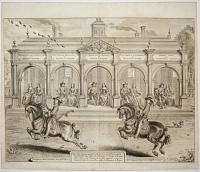
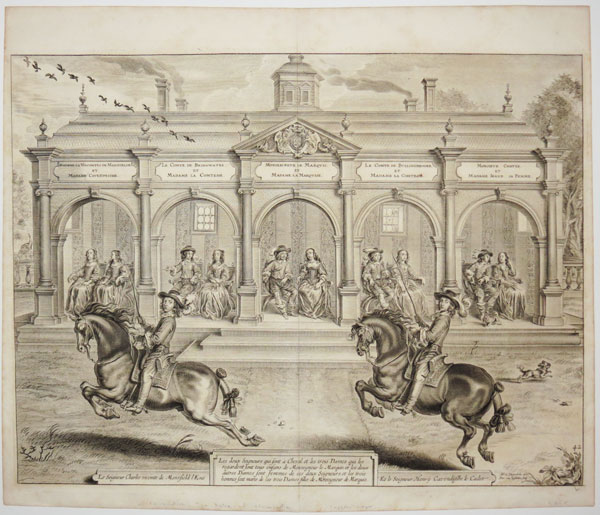
Le Seigneur Charles viscomte de Mansfield l'Ené Et le Seigneur Henrÿ Cavendÿshe le Cadet.
Abr. à Diepenbeke delin. Petr. van Lisebetten Sculp.
[London: John Brindley, 1743.]
Engraving. 385 x 510mm (15¼ x 20"). Centre fold as usual. Thread margins.
A group portrait of William Cavendish (1592-1676, later 1st Duke of Newcastle) and his wife seated watching his two sons practicing dressage. Also seated under the arcade are their four daughters and their husbands. Plate 42 of the Duke of Newcastle's treatise on horsemanship, 'La Methode et Invention nouvelle de Dresser les Chevaux', first published in Antwerp by Jacob van Meurs c.1658, but this example from the first English edition, 'A General System of Horsemanship in All Its Branches'. After the defeat of the Royalist cause in the Civil War Cavendish settled in Antwerp, where this work was engraved. However his estates at Bolsover and Welbeck Abbey were often the backdrop of these famous dressage plates.
[Ref: 48205] £360.00
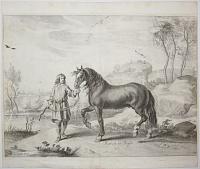
Rubecan un Rousin.
Abr. à Diepenbeke delin. Lucas Vorstermans Sculp.
[London: John Brindley, 1743.]
Engraving. 385 x 530mm (15¼ x 21"). Centre fold as usual, trimmed within plate at sides, as issued.
A portrait of a squire holding the reins of a horse, landscape behind. Plate 10 of the Duke of Newcastle's treatise on horsemanship, 'La Methode et Invention nouvelle de Dresser les Chevaux', first published in Antwerp by Jacob van Meurs c.1658, but this example from the first English edition, 'A General System of Horsemanship in All Its Branches'. After the defeat of the Royalist cause in the Civil War William Cavendish (1592-1676) settled in Antwerp, where this work was engraved. However his estates at Bolsover and Welbeck Abbey were often the backdrop of these famous dressage plates.
[Ref: 48206] £280.00
(£336.00 incl.VAT)
![[Chart containing the greater part of the South Sea to the South of the Line, with the Islands dispers'd throu' the same.]](jpegs/44645.jpg)


![[Carrying Wool - Canterbury, New Zealand.] New Zealand Wool Team [ink mss.]](jpegs/63083.jpg)

![[Carrying Wool - Canterbury, New Zealand.] New Zealand Wool Team [ink mss.]](jpegs/52126.jpg)


![[Trees in New Zealand]](jpegs/19115.jpg)
![[Trees, with a rickety footbring over a small waterfall, New Zealand]](jpegs/19116.jpg)
![[Trees of New Zealand]](jpegs/19113.jpg)
![Woodland scene, New Zealand]](jpegs/19120.jpg)

![[The Newbury Coat.] To Robert Throckmorton Esq.re Buckland House Farringdon This Print respresenting the beginning progress & completion of an extraordinary undertaking](jpegs/31236.jpg)


![[Eastern entrance to Newcastle.]](jpegs/8390.jpg)
![[Four Views of Newcastle.]](jpegs/57636.jpg)
![[High Level Bridge] To George Hudson Esquire, M.P.](jpegs/56771.jpg)
![[Thomas Pelham-Holles, Duke of Newcastle] The Compleat Vermin-Catcher of G-B-n, or the Old Trap New Baited.](jpegs/68928.jpg)

![[Four Views in Newcastle.]](jpegs/57646.jpg)
![[The Assembly Rooms at Newcastle on Tyne.]](jpegs/8395.jpg)
![[A Grand House, Newcastle.]](jpegs/8612.jpg)
![[Elswick Hall.]](jpegs/19133.jpg)

![[GreyFriars or Anderson Place] This House was Originally the Monastry of Grey Friers _ New Castle upon Tyne.](jpegs/57778.jpg)
![Central Railway Station, Newcastle. (Uniform with a View of the Interior.) [&] Interior of the Central Railway Station, Newcastle. (Uniform with a View of the Exterior.)](jpegs/27411.jpg)



![[The Duke of Newcastle's stud.]](jpegs/50352.jpg)