![[Thomas Gray] Mr. Gray.](img-thumbnail/jpegs/53515.jpg)
[Thomas Gray] Mr. Gray. Engraved by J.R. Smith, from an Original Drawing in the possession of The Revd. Mr. Potter.
[n.d., c.1783.]
Stipple and etching. 150 x 115mm (6 x 4½"). Thread margins, mounted in album paper.
Thomas Gray (1716 - 1771), poet, classical scholar and letter writer, famed for his 'Elegy in a Country Churchyard'. Frontispiece to Robert Potter's 'Inquiry into Some Passages in Dr. Johnson's Lives of the Poets'. After William Mason (1725 - 1797), poet and divine; friend and biographer of Gray. Frankau: 157. D'Oench: 278. Not in BM, NPG.
[Ref: 53515] £65.00
(£78.00 incl.VAT)
![[Mr Thomas Gray.]](img-thumbnail/jpegs/64212.jpg)
[Mr Thomas Gray.]
[After William Mason], [Engraved by James Basire].
[Published According to Act of Parliament March 1st 1775].
Rare proof engraving. 260 x 205mm (10¼ x 8"). Trimmed to plate.
Portrait of Thomas Gray (1716 - 1771), English poet, letter-writer, and classical scholar at Cambridge University, being a fellow first of Peterhouse then of Pembroke College. He is widely known for his 'Elegy Written in a Country Churchyard', published in 1751.
[Ref: 64212] £190.00
(£228.00 incl.VAT)
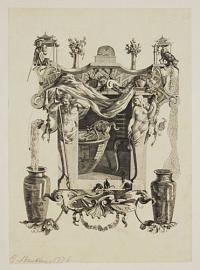
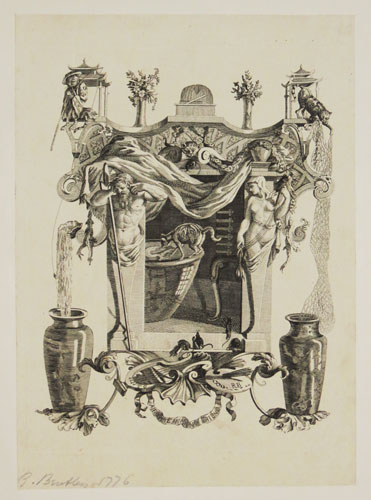
A Favourite Has No Friend.
R.B. [Richard Bentley.]
[n.d., c.1776.]
Rare engraving. Platemark: 265 x 210mm (10¼ x 8¼"). Tipped into backing sheet.
An illustration from 'Designs by Mr. R. Bentley, for six poems by Mr. T. Gray', published in 1775. The central image depicts a cat pawing at a fish in a large ornamental fish bowl. A highly ornate chinoiserie border featuring animals including mice and cats, vases, and a harp below inscribed 'T.G.' (Thomas Gray), surrounds the scene.
[Ref: 38664] £230.00
(£276.00 incl.VAT)
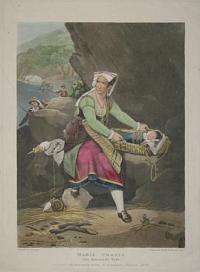
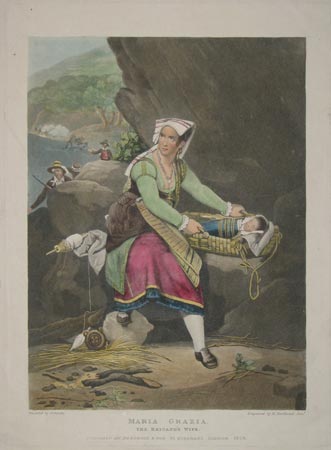
Maria Grazia. The Brigand's Wife.
Painted by Schnetz. Engraved by H. Berthoud. Junr.
Published by Berthoud & Son. 65. Quadrant. London. 1828.
Coloured aquatint. 337 x 247mm. 13¼" x 9¾".
In 1819 Papal troops demolished the community of Sonnino, arresting several hundreds of prisoners. The men were detained in the Castel Sant'Angelo, whereas the women and children were held in a workhouse adjacent to the Thermes of Diocletian. After several months the Roman authorities could not maintain the women and children at such a high expense, so released them. Maria Grazia, whom was amongst these captives, became mistress of Schnetz and remained in Rome to make a long career of posing, becoming somewhat of a celebrity.
[Ref: 8522] £65.00
(£78.00 incl.VAT)

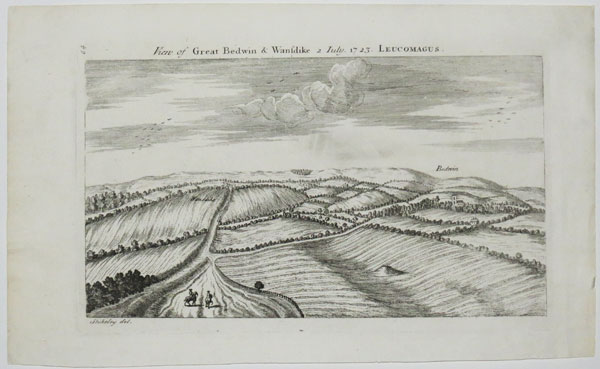
View of Great Bedwin & Wansdike 2 Iuly 1723 Leucomagus.
Stukely del.
[1723.]
Etching. Plate: 175 x 290mm (7 x 11½''), with very large margins.
A view in Wiltshire showing the start of the Wansdyke, a man made defensive ditch which runs from Savernake, near Marlborough to Monkton Combe near Bath. The village of Great Bedwyn is shown on the right. William Stukely was an antiquarian who took great interest in the prehistoric monuments at Stonehenge and Avebury.
[Ref: 50288] £140.00
(£168.00 incl.VAT)
![[Views of the Great Eastern and Great Britain steam ships]](img-thumbnail/jpegs/33753.jpg)
[Views of the Great Eastern and Great Britain steam ships]
[Anon., c.1845-60]
Wood-engraving, sheet 180 x 245mm (Great Eastern); lithograph, sheet 170 x 255mm (Great Britain). Glued to album sheet; ink stain to 'Great Britain'.
Views of two steam ships designed by Isambard Kingdom Brunel, the 'Great Eastern' and the 'Great Britain'. The latter has been preserved as a visitor attraction in Bristol's Great Western Dockyard, where she was built. For the launch of the 'Great Britain', see ref. 23457; for the 'Great Eastern' see also refs. 2200, 33627, 33628.
[Ref: 33753] £240.00
(£288.00 incl.VAT)
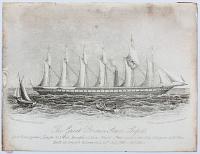
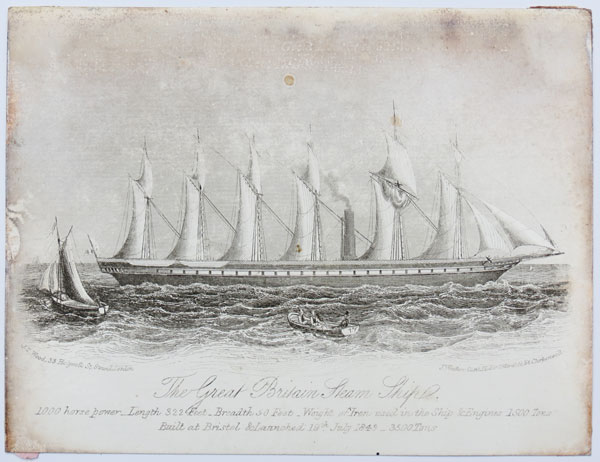
The Great Britain Steam Ship. 1000 horse power _ Length 322 Feet _ Breadth 50 feet _ Weight of Iron used in the Ship & Engins 1500 Tons. Built at Bristol & Launched 19th July 1843 _ 3500 Tons.
J.T. Wood, 33 Holywell St, Strand London. J. Windsor Card Maker 2 Meredith Street, Clerkenwell.
[n.d., c.1843.]
Steel engraving on porcelain card. Sheet 115 x 150mm (4½ x 6"). Some staining to edges.
A souvenir card for the launching of Isambard Kingdom Brunel's SS Great Britain, at the time the largest ship in the world.
[Ref: 42027] £65.00
(£78.00 incl.VAT)
![''Great Britain'' Built at Bristol 1837-1843 [...]](img-thumbnail/jpegs/60913.jpg)
''Great Britain'' Built at Bristol 1837-1843 [...]
L.H.M. [Leonard Harrison Matthews] del 1926 sculp 1931.
Etching. 190 x 270mm (7½ x 10½"), with second etching on reverse. Creased, some spotting.
An amateur etching of SS Great Britain, surrounded by vignette details. On the reverse is an etching os a woman sleeping in an armchair, with monogram 'UNK' Designed by Isambard Kingdom Brunel, she was the largest passenger ship in the world when she was completed in 1845, but here she is shown being used as a warehouse, quarantine ship and coal hulk in the Falkland Islands. Scuttled in 1937, she was brought back to England in 1970 and restored. Dr. Leonard Harrison Matthews (1901-86) drew this sketch when he was a zoologist with the 'Discovery Investigations' (1924-9) in the Falklands and South Georgia, studying the biology of whales and southern elephant seals. In 1931 he published a paper, 'South Georgia, the Empire's Sub-Antarctic Outpost'; over fifty years later his last publication was 'Mammals in the British Isles' (1982).
[Ref: 60913] £220.00
(£264.00 incl.VAT)
![''Great Britain'' Built at Bristol 1837-1843 [...]](img-thumbnail/jpegs/60912.jpg)
''Great Britain'' Built at Bristol 1837-1843 [...]
L.H.M. [Leonard Harrison Matthews] del 1926 sculp 1931.
Scarce etching, very large margins. 190 x 270mm (7½ x 10½"). Some spotting.
An amateur etching of SS Great Britain, surrounded by vignette details. Designed by Isambard Kingdom Brunel, she was the largest passenger ship in the world when she was completed in 1845, but here she is shown being used as a warehouse, quarantine ship and coal hulk in the Falkland Islands. Scuttled in 1937, she was brought back to England in 1970 and restored. Dr. Leonard Harrison Matthews (1901-86) drew this sketch when he was a zoologist with the 'Discovery Investigations' (1924-9) in the Falklands and South Georgia, studying the biology of whales and southern elephant seals. In 1931 he published a paper, 'South Georgia, the Empire's Sub-Antarctic Outpost'; over fifty years later his last publication was 'Mammals in the British Isles' (1982).
[Ref: 60912] £320.00
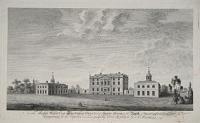
To Ralph Willett Esq; This North West View of Merly-House; in the Parish of Great Canford, Dorset. Engraved at his Expence, is most greatfully Inscribed by, J. Hutchins.
J. Hutchins. T. Bonnor sc.
[n.d. c.1861.]
Copper engraving. Plate 222 x 375mm (8¾" x 14¾").
From Hutchins "The History and Antiquities of the County of Dorset".
[Ref: 9353] £95.00
(£114.00 incl.VAT)
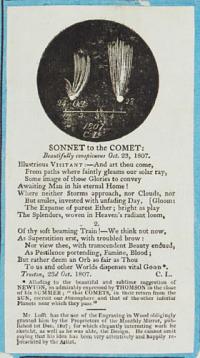
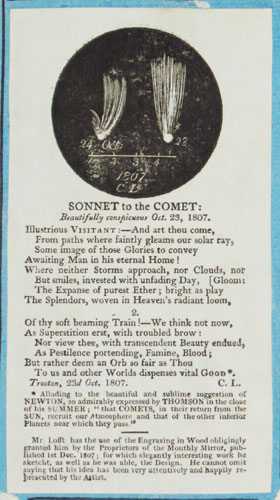
Sonnet to the Comet: Beautifully conspicuous Oct. 23, 1807.
[written by Capel Lofft.]
[n.d., c. 1807.]
Wood-engraving with letterpress. Sheet 135 x 70mm (5¼ x 2¾"). Laid on album paper.
Two sketches of the tail of the 'Great Comet of 1807' (spotted on the 9th September from Sicily, last recorded sighting on the 27th March 1808 from St Petersburg), illustrating a poem by Capel Lofft. Lofft thanks the proprietors of the 'Monthly Mirror' for the use of the wood engraving. Lofft (1751-1824), was a barrister with a conscience: in 1772, before he was called to the bar, he was involved in the Somerset v Stewart case, in which the Court of King's Bench decided that chattel slavery was unsupported by the common law in England and Wales.
[Ref: 44449] £260.00
(£312.00 incl.VAT)

Great Dane.
John C. Janes. [Signed in pencil.]
[n.d., c.1940]
Etching 210 x 172mm.
[Ref: 3429] £220.00
(£264.00 incl.VAT)
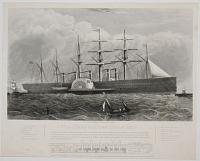
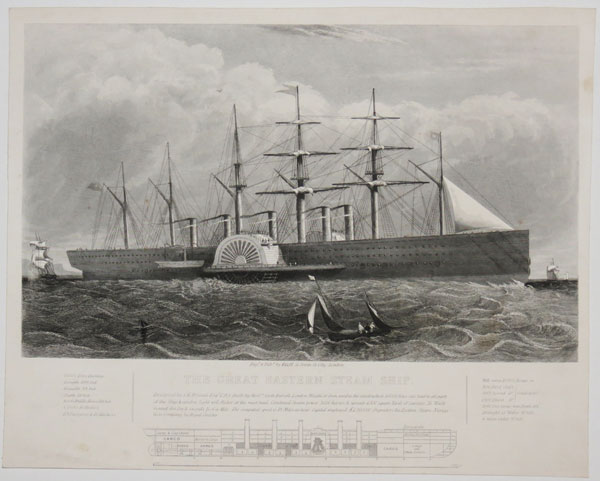
The Great Eastern Steam Ship.
Eng.d & Pub.d by Ellis, 51 Jewin St. City, London. [n.d., c.1850].
Engraving. Sheet size: 310 x 395mm (12¼ x 15½").
The 'Great Eastern' steam ship was designed by Isambard Kingdom Brunel and built by Scott Russell & Co.Ltd, London (screw engines by James Watt & Co.Ltd, Birmingham), five funnels, six masts, iron construction, paddle and screw propulsion and a speed of 12 knots. Work started on the ship, which at first was going to be called the Leviathan, in 1854. There were many problems in building the ship and in trying to launch it, and the ship, now renamed the Great Eastern, was not finally afloat until January 1858. She was cheered on her way by enormous crowds as she travelled down river towards the sea. The public impact of the launching of the 'Great Eastern' was enormous and the event was widely celebrated in the press. During sea trials on 9th September 1859 the Great Eastern's heaters exploded, killing six firemen and devestating the grand saloon. The explosion would have sunk a lesser ship, but the Great Eastern survived. Brunel's new construction methods, dividing the ship up into compartments with watertight bulkheads, limited the extent of the damage. However, the bad news hastened the death of Brunel, who passed away on 15th September. In 1864, the Great Eastern was sold for a fraction of its cost to a cable laying company. The time that the ship spent laying cables for the new telegraph system was its most successful. It was used to lay the first telegraph cable to America. The Great Eastern was finally broken up in 1888.
[Ref: 33627] £360.00
![[SS Great Eastern.] The Leviathan, at her Moorings off Deptford.](img-thumbnail/jpegs/54061.jpg)
[SS Great Eastern.] The Leviathan, at her Moorings off Deptford. Designed and Constructed by Scott Russell, Esq. - Engineer I.K. Brunel Esq.r F.R.S.
McGuire del & litho.
[n.d., c.1858.]
Tinted lithograph. Sheet 500 x 570mm (19¾ x 22½"). Laid on card, a few tears with loss in margins.
An early illustration of SS Great Eastern, using the name given to the ship at the official launch in December 1857 by Henrietta Hope, daughter of Henry Thomas Hope, chairman of the Eastern Steam Navigation Company. The name was changed to Great Eastern, the intended name, in July 1858.
[Ref: 54061] £440.00
![[SS Great Eastern.] The Leviathan, Ready for Sea.](img-thumbnail/jpegs/54062.jpg)
[SS Great Eastern.] The Leviathan, Ready for Sea. Designed and Constructed by Scott Russell, Esq. - Engineer I.K. Brunel Esq.r F.R.S.
McGuire del & litho.
[n.d., c.1858.]
Tinted lithograph. Sheet 520 x 650mm (20½ x 25½"). Laid on card, a few tears, some loss of print in the statistics at bottom. Top right margin damaged.
An early illustration of SS Great Eastern, using the name given to the ship at the official launch in December 1857 by Henrietta Hope, daughter of Henry Thomas Hope, chairman of the Eastern Steam Navigation Company. The name was changed to Great Eastern, the intended name, in July 1858.
[Ref: 54062] £460.00

The Great Eastern Steam Ship. Presented Gratis with "The Guide," March 5, 1859.
E. Landells sc.
"Nassau Steam Press," W.S. Johnson, CO, St. Martin's Lane, W.C.
Wood engraving, sheet approx 620 x 910mm (24½ x 35¾"). Folded.
Large image of the 'Great Eastern' steam ship, by far the largest ship of her time, with decorative border and cartouches showing it in construction and from different angles, published in advance of the ship's maiden voyage. The ship was designed by Isambard Kingdom Brunel and built by Scott Russell & Co.Ltd, London (screw engines by James Watt & Co.Ltd, Birmingham), to meet demand for a ship capable of journeying to India and the Far East under steam and without stopping for refueling. Work started on the ship, which at first was going to be called the Leviathan, in 1854. However, due to problems encountered in building the ship and in trying to launch it, the ship (by now renamed the Great Eastern) was not finally afloat until January 1858. She was cheered on her way by enormous crowds as she travelled down river towards the sea. The public impact of the launching of the Great Eastern was enormous and the event was widely celebrated in the press. During sea trials on 9th September 1859 the Great Eastern's heaters exploded, killing six firemen and devestating the grand saloon. The explosion would have sunk a lesser ship, but the Great Eastern survived. Brunel's new construction methods, dividing the ship up into compartments with watertight bulkheads, limited the extent of the damage. Brunel, already mortally sick by this time, passed away on 15th September. In 1864, the Great Eastern was sold for a fraction of its cost to a cable laying company. The time that the ship spent laying cables for the new telegraph system was its most successful. It was used to lay the first telegraph cable to America. The Great Eastern was finally broken up in 1888.
[Ref: 41081] £220.00
(£264.00 incl.VAT)
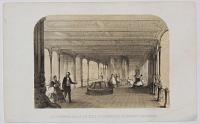
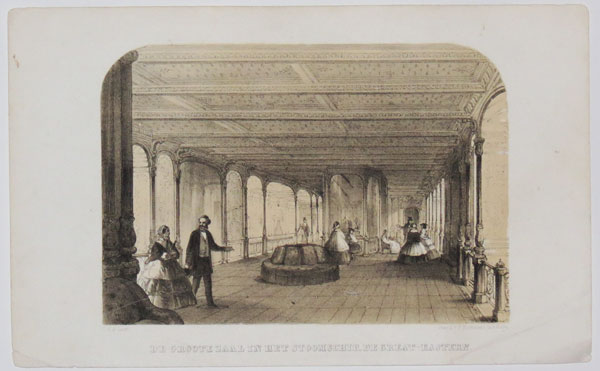
De Groote Zaal in het Stoomschip, de Great-Eastern
C.C.A. Last Steend v. P. Blommers te 's Hage.
[c.1860]
Rare lithograph with tintstone, sheet 145 x 235mm (5¾ x 9¼"). Surface loss;
Dutch print showing the interior of the 'Great Eastern' steam ship designed by Isambard Kingdom Brunel and built by Scott Russell & Co.Ltd, London. After many problems during construction, the ship was not completed until 1858, arousing enormous public interest at the time. During sea trials on 9th September 1859 the Great Eastern's heaters exploded, killing six firemen and devestating the grand saloon. The explosion would have sunk a lesser ship, but the Great Eastern survived. Brunel's new construction methods, dividing the ship up into compartments with watertight bulkheads, limited the extent of the damage. However, the bad news hastened the death of Brunel, who passed away on 15th September. In 1864, the Great Eastern was sold for a fraction of its cost to a cable laying company. The time that the ship spent laying cables for the new telegraph system was its most successful. It was used to lay the first telegraph cable to America. The Great Eastern was finally broken up in 1888.
[Ref: 39843] £70.00
(£84.00 incl.VAT)

Great Eastern Railway Pension Fund. This is to certify that Mr [Albert Mote] is a Member of the above Fund, his Membership dating from the 1st day of [Nov.r] 19[03].
Designed by W. Lucas, G.E.R. Carriage Dep.t, Stratford. Waterlow & Sons Limited, London Wall, London.
[c.1903].
Chromolithographic certificate, completed with old ink mss. Sheet 635 x 475mm (25 x 18¾"). Foxing at top margin, small tears in edges taped.
A large and colourful certificate with gold highlights, with an architectural design supporting with a central armorial shield, surrounded by vignette views including a passenger ship, a locomotive, passenger carriage, stock wagon, signals and a beehive.
[Ref: 62672] £160.00
(£192.00 incl.VAT)

The Illustrated Exhibitor. A Tribute to the World's Industrial Jubilee; Comprising Sketches, by Pen and Pencil, of the Principal Objects in the Great Exhibition of the Industry of all Nations. 1851.
London: Printed and Published by John Cassell, 335, Strand. [1851.]
4to, original cloth gilt; pp. xliv + 556, profusely illustrated. Scuffed cover.
An account of the Great Exhibition of 1851 at the Crystal Palace, including the origin of Expositions, the history of the building and the descriptions of its principal objects.
[Ref: 59838] £260.00
(£312.00 incl.VAT)
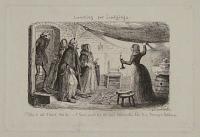
Looking for Lodgings. 'This is all I have ma'm: I have just let the last tent on the tiles to a foreign nobleman.'
George Cruikshank.
[London: David Bogue, 1851.]
Etching. 155 x 255mm, 6 x 10".
A group of four adults, presumably "Mr. and Mrs. Sandboys and family", being shown to a single hammock. Illustration from Henry Mayhew's "The World's show, 1851, or, The Adventures of Mr. and Mrs. Sandboys and family". Early in the season the tickets for the Great Exhibition were 3 guineas (£275 today), reducing to £1, five shillings, and finally (in the height of the summer, with the wealthy escaped from London) to 1 shilling (£4.35). 4.5 million 1-shilling tickets were sold.
[Ref: 16953] £60.00
(£72.00 incl.VAT)
![[Osler's Crystal Fountain]](img-thumbnail/jpegs/68488.jpg)
[Osler's Crystal Fountain]
F. Bedford Del Et Lith.
W. Digby Wyatt Dirext. [n.d. c.1851] [London: published by Day and Son, lithographers to the Queen, [1851-1853]]
Chromolithograph, sheet 405 x 255mm (15¾ x 10"). Trimmed around image.
Plate 23 from, 'Plate 40 from M. Digby Wyatt, The industrial arts of the nineteenth century: a series of illustrations of the choicest specimens produced by every nation at the Great Exhibition of the Works of Industry, 1851; dedicated, by permission, to his Royal Highness the Prince Albert (London: published by Day and Son, lithographers to the Queen, [1851-1853])'. An image of the Crystal Fountain, designed by Abraham Follett Osler (1808–1903), standing in the heart of the Transept at the Great exhibition. It was said to be 27 feet tall and needed four tons of glass to construct it.
[Ref: 68488] £80.00
(£96.00 incl.VAT)
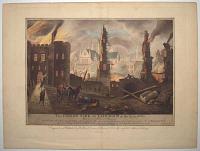
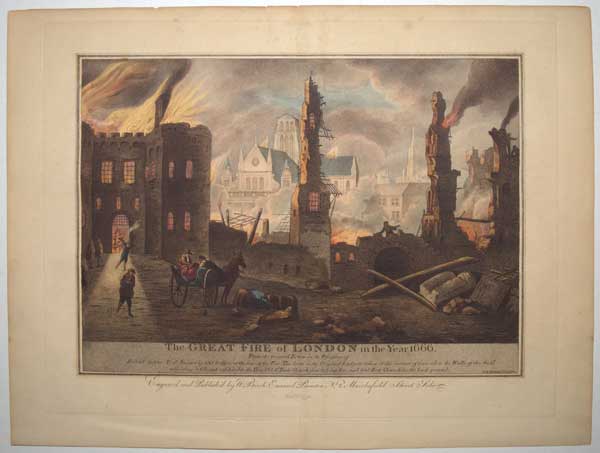
The Great Fire of London in the Year 1666. From the original picture in the possession of Robert Golden Esq.r Painted by Old Griffier at the time of the Fire. The scene is the original Ludgate taken at the instant of time when the Walls of the Goal [sic] adjoining it fell and exhibited to the view Old St. Paul's Church, just taking fire, and Old Bow Church in the background. Vide Pennant's London.
J. Griffier [in image].
Engrav'd and Publish'd by W. Birch, Enamel Painter, No,, 2, Macclesfield Street, Soho. Dec.r 1st. 1792.
Coloured stipple. 300 x 390mm (11¾ x 15¼") large margins. Crack in platemark at bottom, binding folds as normal.
A view of collapsed buildings around Ludgate, with St Paul's Cathedral and Bow Church wreathed in smoke behind. Unusually the inscription area is also stippled. Published in Thomas Pennant’s Some Account of London. Although the view is ascribed to Jan Griffier the elder (1645/52-1718) , the BM records that it ''first appears in London soon after the Great Fire of 1666''. As a painter he specialised in landscapes, but he also engraved mezzotints and etched, including the animals and birds of Francis Barlow. BM 1880,1113.1159. Crace 1878-11-51.
[Ref: 55913] £260.00
(£312.00 incl.VAT)
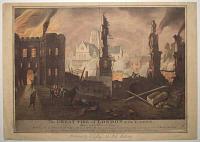
The Great Fire of London in the Year 1666. From the original picture in the possession of Robert Golden Esq.r Painted by Old Griffier at the time of the Fire. The scene is the original Ludgate taken at the instant of time when the Walls of the Goal [sic] adjoining it fell and exhibited to the view Old St. Paul's Church, just taking fire, and Old Bow Church in the background.
J. Griffier [in image]. [Engraved by W. Birch.]
Published by E. Jeffery, No 11. Pall Mall, 1807.
Coloured stipple. 300 x 390mm (11¾ x 15¼") Trimmed within plate top and bottom, to plate at sides, binding folds.
A view of collapsed buildings around Ludgate, with St Paul's Cathedral and Bow Church wreathed in smoke behind. Unusually the inscription area is also stippled. Originally published in Thomas Pennant’s 'Some Account of London', this example has 'Vide Pennant's London' erased from the plate bottom right and Jeffery's name replacing William Birch's as publisher. Although the view is ascribed to Jan Griffier the elder (1645/52-1718) , the BM records that it ''first appears in London soon after the Great Fire of 1666''. As a painter he specialised in landscapes, but he also engraved mezzotints and etched, including the animals and birds of Francis Barlow. BM 1880,1113.1159. Crace 1878-11-51.
[Ref: 55914] £160.00
(£192.00 incl.VAT)
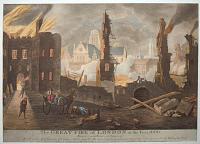
The Great Fire of London in the Year 1666. From the original picture in the possession of Robert Golden Esq.r Painted by Old Griffier at the time of the Fire. The scene is the original Ludgate taken at the instant of time when the Walls of the Goal [sic] adjoining it fell and exhibited to the view Old St. Paul's Church, just taking fire, and Old Bow Church in the background.
J. Griffier [in image]. [Engraved by W. Birch.]
[Published by E. Jeffery, No 11. Pall Mall, 1807.]
Coloured stipple. Sheet 235 x 330mm (9¼ x 13"). Trimmed within plate on three sides, into inscription area at bottom, losing publication inscription, with fold.
A view of collapsed buildings around Ludgate, with St Paul's Cathedral and Bow Church wreathed in smoke behind. Unusually the inscription area is also stippled. Originally published in Thomas Pennant’s 'Some Account of London' in 1792, this example has 'Vide Pennant's London' erased from the plate bottom right. Although the view is ascribed to Jan Griffier the elder (1645/52-1718) , the BM records that it ''first appears in London soon after the Great Fire of 1666''. As a painter he specialised in landscapes, but he also engraved mezzotints and etched, including the animals and birds of Francis Barlow. BM 1880,1113.1159. Crace 1878-11-51.
[Ref: 54246] £260.00
(£312.00 incl.VAT)
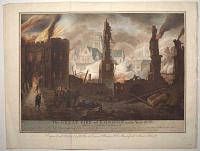
The Great Fire of London in the Year 1666. From the original picture in the possession of Robert Golden Esq.r Painted by Old Griffier at the time of the Fire. The scene is the original Ludgate taken at the instant of time when the Walls of the Goal [sic] adjoining it fell and exhibited to the view Old St. Paul's Church, just taking fire, and Old Bow Church in the background. Vide Pennant's London. Proof.
J. Griffier [in image].
Engrav'd and Publish'd by W. Birch, Enamel Painter, No,, 2, Macclesfield Street, Soho. Dec.r 1st. 1792.
Fine coloured stipple, proof. Sheet 295 x 390mm (11½ x 15¼") Trimmed within plate top and bottom, to plate at sides, binding folds as normal.
A view of collapsed buildings around Ludgate, with St Paul's Cathedral and Bow Church wreathed in smoke behind. Unusually the inscription area is also stippled. Published in Thomas Pennant’s Some Account of London. Although the view is ascribed to Jan Griffier the elder (1645/52-1718) , the BM records that it ''first appears in London soon after the Great Fire of 1666''. As a painter he specialised in landscapes, but he also engraved mezzotints and etched, including the animals and birds of Francis Barlow. BM 1880,1113.1159. Crace 1878-11-51.
[Ref: 55912] £230.00
(£276.00 incl.VAT)
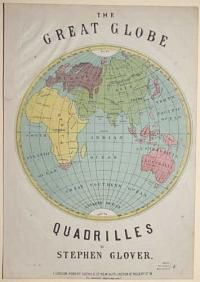
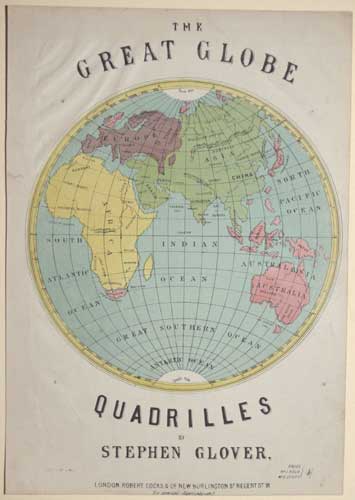
The Great Globe Quadrilles by Stephen Glover
[S. Rosenthal lith.]
London: Robert Cocks & C.o New Burlington S.t Regent S.t W. [n.d. c.1870]
Colour lithograph. 330 x 240mm (13 x 9½"). Trimmed with creasing in the top left corner and a small repaired tear in the upper left margin. Two worm holes in top left and bottom right corners.
An illustrated cover of the Eastern hemisphere for the sheet music to Stephen Glover's 'Quadrilles'.
[Ref: 56908] £190.00
(£228.00 incl.VAT)
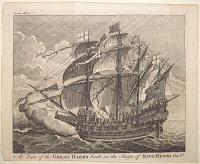
A View of the Great Harry built in the Reign of King Henry the 8.th. London Mag:
Engraving. 190 x 235mm (7½ x 9¼"). Bottom margin trimmed to plate mark. Three vertical creases as usual.
A side view of the Henry Grace a Dieu or Great Harry flagship of the King's Fleet. At the time it was the largest warship in the world, surpassing even the Mary Rose.
[Ref: 56312] £160.00
(£192.00 incl.VAT)

Great Marlow.
J. Farington R.A. delt. J. C. Stadler Sculpt.
Pub. June 1, 1793, by J. & J. Boydell, Shakespeare Gallery, Pall Mall, & No. 90, Cheapside.
Sepia aquatint. 320 x 220mm. Small tear and crease to upper edge.
From the 'History of the River Thames'. Abbey: 432.
[Ref: 2409] £140.00
(£168.00 incl.VAT)

Court Garden and Great Marlow.
J. Farington R.A. del.t J.C. Stadler fct.
Pub: June 1. 1793, by J. & J. Boydell. Cheapside, & Shakspeare Gallery Pall Mall.
Hand-coloured etching and aquatint. Image with border 207 x 316mm. 8¼ x 12½". Sheet 311 x 406mm. 12¼ x 16". Trimmed and laid on card. few repaired nicks.
View with the Thames in the middle distance, across a field with four cows, a bridge on the right to the town of Marlow on the other side of the river, the Court Garden House on the left, three figures in the right foreground resting at an elevated ground surrounded by trees. Plate 34 to the first volume of "A History of the River Thames" within 'A History of the Principal Rivers of Great Britain' (1794). Abbey Scenery: 432.34.
[Ref: 25861] £90.00
(£108.00 incl.VAT)

View of the Great Meteor, which appeared November 6, 1803. As Seen at Greenwich. Copied from the Philisophical Magazine by permission. As Seen Near Soho Square. Copied from Mr Nicholson's Journal by Permission.
Published Feb.y 1 1804 by Richard Phillips, N.º 71, S.t Paul's Church Yard.
Mezzotint. Sheet 165 x 195mm (6½ x 7¾"). Binding folds.
Four depictions of the meteor.
[Ref: 62207] £260.00
(£312.00 incl.VAT)
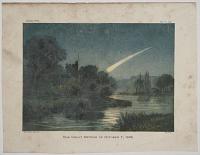
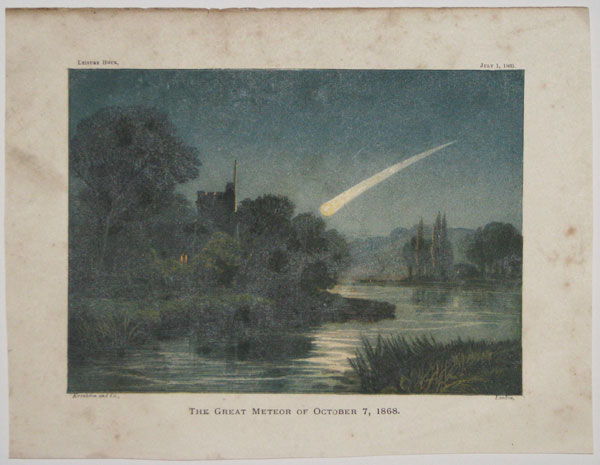
The Great Meteor of October 7, 1868.
Kronheim & Co. London. Leisure Hour, July 1, 1869.
Coloured engraving. 178 x 235mm. 7 x 9¼".
The Great Fireball of 1868.
[Ref: 18979] £75.00
(£90.00 incl.VAT)
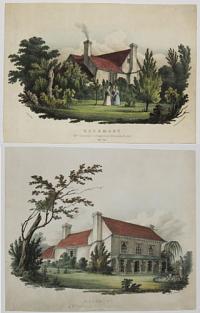
Rosemont. Mrs Granville's Cottage, Great Missenden, Bucks West View. [&] South West View.
J. Perry lithog. Printed by C. Hullmandel.
[n.d., c.1840.]
Two coloured lithographs, each sheet c. 190 x 260mm (7½ x 10¼"),
The cottage belonged to the wife of Augustus Bozzi Granville MD, FRS, a doctor who served with Napoleon and in the British Navy before moving to London. He is credited with carrying out the first medical autopsy on an Egyptian Mummy which he described to the Royal Society of London in 1825.
[Ref: 38844] £220.00
(£264.00 incl.VAT)
view all images for this item
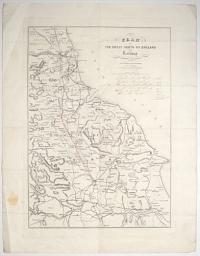
Plan of the Great North of England Railway. Tho.s Storey Esq.r Engineer. R. Otley & T. Sopwith, Surveyors.
[n.d., c.1836.]
Engraved map, with some hand colour. 495 x 350mm (19½ x 13¾"), with large margins, watermarked 'J Whatman 1836'. Folded as issued, holes in corners; old ink mss. table of distances and added names on map.
A map of north east England, covering from Huddersfield and the Humber north to Morpeth, marking the existing railways and the route of the proposed 'Great North of England Railway' marked in red. The route from York and Darlington was opened in 1841, but by 1846 the company had been absorbed by the 'Newcastle and Darlington Junction Railway'.
[Ref: 53005] £230.00
(£276.00 incl.VAT)

659 to 36!! Great Odds for the Oak Stake.
CJG. London, Jany 4.th 1835.
Published by the Society for the Suppression of Conservative Vice, & sold by all Lovers of Reform of Abuses & to be had of E. Birchenall: Churchgate St; Bury.
Lithograph. Sheet: 495 x 315mm, (19½ x 12½") very large margins.
Dominated by an auctioneer, a British satire, a series of unconnected caricature vignettes. The centre of the print is dominated by a large set of scales – a well-established symbol within the English satirical canon – which are weighted heavily towards the side containing 659 “£10 voters”, as opposed to the 36 well-dressed gentlemen of the “close packed corporation”. Beneath the scales a tubby gent in a bicorn hat tries to correct this imbalance by helplessly tugging at a rope. The multiple punning references to oaks are reinforced by the image of a dying tree stump, which Grant had given a human face, that looks miserably on from the background whilst a vulture, or some other bird of prey, circles above it menacingly. In the bottom left-hand corner two men, an undertaker and a man carrying the trappings of a pharmacist, stand in conversation. The apothecary, with a face that appears to be hideously scarred by smallpox; above stands a huge wheel of cheese, out of which crawls a figure. The rest of the print is covered by a motley collection of characters including ‘Teddy the Mower’ – a hobo who carries an official mace that’s been turned into a scythe, ‘Turn Again Dick’ – A two-faced politician who advocates reform but also brandishes an article written for the Tory press, ‘A German Duck’ – A grotesquely overweight and featureless figure that has a dead bird hanging out of his coat pocket and the unnamed figure of an auctioneer. The print refers to the campaign for the 1835 general election campaign that began in Bury St Edmunds. The multiple references to ‘oaks’ relate to a prominent local banker by the name of James Henry Oakes, a staunch Tory supporter, who used his considerable wealth to pack the town Corporation with placemen who would deliver the policies he wanted. It is possible that the portly figure who is attempting to pull the scales back in favour of the “Close Pack’d Corporation” may be James Henry Oakes himself, although the character bears no resemblance to the 1839 portrait of Oakes held by the National Gallery. See Ref: 51770
[Ref: 39946] £320.00
![[The Great Plague of London.] London's Dreadful Visitation:](img-thumbnail/jpegs/63455.jpg)
[The Great Plague of London.] London's Dreadful Visitation: Or. A Collection of All the Bills of Mortality From this Present Year: Beginning the 27th of December 1664. and ending the 19th. of December following: As also, The General or whole years Bill: According to the Report made to the King's Most Excellent Majesty, by the Company of Parish-Clerks of London &c. London: Printed and are to be sold by E. Cotes living in Aldersgate-street. Printer to the said Company 1665.
[n.d., c.1840.]
Engraving. 230 x 175mm (9 x 6¾").
The titlepage to a volume listing the deaths from the bubonic plague known as the Great Plague of London, 1664-5. An engraved facsimile of the original woodcut and letterpress titlepage.
[Ref: 63455] £220.00
(£264.00 incl.VAT)
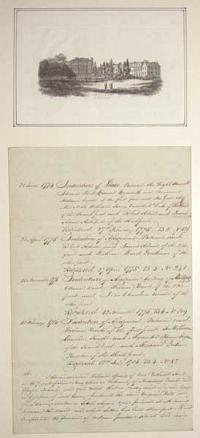
The entrance of great Portland street.
Published [illegible] 1808.
Etching. 90 x 155mm (3½ x 6"), pasted on album sheet with 2pp. als dated 1826.
A view of Great Portland Street from fields to the north. The manuscript letter from William Spring to a Mr Bourne concerning a list of indentures in the possession of Bourne.
[Ref: 64335] £260.00
(£312.00 incl.VAT)
![[Niagara Falls Suspension Bridge] The Great Railway Suspension Bridge](img-thumbnail/jpegs/52996.jpg)
[Niagara Falls Suspension Bridge] The Great Railway Suspension Bridge being the Connecting Link in the American Chain of Railways from the Atlantic & The Missisippi. J.A. Robbling Engineer.
[n.d., c.1855.]
Rare coloured wood engraving. Sheet 140 x 210mm (5½ x 8¼"). Tears in edges.
A view of Niagara Falls Suspension Bridge, linking Ontario, Canada, with New York State, with the waterfall in the background. Built in 1855, it was the world's first working railway suspension bridge, with road traffic on a lower deck. It was replaced in 1897.
[Ref: 52996] £85.00
(£102.00 incl.VAT)
![[Great Reed Warbler] 26. L'Efarvatte et son nid. Grandeur naturelle.](img-thumbnail/jpegs/50624.jpg)
[Great Reed Warbler] 26. L'Efarvatte et son nid. Grandeur naturelle. Sylvia arundinacea (Latham.) Europe.
Edouard Traviés.
London pub by Gambart, Junin & Co. 25 Berniers S.t.
Coloured lithograph. Sheet 490 x 375mm (19¼ x 14¾"). Printseller's blindstamp.
A great reed warbler on its distinctive nest. Plate 26 of the series 'Les oiseaux les plus remarquables par leurs formes et leurs couleurs'.
[Ref: 50624] £360.00
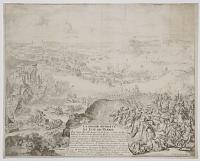
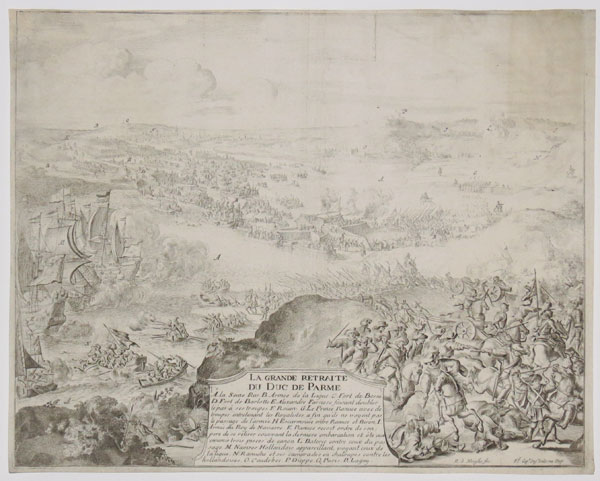
La Grand Retraite du Duc de Parme.
R. de Hooghe fec. El Cap.n Ing.o Ledesma Disp.
[n.d., c.1670-1699.]
Engraving, rare. Plate: 265 x 325mm (10½ x 12¾"). Trimmed at top, repairs, bit messy.
A large battle scene showing the army of Alessandro Duke of Parma and Governor of the Spanish Netherlands retreating across the Seine during the Eighty Years War, the city of Rouen in the background. An illustration from 'Histoire de la Guerre de Flandre' by Famianus Strada, written with the help of Farnese which discussed the beginning of the Eighty Years War which led up to the Dutch Revolt. Rijksmuseum: BI-1929-10-31.
[Ref: 43024] £160.00
(£192.00 incl.VAT)

Napoleon amd his Army, Effecting the Wonderful Passage of the Alps, at Mount St Bernard.
Engraved by Mr George Cruikshank from the original design of C. Vernet. executed at Paris by L. Duplessi Bertaux.
Published July 1, 1823 by John Cumberland, No 19, Ludgate Hill.
Coloured aquatint. Sheet 215 x 275mm (8½ x 10¾"). Folded twice as issued, split taped, album paper stuck over left edge.
The French army crossing the Alps through the Great St Bernard Pass, into northern Italy in 1800. From W.H. Ireland's 'Life of Napoleon Bonaparte', 1828. Tooley 278.
[Ref: 53347] £95.00
(£114.00 incl.VAT)
The Great Telescope, (of 52 Feet focus. 6 feet clear opening of Speculum.) Erected at Birr Castle in Ireland by the Earl of Rosse, President of the Royal Society. Lord Rosse directing the Conveyance of the Great Speculum to iits position at the base of the Tube, North Side.
On Stone by W. Bevan from a drawing by Miss Henrietta Compton. Figurres by G. Herbert Herries.
[n.d. c.1850]
Tinted lithograph, image area 324 x 495mm. 12¾ x 19½". Sheet 470 x 629m. 18½ x 24¾". Two tears in title and one in left margin.
The real race for aperture was launched by William Parsons, the third Earl of Rosse. The Earl was a man of vast wealth, who owned extensive estates in Ireland. He was a passionate amateur astronomer, and like most amateurs, he needed a larger telescope. Money was not a hindrance for the Earl. He wanted to build the world's largest telescope, and he wanted it to be used by professional astronomers who would be able to properly access the discoveries which would be made. He decided to attempt a mirror six feet in diameter. The project began in 1843, but had to be suspended in 1845 due to the Great Potato Famine. By 1847 conditions had improved, and the telescope was finally placed into service. The team of professional astronomers which the Earl had engaged was headed by Sir Robert Ball.The telescope proved to be of amazing optical quality. But its light-gathering capacity was beyond all expectation. For the first time it was possible to detect stars as faint as 18th magnitude. The first subject of detailed examination was the Moon. Minute craters and rills which had never before been glimpsed were charted. Delicate new details were seen on Jupiter, Saturn, and Mars. After about one year of intensive study of the solar system, the telescope was turned to the stars. The big question which astronomers were asking in the mid-Nineteenth Century was 'Are the nebulae composed of minute stars which we cannot resolve because of their extreme distance?' The great telescope provided the first opportunity to try for a meaningful answer. It was not known at this time that there were different kinds of nebulae - some composed of stars, and some composed of gas and dust. After the Earl's death in 1867, his son, the Fourth Earl of Rosse continued his father's work. He fitted the telescope with a clock drive, and expanded the research with other (smaller) special-purpose instruments. Research on the heat content of the Moon was carried out over a 22-year period. The last observations were made with the 72' in 1878, and it was dismantled in 1908. It is interesting to note that this instrument was not surpassed in size until the 100' Hooker telescope at Mt. Wilson was placed in service in 1917. See ref 57216.
[Ref: 1421] £790.00
![[Great Tom.]](img-thumbnail/jpegs/44297.jpg)
[Great Tom.]
[n.d., 1807.]
Engraving. 240 x 210mm (9½ x 8¼"). Thread margins.
Great Tom, the hour bell in the South West Tower of St Pauls Cathedral, with a lip of six feet. According to the inscription on the bell it had been cast in the 14th century in the reign of Edward III and 'bought from the ruins of Westminster' when the clock tower was demolished in 1707. From 'Antiquarian Repertory' (1807).
[Ref: 44297] £80.00
(£96.00 incl.VAT)
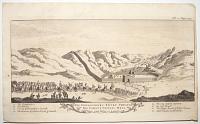
The Embassadors Entry Through the Famous Chinese Wall Near 1200 Miles in Length.
[Engraved by Emanuel Bowen.]
[London: Awnsham & John Churchill, 1744.]
Engraving. Plate 220 x 340mm (8¾ x 13½"). Trimmed on right.
The Great Wall of China, with a Russian embassy approaching. From 'A Complete Collection of Voyages and Travels' by John Harris.
[Ref: 53070] £230.00
(£276.00 incl.VAT)

The Great Wall of China.
Jabez Vale, 44, Hanover Street, Liverpool. [n.d., c.1860.]
Scarce woodcut, printed in blue. Sheet: 175 x 225mm (7 x 9''). Trimmed.
Tea Wrapper. A view of the Great Wall of China after Sands.
[Ref: 48622] £350.00
![[Chinese Figures by the Great Wall of China.]](img-thumbnail/jpegs/49909.jpg)
[Chinese Figures by the Great Wall of China.]
[n.d., c.1860.]
Rare chromolithograph. Sheet: 175 x 125mm (7 x 5''). Laid on card as issued.
A view near the Great Wall of China with figures, one on horseback, in the foreground.
[Ref: 49909] £160.00
(£192.00 incl.VAT)
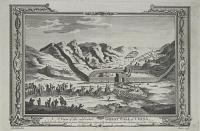
A View of the celebrated Great Wall of China, which divides that Empire from Tartary, & was originally built to prevent the Invasions of the Tartars.
G.H. Millar delin. Taylor sculp.
[London: A. Hogg, c.1782.]
Etching and engraving, 215 x 330mm. 8½ x 13".
The Great Wall of China is a series of stone and earthen fortifications in China, built, rebuilt, and maintained between the 6th century BC and the 16th century to protect the northern borders of the Chinese Empire from Xiongnu attacks during the rule of successive dynasties. An illustration to George Henry Millar's 'The new and universal System of Geography, being a complete history and description of the whole world. ...' 1782.
[Ref: 9657] £90.00
(£108.00 incl.VAT)
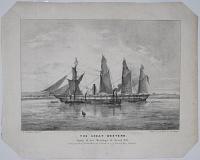
The Great Western. Lying at her Moorings at Broad Pill.
I. Walter, Pinxd. Scale of 40 feet to an Inch.
Lithographed & Published by T. Bedford, 44 Broad Quay Bristol. [n.d., c.1840.]
Lithograph, image 170 x 245mm. 6¾ x 9¾". Lightly soiled. Sheet corners missing.
The SS Great Western, launched in 1837, was the first steamship purposely built for the Atlantic crossing. When it completed the crossing on 23 April 1838, it was the fastest ship ever to do so. An attractive lithograph. After Joseph Walter (1783 - 1856), marine painter, who worked in Bristol.
[Ref: 10912] £180.00
(£216.00 incl.VAT)
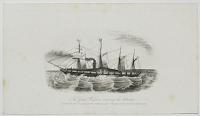
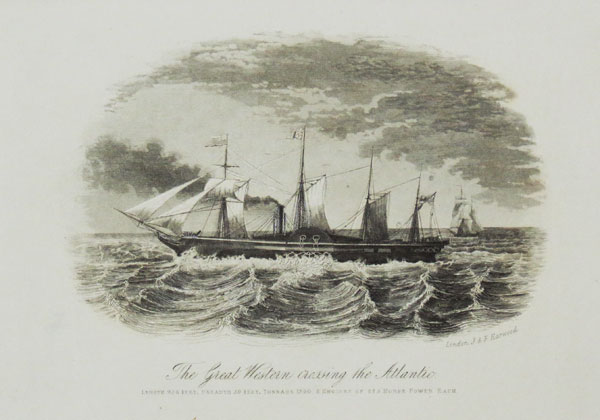
The Great Western crossing the Atlantic. Length 236 Feet_Breadth 59 Feet_Tonnage 1320_2 Engines of 225 Horse Power Each.
[n.d., c.1840.]
Engraving. Sheet: 110 x 190mm (4¼ x 7½'').
A maritime scene showing SS Great Western, designed by Isambard Kingdom Brunel, the first steam ship built for crossing the Atlantic and the first unit in the Great Western Steam Ship Company.
[Ref: 48343] £60.00
(£72.00 incl.VAT)
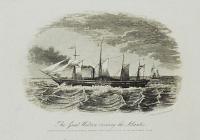
The Great Western crossing the Atlantic. Length 236 Feet, Breadth 59 Feet, Tonnage 1320, 2 Engines of 225 Horse Power Each.
London J. & F. Harwood. [n.d., c.1840.]
Engraving. Sheet: 135 x 185mm (5¼ x 7¼'').
A maritime scene showing SS Great Western, designed by Isambard Kingdom Brunel, the first steam ship built for crossing the Atlantic and the first unit in the Great Western Steam Ship Company.
[Ref: 48344] £50.00
(£60.00 incl.VAT)
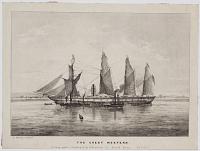
The Great Western.
J. Walter Pinx.d.
Lithographed & Published by T. Bedford, 44 Broad Quay, Bristol. [c.1837.]
Rare lithograph. Sheet 205 x 270mm (8 x 10½"). Small worm hole.
Isambard Kingdom Brunel's SS Great Western steamship. NMM: PAH0210. From an album of the Walter family.
[Ref: 37730] £260.00
(£312.00 incl.VAT)
![[Thomas Gray] Mr. Gray.](jpegs/53515.jpg)
![[Mr Thomas Gray.]](jpegs/64212.jpg)
![[Views of the Great Eastern and Great Britain steam ships]](jpegs/33753.jpg)
![''Great Britain'' Built at Bristol 1837-1843 [...]](jpegs/60913.jpg)
![''Great Britain'' Built at Bristol 1837-1843 [...]](jpegs/60912.jpg)


![[SS Great Eastern.] The Leviathan, at her Moorings off Deptford.](jpegs/54061.jpg)
![[SS Great Eastern.] The Leviathan, Ready for Sea.](jpegs/54062.jpg)



![[Osler's Crystal Fountain]](jpegs/68488.jpg)






![[The Great Plague of London.] London's Dreadful Visitation:](jpegs/63455.jpg)

![[Niagara Falls Suspension Bridge] The Great Railway Suspension Bridge](jpegs/52996.jpg)
![[Great Reed Warbler] 26. L'Efarvatte et son nid. Grandeur naturelle.](jpegs/50624.jpg)


![[Great Tom.]](jpegs/44297.jpg)


![[Chinese Figures by the Great Wall of China.]](jpegs/49909.jpg)