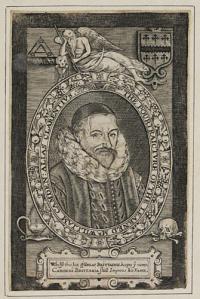
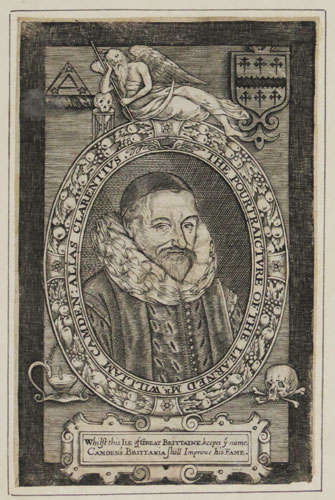
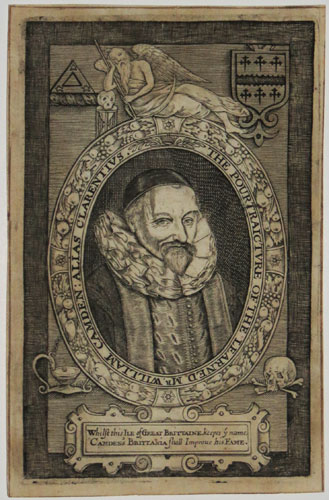
The Pourtraicture of the Learned Mr. William Camden Alias Clarentius. Whilst this Isle of Great Britain keepes ye name Camdens Brittania shall Improve his Fame.
[Robert White.]
[1674.]
Engraving. Sheet: 140 x 90mm (5½ x 3½''). Trimmed and laid on album sheet.
A half-length portrait of antiquarian, historian and topographer William Camden (1551-1623)
[Ref: 48782] £160.00
(£192.00 incl.VAT)

Gvillavme Camden.
N. De. L'armessin Sculp.
[n.d. c.1760.]
Engraving, sheet 185 x 135mm (7¼ x 5¼"). Trimmed within plate.
William Camden (1551-1623) was an English antiquarian, historian, topographer, and officer of arms. He wrote the first chronographical survey of the islands of Great Britain and Ireland (Britannia 1586), and the first detailed historical account of the reign of Elizabeth I of England (the Annals 1615). Map interest. NPG: D28006.
[Ref: 66938] £160.00
(£192.00 incl.VAT)
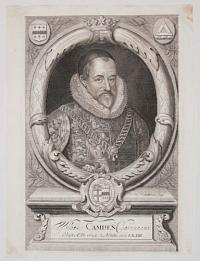
William Camden Clarenceux. Obijt A.o D. 1623. Aetatis suae LXXIII.
R. White sculp. [Marcus Gheeraerts.]
[n.d. c.1695; but later.]
Copper engraving, later impression. Plate 296 x 203mm. 11¾ x 8". Trimmed close to plate, some creasing.
William Camden, head and shoulders in an oval, wearing a chain and cap; frontispiece to his 'Britannia', ed. by Gibson (1695). William Camden (1551-1623) was an British antiquary and historian. He wrote the first chorographical survey of the islands of Great Britain and Ireland and the first detailed historical account of the reign of Elizabeth I of England. See NPG: D21096.
[Ref: 23199] £120.00
(£144.00 incl.VAT)
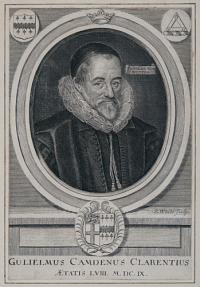
Gulielmus Camdenus Clarentius. Aetatis LVIII. M. DC. IX.
R. White Sculp. [Marcus Gheeraerts the Younger pinx.]
[n.d., c.1695.]
Line engraving. 177 x 120mm. 7 x 4¾". Trimmed and stuck on separate sheet.
William Camden (1551-1623), English antiquarian, historian, and officer of arms. He wrote the first topographical survey of the islands of Great Britain and Ireland and the first detailed historical account of the reign of Elizabeth I of England. In 1566 he entered Oxford, transferring from Magdalen College, to Broadgates Hall, and finally to Christ Church. At Christ Church he encountered Philip Sidney, who encouraged Camden's thirst for antiquaries. In 1571 he returned to London without a degree, but soon took up post as Usher of Westminster School, giving him freedome to travel and pursue his antiquarian researches. NPG D21094. Macdonnell Collection.
[Ref: 14467] £60.00
(£72.00 incl.VAT)

Willi. Camden Clarenceux ye Sone of a painter Nat An.o 1550 Obit. 1623
R: Gaywood fc.
[c.1661]
Etching with hand colouring, 220 x 160mm. 8½ x 6¼".
Portrait of William Camden (1550-1623), historian and herald, known for his 'Britannia' (1586). Engraved by Richard Gaywood as a plate to Morgan's 'Sphere of Gentry' (1661). O'Donoghue 10.
[Ref: 15832] £320.00

Gvillavme Camden.
N. De. L'armessin Sculp.
[n.d. c.1760.]
Engraving. Plate 190 x 140mm. 7½ x 5½".
William Camden (1551-1623) was an English antiquarian, historian, topographer, and officer of arms. He wrote the first chorographical survey of the islands of Great Britain and Ireland, and the first detailed historical account of the reign of Elizabeth I of England. Map interest. NPG: D28006.
[Ref: 23967] £70.00
(£84.00 incl.VAT)
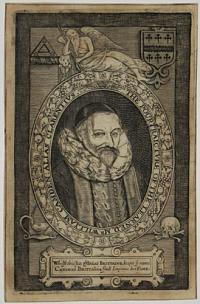
The Pourtraicture of the Learned Mr William Camden: Alias Clarentius While this Ile of Great Brittaine keeps ye name / Camdens Brittania shall Improve his Fame
[Anon, 1636]
Rare, very fine & ornate engraving, platemark 140 x 90mm (5½ x 3½"). Rare.
William Camden (1551-1623), English antiquarian, historian, and officer of arms. He wrote the first topographical survey of the islands of Great Britain and Ireland and the first detailed historical account of the reign of Elizabeth I of England. In 1566 he entered Oxford, transferring from Magdalen College, to Broadgates Hall, and finally to Christ Church. At Christ Church he encountered Philip Sidney, who encouraged Camden's thirst for antiquaries. In 1571 he returned to London without a degree, but soon took up post as Usher of Westminster School, giving him freedom to travel and pursue his antiquarian researches. Portrait in oval with figure of Time and other emblems. O'D 7
[Ref: 39424] £190.00
(£228.00 incl.VAT)

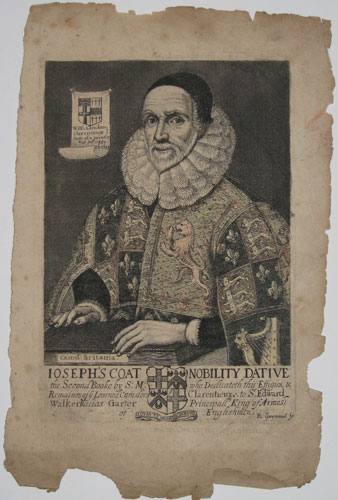
Willi. Camden Clarenceux ye Sone of a painter Nat An.o 1550 Obit. 1623 Joseph's Coat Nobility Dative the Second Booke by S: M: [...]
R: Gaywood fc.
[c.1661]
Etching, 220 x 150mm (8½ x 6"). Trimmed along platemark; glued to backing sheet with engraving of a tomb verso.
Portrait of William Camden (1550-1623), historian and herald, known for his 'Britannia' (1586), a copy of which his hands rest upon here. Engraved by Richard Gaywood as a plate to Sylvanus Morgan's 'Sphere of Gentry' (1661). The work consisted of four 'books', of which Josephs's Coat was the second, to which this was presumably the frontispiece. This engraving was taken from a portrait of Camden which was destroyed in the great fire of London in 1666. However, when Morgan became master of the Painter-Stainers' Company in 1676, he presented the company with a portrait of Camden (a former benefactor of the Painter-Stainers), worked up in turn from the Gaywood engraving. That portrait still hangs in the Painter-Stainers' hall. O'Donoghue 10.
[Ref: 37629] £320.00

Giulielm Camden Clarenti. Pralecturae Historicae Fundator Munific. Hic oculos similesq vultus, hic ora lueri Poteris, nec ultra haec artifex quivit manus Annales ipsum celebrisq Britannia monstrant Perenniora saxo et aere [Greek Cyrillic.] Quisquis et Historiae Cathedram hanc conscenderit esto Benignitatis usque monumentum loquax.
Marcus Gherrardis pinxit. Loder del. Engrav'd by James Basire 1789.
Publish'd as the Act directs March 25, 1789.
Engraving, with large margins. Plate 330 x 222mm. 13 x 8¾".
William Camden (1551-1623) was an English antiquarian, historian, topographer, and officer of arms. He wrote the first chorographical survey of the islands of Great Britain and Ireland, and the first detailed historical account of the reign of Elizabeth I of England. After Marcus Gheeraerts (c.1561/2-1636). NPG: D18702.
[Ref: 24798] £130.00
(£156.00 incl.VAT)
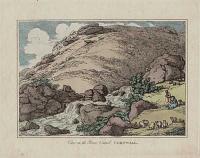
View on the River Camel, Cornwall.
Drawn & Etched by Rowlandson.
[London: Thomas Tegg, n.d., 1822.]
Coloured etching. 185 x 235mm (7¼ x 9¼"), with very large margins.
A view of the River Camel on Bodmin Moor. From Rowlandson's 'Sketches from Nature': The plate was first published in 1812 by Rowlandson in a fortnightly series: it was not published in a book until 1822. Abbey 33.
[Ref: 61107] £130.00
(£156.00 incl.VAT)
![[Camels] Dromadiare. No. 29.](img-thumbnail/jpegs/55559.jpg)
[Camels] Dromadiare. No. 29.
V. Adam. Imp. Lith. de A. Godard.
J. Bulla et Delarue, Succ. d'Aumont, rue J.J. Rousseau, 10 [n.d., c.1850].
Fine tinted lithograph. Sheet 355 x 460mm (14 x 18") large margins. Some faint spotting.
A camel in a caravan's camp, by Victor Adam (1801-66).
[Ref: 55559] £260.00
(£312.00 incl.VAT)
![[Camels] Étude de Chamaeu. No. 44.](img-thumbnail/jpegs/55560.jpg)
[Camels] Étude de Chamaeu. No. 44.
V. Adam. Imp. Lith. de A. Godard, rue Hautefeuille, 16..
J. Bulla et Delarue, Succ. d'Aumont, rue J.J. Rousseau, 10 [n.d., c.1850].
Fine tinted lithograph. Sheet 355 x 460mm (14 x 18"), large margins. Some foxing, tear taped in title left.
A turbanned rider on a trotting camel in a desert landscape, by Victor Adam (1801-66).
[Ref: 55560] £260.00
(£312.00 incl.VAT)
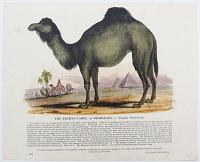
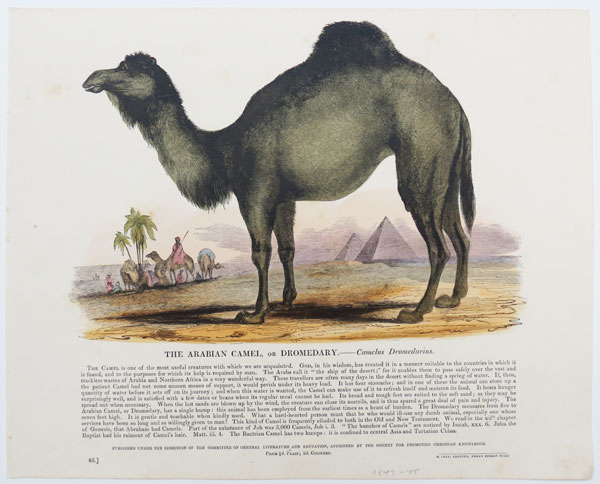
The Arabian Camel, or Dromedary._Camelus Dromedarius. Price ¾d. Plain; 2d. Coloured.
Published Under the Direction of the Committtee of General Literature and Education, Appointed by the Society for Promoting Christian Knowledge. R. Clay, Printer, Bread Street Hill.
Hand-coloured wood engraving. Sheet: 275 x 340mm (10¾ x 13½'').
A portrait of a camel with a description of the animal below, the description includes references to the Bible.
[Ref: 48578] £110.00
(£132.00 incl.VAT)

Camelus Dromedarius Linn.
De Seve del. J.C. Bock sc.
[Erlangen: Wolfgang Walther, c.1775.]
Engraving with original fine hand colour, pt 18th century watermark. 230 x 180mm (9 x 11"), with large margins.
A portrait of an Arabian camel (Dromedary), from Johann Christian Daniel Schreber's 'Die Säugthiere in Abbildungen nach der Natur mit Beschreibungen'.
[Ref: 52336] £230.00
(£276.00 incl.VAT)
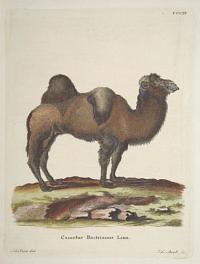
Camelus Bactrianus Linn.
De Seve del. J.C. Bock sc.
[Erlangen: Wolfgang Walther, c.1775.]
Engraving with fine original hand colour. 230 x 180mm (9 x 11"), with large margins.
A portrait of Bactrian camel of Central Asia, from Johann Christian Daniel Schreber's 'Die Säugthiere in Abbildungen nach der Natur mit Beschreibungen'.
[Ref: 52337] £230.00
(£276.00 incl.VAT)
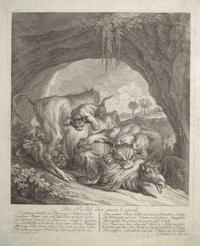
Der Pardel über einem Cameel.
Joh. El. Ridinger inv. et del. M. El. Ridinger sculps. Aug Vin.
[Augsburg, c.1760.]
Engraving, watermark M. Heusler, 350 x 290mm (13¾ x 11½"). Some wear to margins.
A family of big cats bringing down a camel in a cave. Despite being described as leopards, the cats look more like a lioness and her cubs. Johann Elias Ridinger (1698-1767) is regarded as one of the best German engravers of animals, especially horses, hounds and hunting scenes
[Ref: 55342] £160.00
(£192.00 incl.VAT)
![[Camel in Desert.]](img-thumbnail/jpegs/28872.jpg)
[Camel in Desert.]
E.J. Detmold [signed in pencil.]
[n.d. c.1900.]
Drypoint with pencil signature, with very large margins. Plate 196 x 401mm (7¾ x 15¾").
A rider and camel run towards people and a town to the right, by Edward Julius Detmold (1883-1957), twin brother to Charles Maurice Detmold (1883-1908). The pair were among the artists associated with the Golden Age of Illustration. They worked together making sketches at the Zoological Gardens and exhibited together from the age of fourteen. He became one of the best Edwardian animal illustrators, known for his subtle placement of animals within their natural environment. Edward expressed artistic versatility and published a number of books of fine fantasy drawings in the 1920s; they portrayed a vivid imagination and he utilised warm colouring, which suited the period. The Jungle Book (1908) was to be the last substantial commission that the brothers worked on - due to the death of Charles in that same year. The extraordinary success of their illustrations to accompany Kipling's classic tale, however, firmly established the reputation for Edward and the following year, a suite of illustrations prepared to Aesop's tales were published in The Fables of Aesop (1909).
[Ref: 28872] £290.00
(£348.00 incl.VAT)
![[Camel train at an oasis.]](img-thumbnail/jpegs/64344.jpg)
[Camel train at an oasis.]
[Edward Julius Detmold.]
[n.d., c.1925.]
Etching on india paper. 300 x 400mm (11¾ x 15¾"), with large margins. Edges taped.
Laden camels standing at an oasis, two in water. Edward Julius Detmold (1883-1957) began etching with his twin, Maurice, and exhibited at The Royal Academy aged 13. In 1908 Maurice committed suicide and Edward, traumatised, stopped etching. In 1922 an appreciative article about the Detmolds in the Print Collector's Quarterly inspiring Edward to return to printmaking. An edition of 'The Arabian Nights' illustrated by Detmold was published in 1924.
[Ref: 64344] £380.00

Robertus Camell, LL D
[Engraved by John Theodore (Dietrich) Heins Senior.]
[n.d. c.1750]
Rare mezzotint. Sheet 300 x 225mm (11¼ x 8¾). Trimmed into plate.
Three-quarter length seated portrait of Robert Camell (d. 1732), Rector of Bradwell, Suffolk. He is seated at a table, turning away from a book in which he writes with right hand with his left arm resting on the edge of his chair. He wears a loose coat over dark robe with a broad waist-band, bands and a soft hat. He is lit by the candle on the table. This state is after plate reduced and artist's name removed. CS 1 ii of ii. Ex: collection of The Hon. Christopher Lennox-Boyd.
[Ref: 66518] £180.00
(£216.00 incl.VAT)

Robertus Camell, LL D
[Engraved by John Theodore (Dietrich) Heins Senior.]
[n.d. c.1750]
Mezzotint. Sheet 300 x 225mm (11¼ x 8¾). Trimmed into plate, laid on album paper at sides.
Three-quarter length seated portrait of Robert Camell (d. 1732), Rector of Bradwell, Suffolk.. He is seated at a table, turning away from a book in which he writes with right hand with his left arm resting on the edge of his chair. He wears a loose coat over dark robe with a broad waist-band, bands and a soft hat. He is lit by the candle on the table. This state is after plate reduced and artist's name removed. CS 1 ii of ii. Ex: collection of The Hon. Christopher Lennox-Boyd.
[Ref: 66519] £260.00
(£312.00 incl.VAT)
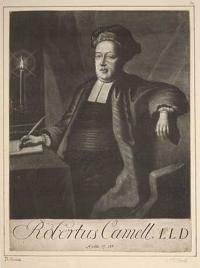
Robertus Camell, LL D [Noble 17 125] [in ink]
[Engraved by John Theodore (Dietrich) Heins Senior.]
[n.d. c.1750]
Very scarce mezzotint. Sheet 300 x 225mm (11¼ x 8¾), 18th century watermark. Trimmed and tipped into album sheet at sides.
Three-quarter length seated portrait of Rector of Bradwell, Suffolk, Robert Camell (d. 1732). He is seated at a table, turning away from a book in which he writes with right hand with his left arm resting on the edge of his chair. He wears a loose coat over dark robe with a broad waist-band, bands and a soft hat. He is lit by the candle on the table. This state is after plate reduced and artist's name removed. CS 1 II of II. NPG D1186.
[Ref: 61586] £420.00
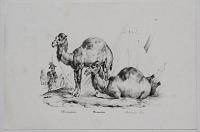
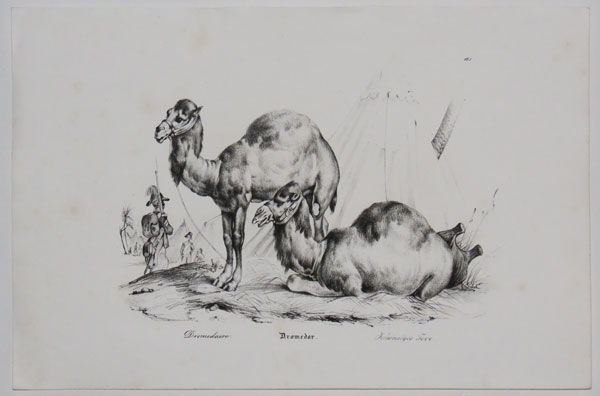
Dromedaire. Dromedar. Kösönséges Teve. 163.
[n.d. c.1860.]
Lithograph. 240 x 368mm (9½ x 4½").
Two dromedary or Arabian camels, distinguished by their even-toes and one hump; one sat and the other standing at a military camp.
[Ref: 29466] £95.00
(£114.00 incl.VAT)
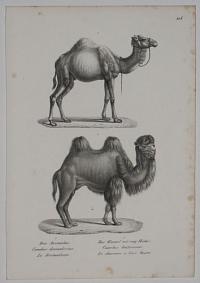
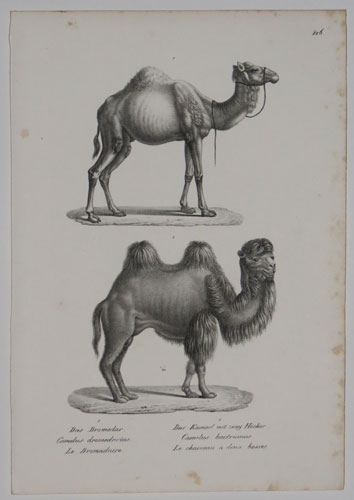
1. Das Dromedar. Camelus dromedarius. Le Dromadaire. 2. 2. Das Kameel mit zwey Höcker. Camelus bactrianus. Le chameau a deux bosses. 1/20. 116.
[H.R. Schinz.] [C.J. Brodtmann.]
[Brodtman, 1827.]
Lithograph. 330 x 229mm (13 x 9"). Some spotting.
A Dromedary camel and Bactrian camel. From "Naturgeschichte und Abbildungen der Menschen und der Säugethiere". See Ref: 29471 for reversed impression.
[Ref: 29470] £95.00
(£114.00 incl.VAT)
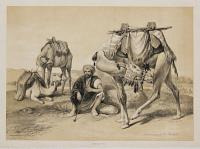
Camels resting in the Sherkiyeh.
Drawn on stone by Lehnert after E. Prisse Esq.r.
James Madden, London. [1851.]
Tinted lithograph. Printed area 265 x 360mm (10½ x 14¼").
A scene of three pack camels and their driver, published in the 'Oriental Album: Characters, Costumes, and Modes of Life, in the Valley of the Nile'. The artist, Achille-Constant-Theodore Emile Prisse d'Avennes (1807-79), was a French orientalism who embraced Islam and took the name Edris-Effendi. Attabay: 1001; Blackmer 1357.
[Ref: 32051] £230.00
(£276.00 incl.VAT)
![[Camels outside a town.]](img-thumbnail/jpegs/13548.jpg)
[Camels outside a town.]
D.Donald.
Published 1923 by the Museum Galleries, Museum Street, London W.C. Copyright.
Etching printed in colours, signed by the artist. 125 x 225mm, 5 x 9".
North African white wash townscape, with four camels, two carrying loads in the foreground. Probably Tunisia.
[Ref: 13548] £170.00
(£204.00 incl.VAT)
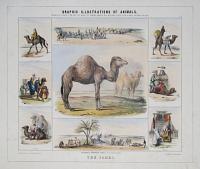
Graphic Illustrations Of Animals, Shewing Their Utility To Man, In Their Services During Life And Uses After Death. Pl. 8. The Camel.
Designed and Drawn on Stone by W Hawkins.
Published by Thomas Varty, 31, Strand, London. [n.d., c.1850.]
Fine original hand coloured lithograph, sheet 360 x 415mm. 14¼ x 16¼". Some soiling.
A central illustration of a dromedary and a Bactrian camels, surrounded by eight vignette scenes of of their uses and products, including transport, portage and clothing. Drawn by Benjamin Waterhouse Hawkins (1807 - ?1889), artist and sculptor of natural history subjects. In 1852 he was appointed director of the fossil department at the Crystal Palace, where he worked with Richard Owen on the famous models of dinosaurs and other extinct lifeforms.
[Ref: 13284] £160.00
(£192.00 incl.VAT)
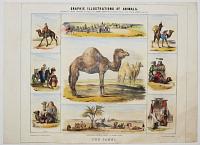
Graphic Illustrations Of Animals, Shewing Their Utility To Man, In Their Services During Life And Uses After Death. Pl. 8. The Camel.
Designed and Drawn on Stone by W Hawkins.
Published by Thomas Varty, 31, Strand, London. [n.d., c.1850.]
Fine hand-coloured lithograph. Sheet: 315 x 440mm (12½ x 17½''). Slight staining.
A central illustration of a dromedary and a Bactrian camels, surrounded by eight vignette scenes of of their uses and products, including transport, portage and clothing. Drawn by Benjamin Waterhouse Hawkins (1807 - ?1889), artist and sculptor of natural history subjects. In 1852 he was appointed director of the fossil department at the Crystal Palace, where he worked with Richard Owen on the famous models of dinosaurs and other extinct lifeforms.
[Ref: 48546] £140.00
(£168.00 incl.VAT)
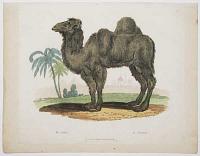
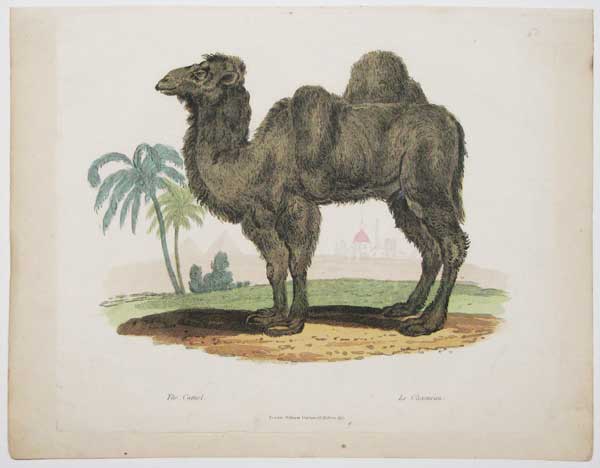
The Camel. Le Chameau.
London: William Dalton; 58., Holborn Hill. [n.d. c.1880.]
Hand-coloured wood engraving. 250 x 290mm (9¾ x 11½"). Laid on album page.
A camel standing strong against a desert backgrop with pyramids and palm trees to the left, and a temple in to the right.
[Ref: 19379] £70.00
(£84.00 incl.VAT)
![[Resting camels.]](img-thumbnail/jpegs/25252.jpg)
[Resting camels.]
G.I. Graham.
[n.d., c.1823.]
Lithograph. Sheet 170 x 240mm, 6¾ x 9½". Trimmed.
Pack camels at rest. Extremely rare early campaign litho.
[Ref: 25252] £180.00
(£216.00 incl.VAT)
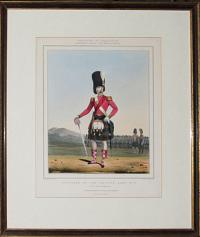
Officers of the British Army, No. 9. 79th (or Cameron Highlanders.) Dedicated by Permission to the Adjatant General of his Majesty's Forces.
L. Mansion & S.t Eschauzier inv. & del. Printed by Lefevre & Co. Coloured by C. Bowen & C.H. Martin.
London, Published by W. Spooner 253, Regent St. [n.d., c.1830.]
Fine coloured lithograph. Framed. Printed area: 360 x 280mm (14 x 11''). Frame: 520 x 440mm (20½ x 17¼''). Unexamined out of frame. .
An offficer of the 79th Cameron Highlanders in dress uniforn, the regiment amalgamated with the Seaforth Highlanders to form the Queen's Own Highlanders in 1961, and now forms part of the Scottish Division.
[Ref: 48988] £360.00
![C.H.Cameron [facsimile signature].](img-thumbnail/jpegs/35347.jpg)
C.H.Cameron [facsimile signature]. Atheneum Portraits N.o. 35.
W.D. Lith. Day & Haghe Lith.rs.
London, Pub.d. May 1836, by T. M.c.Lean 26 Haymarket.
Lithograph. On India. Plate: 200 x 280mm, (8 x 11"). Large margins. Some paper toning to edges. Some small fox marks.
Half portrait of Charles Hay Cameron (1795-1880) a jurist who was married to the celebrated photographer Julia Margaret Cameron. A man of cultivated intellect Cameron was friends with many prominent men of the time, inlcuding Sir Henry Taylor and Alfred Tennyson who his wife photographed.
[Ref: 35347] £140.00
(£168.00 incl.VAT)
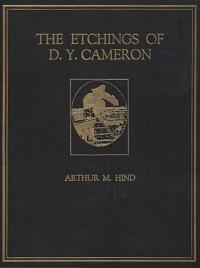
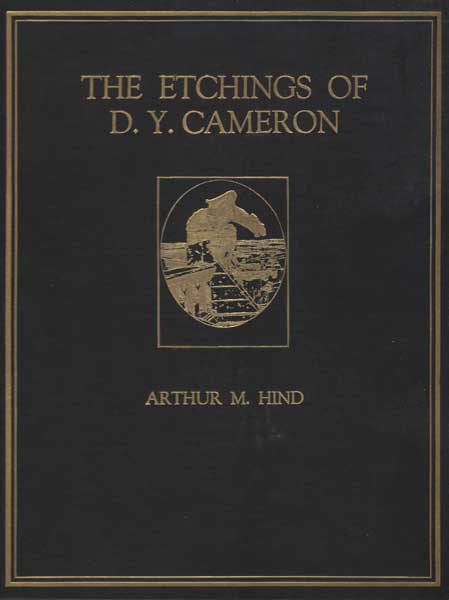
The Etchings of D.Y. Cameron.
Arthur M. Hind.
London. Halton and Truscott Smith, Ltd. 1924.
4to, orginal cloth gilt; pp. vii + 43, with 95 b/w plates. Good condition.
An account of the etchings of Sir David Young Cameron.
[Ref: 59909] £60.00
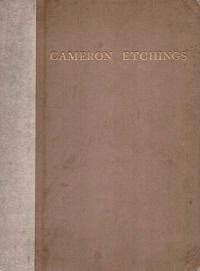
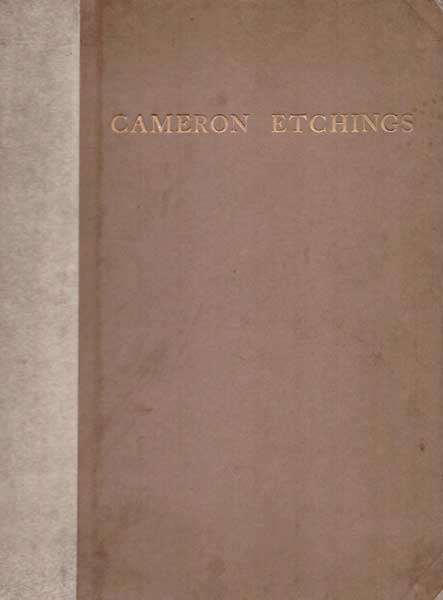
Etchings of D.Y.Cameron and A Catalogue of his Etched Work
with an Introduction Essay by Frank Rinder.
Otto Schulze and Company. 20 South Frederick Street, Edinburgh 1908.
Book: 4to (279 x 215mm). Board binding with gilt title stamped onto frontcover and spine. A 90 page catalogue - 60 of which are illustrations. Binding rubbed and scuffed. Some spotting. Dirty.
A catalogue raisonné of the work of Sir David Young Cameron.
[Ref: 10370] £70.00
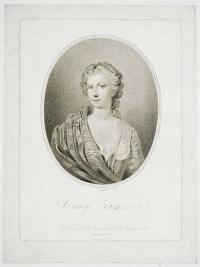
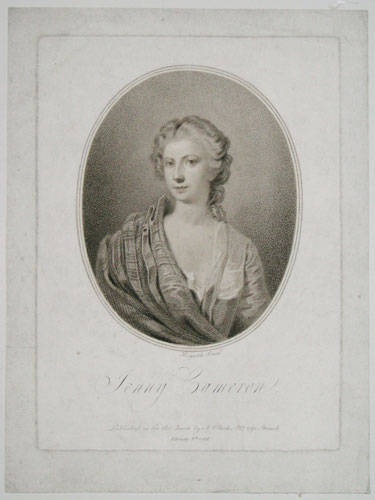
Jenny Cameron.
Hogarth Pinxt.
Published as the Act directs by J. Clarke, No.291, Strand Febuary 8th. 1788.
A rare stipple. Plate 255 x 190mm (10 x 7½"), good margins.
Half-length portrait of a pretty young woman in low-cut dress and tartan shawl. The wife of Archibald Cameron of Lochiel (the last Jacobite to be executed, 1753), she came to London to try and stop his execution, gaining some sympathy, and was probably the 'Jenny Cameron' who visited the exiled Old Pretender in Rome and petitioned him for a pension in the late 1750s. She is often confused with Jenny Cameron of Glendessary (c.1700-72) who rumoured to have raised a troop of men in support of the 1745 Jacobite Rebellion, fighting with them, and being the mistress of the Young Pretender. Not in Sharpe.
[Ref: 20099] £230.00
(£276.00 incl.VAT)

Miss Jenny Cameron Of Lochiel. one of the most numerous Clans of Scotland. If to her Share, some female Errors fall, [/] Look on her Face, and you'll forget them all.
Le Clare pinx. Johnson fecit.
[n.d., c.1750.]
Mezzotint. 325 x 230mm (12¾ x 9"), with large margins. Slight tear in centre.
Three-quarter portrait of a pretty young woman in low-cut dress, powdered wig and tartan shawl, holding a mask. The wife of Archibald Cameron of Lochiel (the last Jacobite to be executed, 1753), she came to London to try and stop his execution, gaining some sympathy, and was probably the 'Jenny Cameron' who visited the exiled Old Pretender in Rome and petitioned him for a pension in the late 1750s. She is often confused with Jenny Cameron of Glendessary (c.1700-72) who was rumoured to have raised a troop of men in support of the 1745 Jacobite Rebellion, fighting with them, and being the mistress of the Young Pretender. Sharp 358, conflating the two Jenny Camerons. Ex: Collection of The Hon. C. Lennox-Boyd.
[Ref: 64636] £360.00

Luis de Camoens.
[London: Humphrey Moseley, 1655.]
Engraving. Sheet 245 x 150mm (9½ x 6"). Trimmed into image on three sides, into verse at bottom, losing a line, large tear repaired, backed with archival tissue.
An illustration of a bust of Portugal's greatest poet Luís Vaz de Camões (c.1525-80), wearing armour, ruff and laurel crown, his left eye closed. The portrait has been reversed, as his right eye was blind. The frontispiece portrait of 'The Lusiad, or, Portugals Historicall Poem: Written in the Portingall Language by Luis de Camoens; and Now newly put into English by Richard Fanshaw Esq'. The missing line of verse should read '(so did I, Her) Beasts cannot browze on Bayes.'.
[Ref: 67858] £380.00
![[Luis Vaz de Camões] Corpore quis fuerit Camões tibi præbet Imago...](img-thumbnail/jpegs/64372.jpg)
[Luis Vaz de Camões] Corpore quis fuerit Camões tibi præbet Imago...
[n.d., c.1720.]
Scarce engraving, 18th century watermark. Sheet 240 x 160mm (9½ x 6¼"). Trimmed into image, mounted in album paper.
Full length portrait of Luís Vaz de Camões (c.1524-80), Portugal's national poet, showing him dressed in armour, blind in his right eye. From an 1720 edition of his works, with a commentary by Manoel Correa.
[Ref: 64372] £390.00
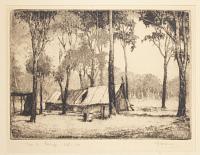
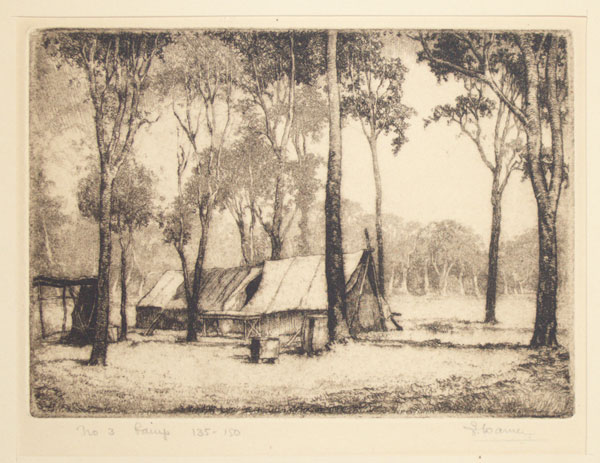
No. 3 Camp.
135-150 / E. Warner.
[n.d. after 1922]
Signed etching. 125 x 175mm (5 x 7"). Sheet laid at top on original mount. Some toning around edges of the mount.
A very atmospheric view of a settlement in a woodland clearing.
[Ref: 54032] £160.00
(£192.00 incl.VAT)

Camp et Fourage génerale.
Inventé et Gravé par Antoine Benoist.
Aparis chez Jacqs. Chereau, rue St. Jacques, au grand St. Remy. [n.d. c.1780.]
Engraving. 273 x 273mm. 10¾ x 10¾". Creases.
A scene of army officers assisting and controlling the harvest cut of the corn. A camp can be seen to the right-hand side.
[Ref: 15557] £130.00
(£156.00 incl.VAT)
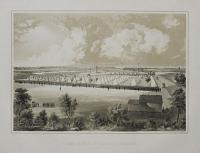
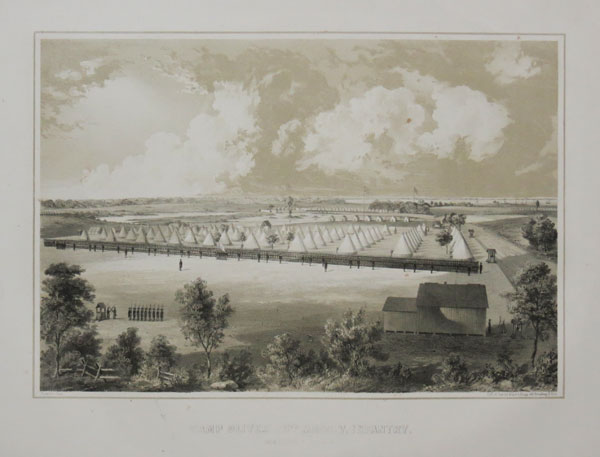
Camp Oliver 25.th Mass V. Infantry. New Berne, N.C. 1862-3.
Combe del.
Lith. of Sarony, Major & Knapp, 449 Broadway, N. York. [n.d. c.1863.]
Tinted lithoraph. Paper toning, nicks and tears around the edges; title text faint.
View of military Camp Oliver; soldiers in line, tipis and American flags in middle ground; harbour in background. New Bern is located at the confluence of the Trent and the Neuse rivers.
[Ref: 29989] £230.00
(£276.00 incl.VAT)
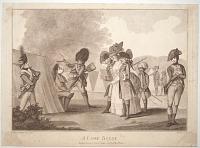
A Camp Scene.
H.W. Bunbury Esq.r Del.t. G. White Sculp.t.
Publish.d June the 25th 1784 by C. White, Stafford Row Pimlico.
Stipple, printed in sepia. 315 x 400mm (12¼ x 15¾"). Trimmed to plate top and bottom. Small margins left & right. Foxing.
A scene in a military encampment. Three visitors (two men and a woman) watch with amusement as a soldier, dressed in full regimentals including a busby, shaves another despite having a spade and axe thrust through his belt. BM Satires 6727.
[Ref: 54586] £230.00
(£276.00 incl.VAT)

La Partie de Campagne. Gravée par Anne Philberte Coulet, de l'Académie Impériale et Royale de Vienne, D'après le Tableau Original de P.J. Loutherbourg, tiré du Cabinet de Monsieur Roland.
P.J. Loutherbourg pinx. A.P. Coulet Sculp.t.
A Paris, Chéz Lempereur Graveur de leurs Majestés Impériale et Royale, rue et Porte St Jacques.
Etching. 330 x 380mm (13 x 15"). Thread margins, worm hole in sky.
A rustic scene, with a group of well-dressed people by the side of a river, a church with a tall dome behind.
[Ref: 43486] £290.00
(£348.00 incl.VAT)
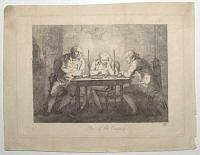
Plan of the Campaign.
CMF [monogram of Catherine Maria Fanshawe].
[n.d., c.1796.]
Etching with drypoint. 205 x 285mm (8 x 11¼"), watermarked 1794, very large margins Creased, tears in margins.
Three elderly men sit at a table examining a map by candlelight. On the walls are two plans of the fortifications of cities. Catherine Maria Fanshawe (1765-1834) was best known for her poetry, including the 'Riddle on the Letter H', which was originally mistakenly ascribed to Lord Byron.
[Ref: 58247] £90.00
(£108.00 incl.VAT)

Plan of the Campaign.
CMF [monogram of Catherine Maria Fanshawe].
[n.d., c.1796.]
Etching with drypoint, presentation copy. 205 x 285mm (8 x 11¼"), watermarked 1794, very large margins Ink inscription showing through from reverse in margin, foxing
Three elderly men sit at a table examining a map by candlelight. On the walls are two plans of the fortifications of cities. An ink text on verso reads ''Drawn & Etch'd by Miss Fanshaw & given by her to Mrs Scott August 1796''. In pencil on front margin composed and elected by Miss Catherine Fanshawe and given to her by Lady Polworth. Catherine Maria Fanshawe (1765-1834) was best known for her poetry, including the 'Riddle on the Letter H', which was originally mistakenly ascribed to Lord Byron.
[Ref: 58246] £180.00
(£216.00 incl.VAT)

Lady Ann Campbell. Countess of Strafford.
J. Reynolds pinx.t. T. Johnson fecit.
[n.d., c.1760.]
Mezzotint, 18th century watermark; 330 x 230mm (13 x 9"). Slightly toned.
A half length portrait of Ann Campbell (c.1715-85), daughter of John Campbell, 2nd Duke of Argyll and wife of William Wentworth, 2nd Earl of Strafford. Horace Walpole called her 'a vast beauty'. The original painting by Sir Joshua Reynolds is in the Minneapolis Institute of Arts (accession No 99.63). Hamilton p.135; CS 5 ii of ii; Russell 6a. Ex: collection of The Hon. Christopher Lennox-Boyd.
[Ref: 67973] £260.00
(£312.00 incl.VAT)

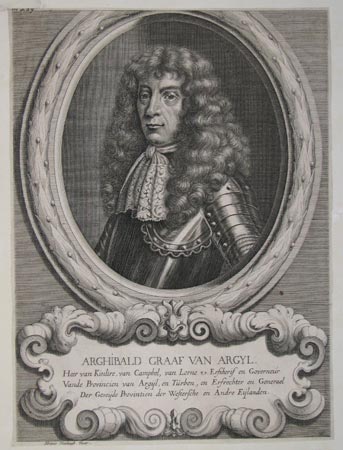
Arghibald Graaf Van Argyl. Heer van Kinlire, van Campbel, van Lorne &. Erfsherif en Governeur Vande Provincen van Argyl, en Turben, en Erfrechter en Generael Der Geseyde Provintien der Westersche en Andre Eylanden.
[Adriano Haelwegh Fecit.]
[n.d., c.1680.]
A rare engraving. Sheet: 330 x 240mm (13 x 9½"). Trimmed within plate and laid on album sheet.
Archibald Campbell, ninth Earl of Argyll (c. 1629 - 1685) a confederate of James Duke of Monmouth, and who was imprisoned for refusing to subscribe to the Test Act in 1681 and sentenced to death. He escaped from Edinburgh castle and left the country but four years later was taken in a abortive attempt to invade Scotland and beheaded. By Adrian Haelwegh, Dutch printmaker (c.1637 - 1702). He worked in Amsterdam, primarily on portraits and book illustrations.
[Ref: 43068] £260.00
(£312.00 incl.VAT)

Arghibald Graaf Van Argyl. Heer van Kinlire, van Campbel, van Lorne &. Erfsherif en Governeur Vande Provincen van Argyl, en Turben, en Erfrechter en Generael Der Geseyde Provintien der Westersche en Andre Eylanden.
Adriano Haelwegh Fecit.
[n.d., c.1680.]
Etching, sheet 342 x 251mm. Trimmed into plate and glued to album page at corners.
Archibald Campbell, ninth Earl of Argyll (c. 1629 - 1685), Earl from 1663 following the restoration of the title two years after his father, the Marquess of Argyll, was executed for treason. Although he shared few of his father's political convictions, displaying little enthusiasm for the Covenants, he too was destined to be executed. A confederate of James Duke of Monmouth, for refusing to subscribe to the Test Act, was found guilty of High Treason in 1681 and sentenced to death. He escaped from Edinburgh castle under the disguise of a page, holding up the train of Lady Sophia Lindsay, his step daughter. He left the country but four years later was taken in a abortive attempt to invade Scotland and beheaded. A fine impression, with inscription set into decorative cartouche, by Adrian Haelwegh, Dutch printmaker (c.1637 - 1702). He worked in Amsterdam, primarily on portraits and book illustrations. Apparently in Italy in 1660s. BM: pg.67, 2.
[Ref: 7538] £220.00
(£264.00 incl.VAT)
![[Archibald Campbell, 1st Marquess of Argyll] Lo here, the Genius of the great Arguyle](img-thumbnail/jpegs/12548.jpg)
[Archibald Campbell, 1st Marquess of Argyll] Lo here, the Genius of the great Arguyle Whose Politicks and Ethicks in one pyle Like Anchor Buoys, appeare to teach thee Wit To shun those rocks on which himselfe was split.
[n.d. c.1715.]
Engraving. 126 x 76mm.
Archibald Campbell (1598-1661), 1st Marquess of Argyll, 8th Earl of Argyll, chief of Clan Campbell, the de facto head of government in Scotland during most of the conflict known as the Wars of the Three Kingdoms. He was the most influential figure in the Covenanter movement that fought for the Presbyterian religion and what they saw as Scottish interests during the English Civil War of the 1640s and 1650s. He was made a privy councillor in 1628. In 1638, the king summoned him, together with Traquair and Roxburgh, to London, but he refused to be won over, warned Charles against his despotic ecclesiastical policy, and showed great hostility towards William Laud. In consequence, a secret commission was given to the Earl of Antrim to invade Argyll and stir up the MacDonalds against him in January 1644, he accompanied the Scottish army into England as a member of the committee of both kingdoms and in command of a troop of horse, but was soon compelled, in March, to return to suppress royalists in the Scottish Civil War and to defend his own territories. At the Restoration, he presented himself at Whitehall, but was at once arrested by order of Charles and placed in the Tower (1660), being sent to Edinburgh to stand trial for high treason. He was acquitted of complicity in the death of Charles I, and his escape from the whole charge seemed imminent, but the arrival of a packet of letters written by Argyll to Monck showed conclusively his collaboration with Cromwell's government, particularly in the suppression of Glencairn's royalist rising in 1652. He was immediately sentenced to death, his execution by beheading taking place on 27 May 1661, before the death warrant had even been signed by the king. His head was placed on the same spike upon the west end of the Tolbooth as that of Montrose had previously been exposed, and his body was buried at the Holy Loch, where the head was also deposited in 1664.
[Ref: 12548] £120.00
(£144.00 incl.VAT)
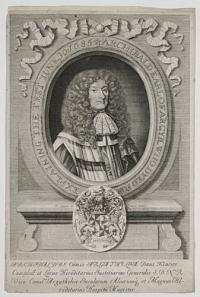
Archibaldu Earl of Argull Who Dyed for Explaining the Test Iune 30 1685. Archibaldus Comes Argatheliae Dnus. Kintire Campbell et Lorne Hereditarius Justitiarius Generalis S.D.N.R. Vice Cometus Argatheliae Insularum Aliarumque et Magnus Hereditarius Hospitii Magister.
D. Loggan ad Vivum delin.
[n.d. c.1680; but later.]
Engraving. 305 x 202mm (12 x 8").
Portrait of Archibald Campbell (1629-1685), ninth Earl of Argyll, head and shoulders in an oval frame, long hair, wearing cravat and robes; coat of arms below. As colonel of the Foot Guards he fought in the Battle of Dunbar in 1650 and the Battle of Worcester in 1651 for Charles II. In 1663 he was elected a Fellow of the Royal Society. He was a confederate of Monmouth and 1681 he was found guilty of High Treason and sentenced to death for refusing to subscribe to the Test Act. He escaped from Edinburgh Castle under the disguise of a page. He then left the country but four years later was taken in an abortive attempt to invade Scotland and was beheaded. Ex Collection: Norman Blackburn. See 24663 for earlier impression.
[Ref: 24662] £120.00
(£144.00 incl.VAT)
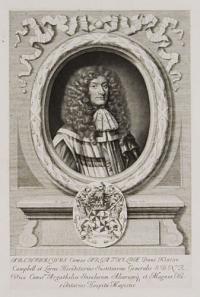
Archibaldus Comes Argatheliae D.nus Kintire Campbell et Lorne Hereditarius Justitiarius Generalis S.D.N.R. Vice Comet.us Argatheliae Insularum Aliarumque et Magnus Hereditarius Hospitii Magister.
D. Loggan ad Vivum delin.
[n.d. c.1690.]
Rare engraving. 296 x 190mm (11¾ x 7½"). Trimmed and laid on old card.
Portrait of Archibald Campbell (1629-1685), ninth Earl of Argyll, head and shoulders in an oval frame, long hair, wearing cravat and robes; coat of arms below. As colonel of the Foot Guards he fought in the Battle of Dunbar in 1650 and the Battle of Worcester in 1651 for Charles II. In 1663 he was elected a Fellow of the Royal Society. He was a confederate of Monmouth and 1681 he was found guilty of High Treason and sentenced to death for refusing to subscribe to the Test Act. He escaped from Edinburgh Castle under the disguise of a page. He then left the country but four years later was taken in an abortive attempt to invade Scotland and was beheaded. Ex Collection: R. Hobson of Hove.
[Ref: 25404] £120.00
(£144.00 incl.VAT)





![[Camels] Dromadiare. No. 29.](jpegs/55559.jpg)
![[Camels] Étude de Chamaeu. No. 44.](jpegs/55560.jpg)


![[Camel in Desert.]](jpegs/28872.jpg)
![[Camel train at an oasis.]](jpegs/64344.jpg)



![[Camels outside a town.]](jpegs/13548.jpg)


![[Resting camels.]](jpegs/25252.jpg)

![C.H.Cameron [facsimile signature].](jpegs/35347.jpg)


![[Luis Vaz de Camões] Corpore quis fuerit Camões tibi præbet Imago...](jpegs/64372.jpg)



![[Archibald Campbell, 1st Marquess of Argyll] Lo here, the Genius of the great Arguyle](jpegs/12548.jpg)