Results 1-8 of 8
<<< Previous 1 Next >>>

Ianus Iacobus Boissardus Vesuntinus Anno Aet LXV. Cous Alexandrum si nobilitanit Apelles, Dum pinxit docta Principis ora manu: Iane, tuum illustrat Theodori industria vultum, Qui tanto heic pictus cernitur artifice.
Petri Lepidi Metensis in Boissardi effigiem a Theo-doro de Bry sculptam.
[n.d. c.1600.]
Engraving, with Latin letterpress on verso. 146 x 95mm. 5¾ x 3¾". Cut.
Jean-Jacques Boissard (1528-1602) was a French antiquary and Neo-Latin poet. Ex Collection: R. Hobson of Hove.
[Ref: 25484] £50.00
(£60.00 incl.VAT)

Ianus Iacobus Boissardus Vesuntinus. Ao.97. Aet. LXIX.
[Theodore de Bry.]
[n.d. c.1602.]
Engraving. 197 x 152mm. 7¾ x 6". Cut, laid on card.
Jean-Jacques Boissard (1528-1602), French antiquary and Neo-Latin poet. Ex Collection: R. Hobson of Hove.
[Ref: 25505] £85.00
(£102.00 incl.VAT)
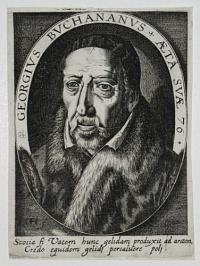
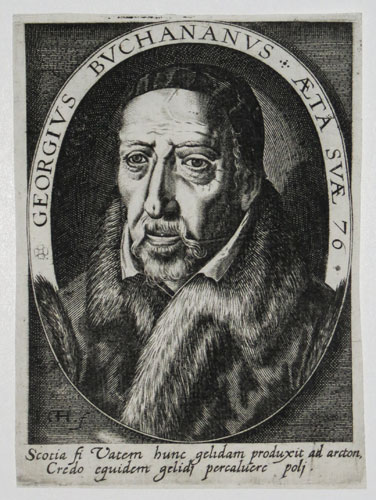
Georgius Buchananus Aeta Suae 76. Scotia fi Vatern hunc gelidam produxit ad arcton, Credo equidem gelidj percaluere polj.
I CH f.
[n.d. c.1669.]
Engraving. 120 x 89mm. 4¾ x 3½".
George Buchanan (1506-1582) was a Scottish historian and humanist scholar. He was part of the monarchomach movement, which consisted of Huguenot theorists who opposed absolute monarchy. Monarchomachs were people who opposed absolutism, believing that sovereignty belonged to the people, but the irony here was that "the people" for monarchomachs in fact only meant to refer to the bourgeoisie and nobility, never the popular masses. Buchanan was a key figure in developing the monarchomach theories in Scotland. Similar to Erasmus, Buchanan had the same ideas about the Catholic church, and was persecuted like all Lutherans in 1539, however he managed to effect his escape, and fled to London and then onto Paris. It was here where faced with further persecution, he accepted an invitation by Andre de Gouveia to take on the post of professor of Latin at the College of Guienne at Bordeaux. Portrait from: 'Bibliotheca Chalcographica, hoc est Virtute et eruditione clarorum Virorum Imagines' by Jean Jacques Boissard. The work with 100 portraits was first published under the title 'Icones virorum illustrium' in 1597-98.
[Ref: 24622] £120.00
(£144.00 incl.VAT)
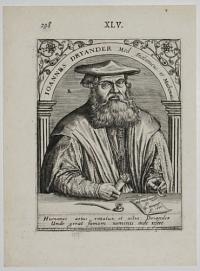
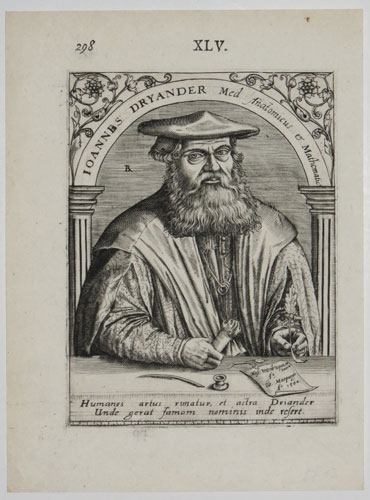
Johannes Dryander Med. Anatomicus & Mathematic'.
[Engraved by Theodore de Bry.]
[n.d., c.1597.]
Engraving with very large margins. 145 x 110mm (5¾ x 4¼").
Johann Dryander (changed from Eichmann) (1500-60), German anatomist, physician, mathematician and astronomer. Published in Jean Jacques Boissard's 'Bibliotheca Chalcographica'. Wellcome: 854.
[Ref: 29800] £180.00
(£216.00 incl.VAT)
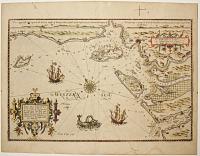
The Sea Coastes of the landes of Poyctou and Bordeaux eue as they shew and appeare, when you sayle there alongst betweene Picquelier and the River of Bordeaux called the Garonne.
Theodor de Bry sculp: [after Lucas Janzoon Waghenaer.]
[London: J. Charlewood, 1588.]
Engraved map with old hand colour, English text on reverse. 330 x 510mm (13 x 20"). Some old ink and pencil annotations, pinhole in centre of compass rose.
An early sea chart of the coast of France from Saint-Hilaire-de-Riez south to the mouth of the Garonne, with the Ile de Ré and Oleron. An English letterpress text on verso gives sailing directions. One of the first maps to be engraved in England (albeit by a German engraver), it has all the features of the golden age of decorative cartography: a compass rose, strapwork cartouches for the title and scale, galleons and a seamonster. The manuscript includes corrections to rhumb lines and due north. This is a plate from the extremely scarce single English editon of Waghenaer's sea atlas, the 'Spieghel der Zeevaerdt', the first printed atlas of sea charts. Commissioned by Sir Christopher Hatton, Elizabeth I's Lord Chancellor, the charts were copied by engravers including by De Bry, Jodocus Hondius, Augustine Ryther, and Johannes Rutlinger, and were published in London as 'The mariners mirrour wherin may playnly be seen the courses, heights, distances, depths, sounding, flouds and ebs ... of the harbouroughs, havens and ports of the greatest part of Europe', the year of the Spanish Armada. It has been suggested that the circulation was limited to the most trusted English sea captains. A second edition of the plate was published in Amsterdam by Jodocus Hondius, who engraved Dutch titles onto it.
[Ref: 45598] £2,000.00
view all images for this item
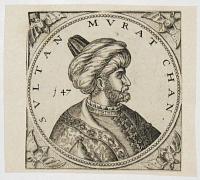
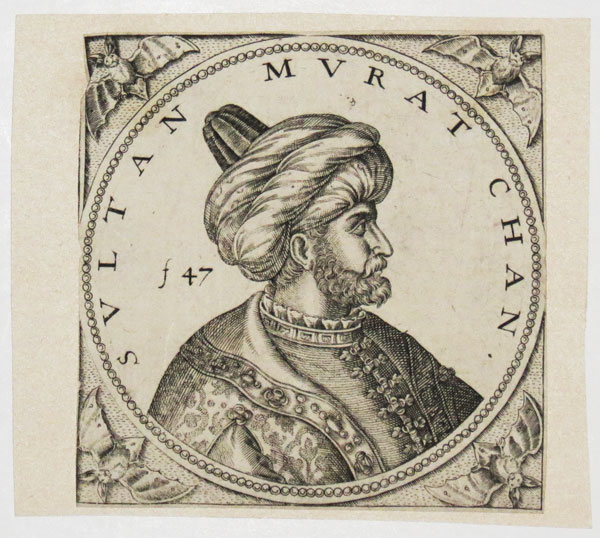
Sultan Murat Chan.
[Engraved by Theodore de Bry.]
[Frankfurt: de Bry, 1593.]
Engraving. Sheet 95 x 95mm (3¾ x 3¾). Trimmed losing ornamental border; glued to backing sheet.
Murad III (1546-95), Sultan of the Ottoman Empire from the death of Selim II in 1574. He approved negotations towards an alliance between the Ottoman Empire and the England of Elizabeth I: England sold the Ottomans tin and lead needed for cannon-casting, and, with the outbreak of England's war with Spain in 1585, they planned joint military operations. Murat wrote that Islam and Protestantism had 'much more in common than either did with Roman Catholicism, as both rejected the worship of idols'. Published in the 'Vitae et icones Sultanorum turcicorum'.
[Ref: 29844] £120.00
(£144.00 incl.VAT)
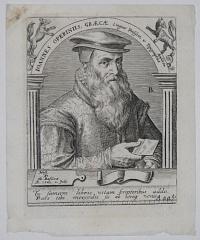
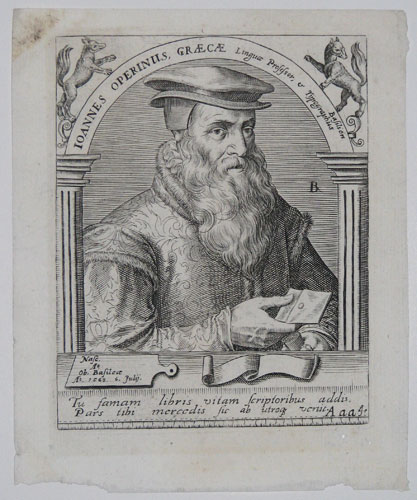
Iohannes Operinus, Graecae Linguae Professor et Tipographus Basilien. Tu famam libris vitam scriptoribus addis, Pars tibi mercedis sic ab utroq venit. Aaa4.
[Theodore de Bry.]
[n.d. c.1710.]
Etching. 172 x 139mm. 6¾ x 5½". Trimmed.
Johannes Oporinus (1507-1568) was a humanist printer in Basel.
[Ref: 18662] £70.00
(£84.00 incl.VAT)
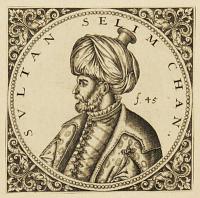
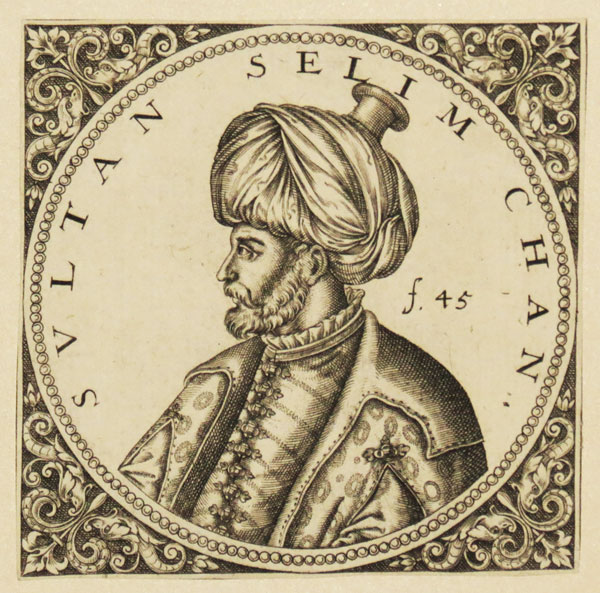
Sultan Selim Chan.
[Engraved by Theodore de Bry.]
[Frankfurt: de Bry, 1593.]
Engraving. Sheet 95 x 95mm (3¾ x 3¾). Trimmed losing ornamental border; glued to backing sheet.
Selim II (1524-1574), son of Suleiman the Magnificent known as 'Selim the Drunkard'. Among his few successess was the capture of Cyprus in 1571, but the destruction of the Ottoman fleet at the Battle of Lepanto the same year has been pinpointed as the beginning of the slow deline of the Empire. Published in the 'Vitae et icones Sultanorum turcicorum'.
[Ref: 29843] £120.00
(£144.00 incl.VAT)
<<< Previous 1 Next >>>